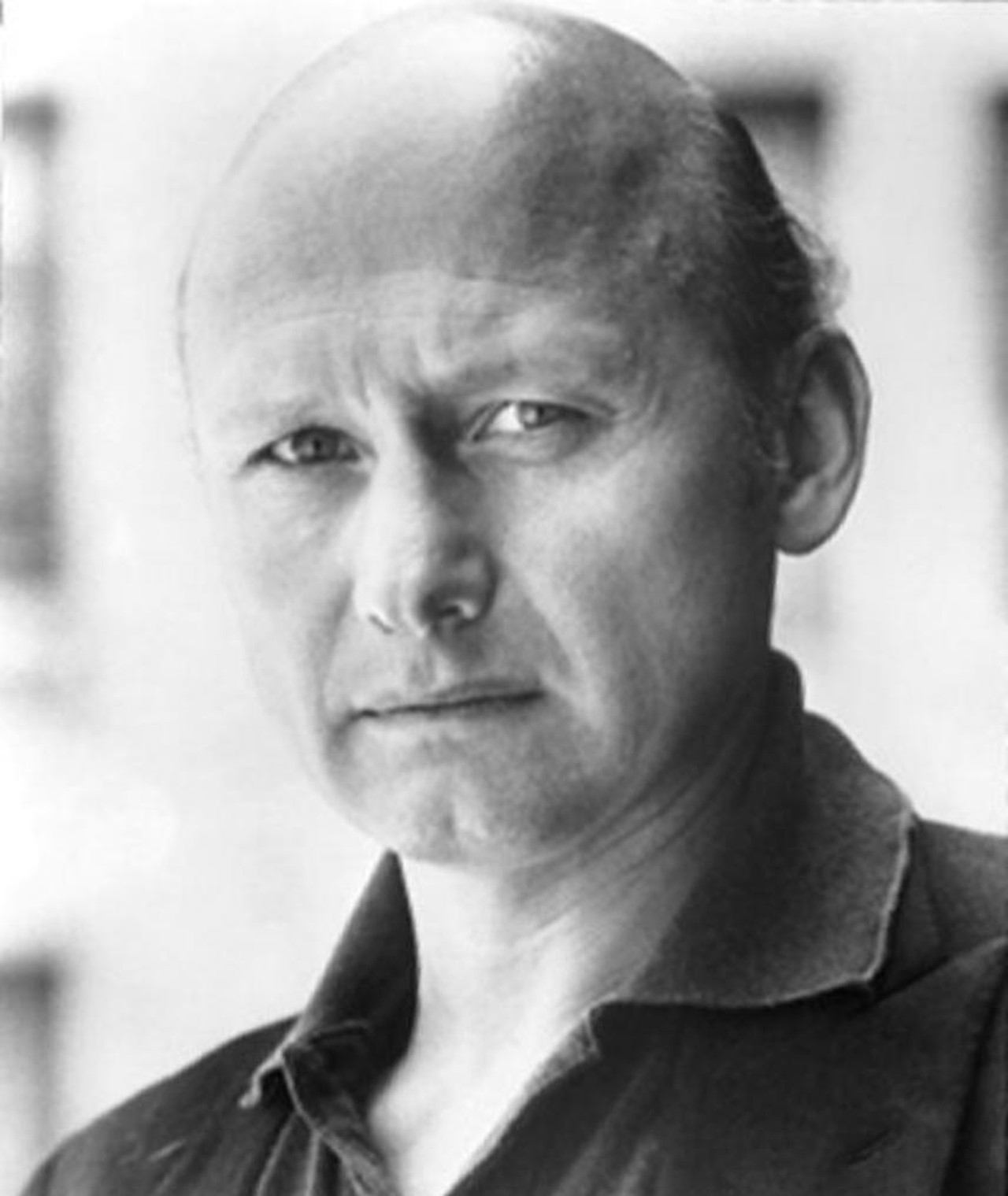
The passing of James Tolkan at age 94 marks the conclusion of a specific era in character-driven narrative utility. Tolkan did not merely occupy space in high-grossing franchises; he functioned as the necessary friction within the "Protagonist vs. Institutional Authority" framework. In the mechanics of 1980s and 1990s cinema, Tolkan represented a specialized asset: the high-intensity bureaucratic antagonist. His presence served a specific structural purpose in screenwriting, acting as a catalyst for protagonist development through the application of unrelenting verbal and psychological pressure.
The Mechanics of Narrative Friction
To understand Tolkan’s impact, one must analyze the "Friction Coefficient" he brought to a scene. In films like Top Gun and the Back to the Future trilogy, the narrative requires a human obstacle that is not necessarily a villain but an unyielding enforcer of rules. Tolkan’s characters—Commander Tom "Stinger" Jardine and Mr. Strickland—operated as the physical manifestation of the stakes. For another look, see: this related article.
The effectiveness of this archetype relies on three distinct variables:
- Vocal Command and Compression: Tolkan utilized a staccato delivery style that minimized silence and maximized urgency. This prevented the protagonist from gaining conversational momentum, forcing a reactive stance.
- Visual Severity: Through his physical stature and the distinct aesthetic of his presence—often featuring a bald head and a rigid, military posture—he communicated immediate, non-negotiable authority.
- The Absence of Empathy: His characters were defined by a total lack of "soft" traits. By stripping away relatability, the script allows the audience to identify more strongly with the rebellious lead (Maverick or Marty McFly) against the cold logic of the institution.
The Strickland Variable: Maintaining Continuity Across Timelines
In the Back to the Future franchise, Tolkan’s role as Mr. Strickland serves as the primary anchor for the Hill Valley social hierarchy. From a structural standpoint, Strickland is the "Invariant Factor." While the environment, the technology, and the social mores of Hill Valley shift between 1955 and 1985, Strickland remains aesthetically and temperamentally identical. Related coverage on the subject has been provided by GQ.
This serves a critical cognitive function for the viewer. By keeping the antagonist static, the filmmakers emphasize the magnitude of the changes occurring around the protagonist. Strickland represents the "Permanent Establishment." His obsession with "slackers" isn't a personality quirk; it is a thematic device used to define the boundaries of the American Dream within the film's universe. If you are not contributing to the system through rigid adherence to its rules, you are a "slacker"—a drain on the social battery.
The Stinger Protocol: Performance Under High Stakes
In Top Gun (1986), Tolkan’s portrayal of Stinger provides the essential "Grounding Logic" for an otherwise high-flying, stylized action film. The film’s opening sequence requires a moment of extreme consequence to justify the deployment of its main characters to the Top Gun school.
Stinger’s role here is a "Status Correction." He exists to deflate the ego of the protagonist, Peter "Maverick" Mitchell, immediately after a feat of aerial skill. This creates a psychological bottleneck: the hero is technically gifted but socially and professionally undisciplined. Tolkan’s delivery of the "Your ego is writing checks your body can't cash" dialogue functions as a mission statement for the entire film's character arc. Without that specific brand of abrasive authority, the protagonist’s eventual maturation would lack a measurable baseline.
Categorizing the Tolkan Filmography: A Functional Taxonomy
Tolkan’s career can be segmented into three functional categories based on how his presence influenced the film’s internal logic:
- The Institutional Barrier: Seen in WarGames (1983) and Top Gun. These characters represent the military-industrial complex. They are the gatekeepers of high-value assets and the first line of defense against unconventional problem-solving.
- The Disciplinarian: Seen in the Back to the Future series. This category focuses on social engineering and the enforcement of behavioral norms within a civilian or educational context.
- The Noir Antagonist: Seen in films like Prince of the City (1981) and Dick Tracy (1990). Here, Tolkan applies his intensity to the darker undercurrents of the law, often playing characters where the line between "Enforcer" and "Oppressor" is intentionally blurred.
The Economic of the Character Actor
Tolkan’s longevity—spanning over six decades—is a result of high "Castability Metrics." Producers and directors look for actors who can convey a massive amount of backstory through a single look or line of dialogue. This reduces the "Narrative Overhead"—the amount of screen time required to establish a character's motivations. When Tolkan walked on screen, the audience knew exactly what the rules were and exactly what would happen if the protagonist broke them.
This efficiency made him a staple of the New York theater scene before his transition to film. His training at the Actors Studio under Lee Strasberg provided the technical foundation for his "Concentrated Intensity." Unlike many actors who seek to expand their emotional range within a single scene, Tolkan excelled at "Vertical Depth"—taking a singular emotional state (usually stern indignation) and pushing it to its absolute psychological limit.
The Evolutionary Gap in Modern Casting
In contemporary cinema, there is a visible deficit in the "Hardliner Archetype" that Tolkan perfected. Modern antagonists are frequently written with complex, sympathetic backstories or "relatable" flaws. While this adds layers, it often dilutes the narrative tension. Tolkan understood that for a hero to truly soar, the ceiling they hit must be made of reinforced concrete.
The decline of this archetype correlates with the shift away from mid-budget, high-concept studio films. As the industry moved toward either micro-budget indies or massive CGI-heavy spectacles, the "Middle Management Villain"—the role Tolkan inhabited—became a secondary priority. However, the recurring popularity of his films suggests that audiences still find deep satisfaction in seeing a clearly defined, uncompromising authority figure get outmaneuvered by a clever protagonist.
Quantitative Legacy: Beyond the Screen
Tolkan's career involved over 100 credits across film and television. His work in the 1980s specifically coincided with the era of the "Blockbuster Blueprint," where characters were designed to be iconic and easily categorized for a global audience.
His impact is best measured by the "Archetypal Persistence" of his characters. Decades after their release, lines like "Slacker!" remain part of the cultural lexicon. This is not accidental. It is the result of a performer leaning into a specific niche with such precision that they become the definitive standard for that role.
The strategic takeaway from Tolkan’s career for the entertainment industry is the value of "High-Contrast Casting." To elevate a lead actor, the surrounding cast must provide significant resistance. Tolkan was the ultimate resistance. He didn't just play a part; he enforced a standard. Actors seeking to replicate this longevity should prioritize mastering a specific "Functional Utility" rather than chasing generic leading-man status. Studios should recognize that the "Uncompromising Antagonist" is not a relic of the past, but a fundamental tool for generating narrative tension.
Future analysis of 1980s cinema must account for the "Tolkan Threshold"—the point at which an authority figure's pressure becomes so great that it forces a fundamental change in the protagonist. This threshold is the engine of the classic Hollywood arc. As the industry moves into an era of increasingly diffused authority and ambiguous morals, the return to high-clarity, high-intensity character work will likely be the primary method for revitalizing traditional storytelling structures.


