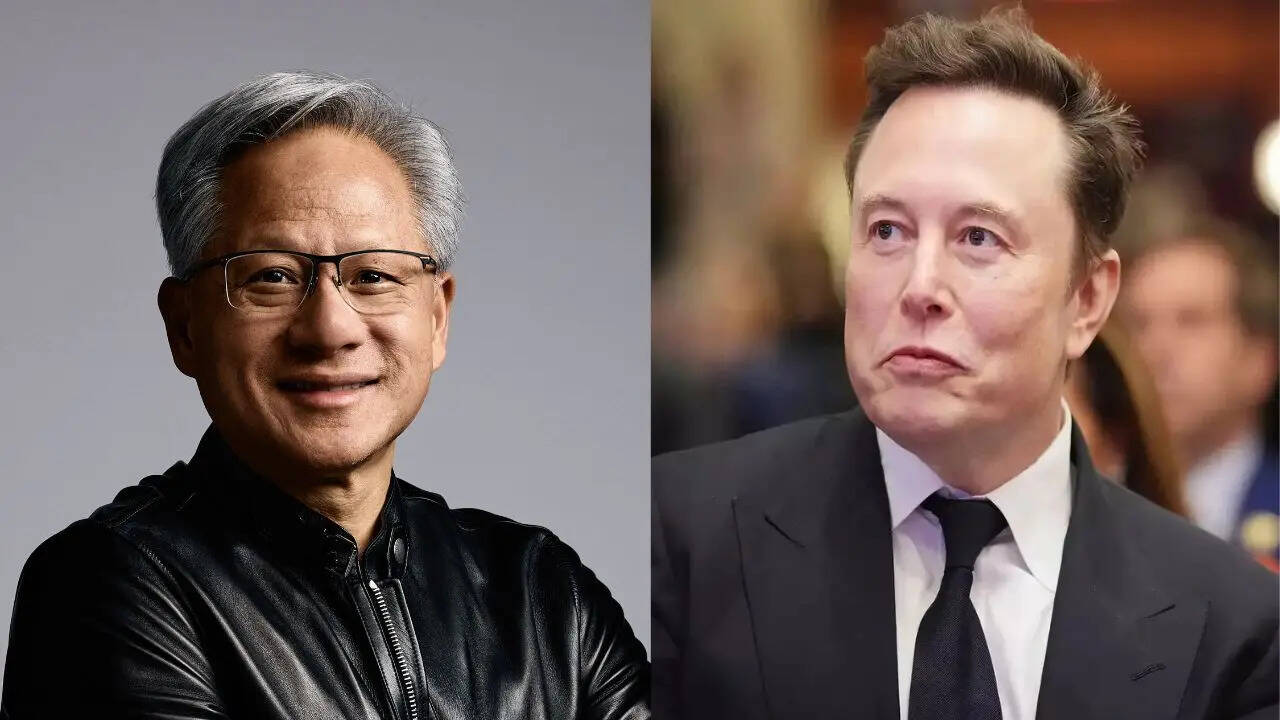
Most people think being a CEO is about sitting in mahogany-clad boardrooms making grand pronouncements. It isn't. For the people running the most valuable companies on earth, it’s a desperate, daily war against time. They don't just "manage" their schedules. They mutilate them.
You’ve probably seen the headlines about Jensen Huang’s grueling work ethic or Elon Musk’s floor-sleeping habits. They make it sound like these guys are just masochists. That misses the point entirely. These leaders have built hyper-specific systems to bypass the bureaucratic sludge that kills most companies. They aren't following "best practices." They’re breaking them.
If you want to move at their speed, you have to stop acting like a middle manager. You need to look at how these high-performers handle the basics—meetings, communication, and even sleep—and realize that their "secret rules" are actually survival mechanisms.
Jensen Huang and the Death of the Status Update
Nvidia’s Jensen Huang runs a company worth trillions, yet he doesn't do one-on-one meetings in the traditional sense. He thinks they’re a waste. If you’re at Nvidia, you don’t get a private audience to "check in." Instead, Huang prefers "top of mind" emails.
Every employee is encouraged to send a short note about what they’re working on or what’s bothering them. He reads hundreds of these. It gives him a direct pulse on the company without the filter of middle management fluff. This isn't about micromanagement. It’s about radical transparency.
Huang also hates the standard corporate structure where information flows up a rigid chain. He often pulls people from different levels into the same meeting. Why? Because it keeps everyone on the same page and stops "telephone game" distortions. If you're a junior engineer with a better idea, he wants to hear it right there, not three weeks later after your boss has sanitized it.
He also stays away from the typical "tell me what I want to hear" culture. He’s known for being blunt. If a product sucks, he says it. If a strategy is failing, he kills it. He doesn’t have time for the polite corporate dance. Most leaders spend 40% of their day being "nice" to avoid hurting feelings. Huang spends that 40% actually fixing the business.
Elon Musk and the Rule of Three Minutes
Elon Musk’s approach to meetings is famous, mostly because it’s so brutal. He expects you to be prepared or get out. There’s a story—likely true—of him asking an employee why they were in a meeting if they weren't contributing anything.
His logic is simple. Meetings are a tax. Every minute you spend in a large room listening to someone drone on is a minute you aren't building, coding, or selling. He famously told employees to just walk out or hang up if a meeting isn't adding value. Most people are too polite to do that. Musk thinks being "polite" while wasting someone's time is actually the height of rudeness.
Then there’s his "timeboxing" technique. Musk is known to break his entire day into five-minute slots. Even lunch is squeezed into one of these intervals, often eaten while he works. This sounds like a nightmare to most of us. But for someone running SpaceX and Tesla simultaneously, it’s the only way to ensure the most important tasks don't get buried by the "urgent" but meaningless ones.
The Power Nap and the Science of the Reset
We’re told that to be successful, you have to out-grind everyone. Sleep when you’re dead, right? Not quite. Even the most intense CEOs recognize the biological limits of the human brain.
Take Hiroshi Mikitani of Rakuten or even the legendary Thomas Edison. They understood that the brain hits a wall. When that happens, your decision-making doesn't just slow down—it gets worse. A 20-minute power nap isn't a sign of laziness. It’s a tactical reset.
Research from NASA showed that a 40-minute nap improved performance by 34% and alertness by 100%. If you’re making billion-dollar bets, you want your brain operating at 100%. Musk has admitted to sleeping on the factory floor during "production hell" periods, but even he acknowledges that once you drop below a certain number of hours, your IQ basically tanks.
The secret isn't "no sleep." It’s "strategic rest." It’s about knowing exactly when your cognitive battery is at 5% and having the discipline to shut down for 15 minutes to get it back to 40%.
Why Your Inbox Is Killing Your Career
Most CEOs at this level have a weird relationship with email. They either ignore it entirely or use it as a weapon.
Jeff Bezos famously used the "question mark email." If a customer complained, he’d forward the email to the relevant executive with a single "?" in the body. That one character sent entire departments into a frenzy. He didn't need to write a three-paragraph memo. He needed an answer.
Others, like Mark Cuban, prefer email over meetings because it’s asynchronous. You can deal with it on your terms. But the rule for top-tier performers is usually the same: No Small Talk. If you email a high-level CEO, don't start with "I hope this finds you well." They don't care. They want to know what you want, why it matters, and what the next step is. If you can’t say it in three sentences, you haven't thought about it enough.
Stop Trying to Be Productive and Start Being Effective
There’s a massive difference between "busy" and "productive." Middle managers are busy. CEOs are effective.
The secret rules aren't about life hacks or buying a specific type of coffee. They’re about protecting your most valuable asset: Focus. Every "rule" these leaders follow is designed to remove a distraction.
- No large meetings? Removes the distraction of social performance.
- No long emails? Removes the distraction of fluff.
- Five-minute blocks? Removes the distraction of procrastination.
You don't need to be the CEO of a Fortune 500 company to use these. You can start tomorrow.
Cut your meetings in half. If a meeting is scheduled for an hour, do it in 20 minutes. You’ll be shocked at how much time is wasted on "waiting for everyone to join" and "recapping what we just said."
Stop "checking" email. Set two or three times a day to process it. Outside of those times, the tab should be closed. If something is truly an emergency, people will call you or find you.
Write less. Force yourself to communicate in bullet points. If you can't explain your project in three bullets, you don't understand it well enough yet.
Take the nap. If your head is spinning and you’re staring at the same sentence for ten minutes, your brain is done. Set a timer for 15 minutes, close your eyes, and stop feeling guilty about it. You’ll get more done in the next two hours than you would have in four hours of "grinding" through the fog.
Success isn't about adding more to your plate. It’s about aggressively scraping off the junk that doesn't matter so you can focus on the one or two things that actually move the needle. These CEOs aren't superheroes. They’re just people who have become incredibly good at saying "no" to everything that isn't essential.