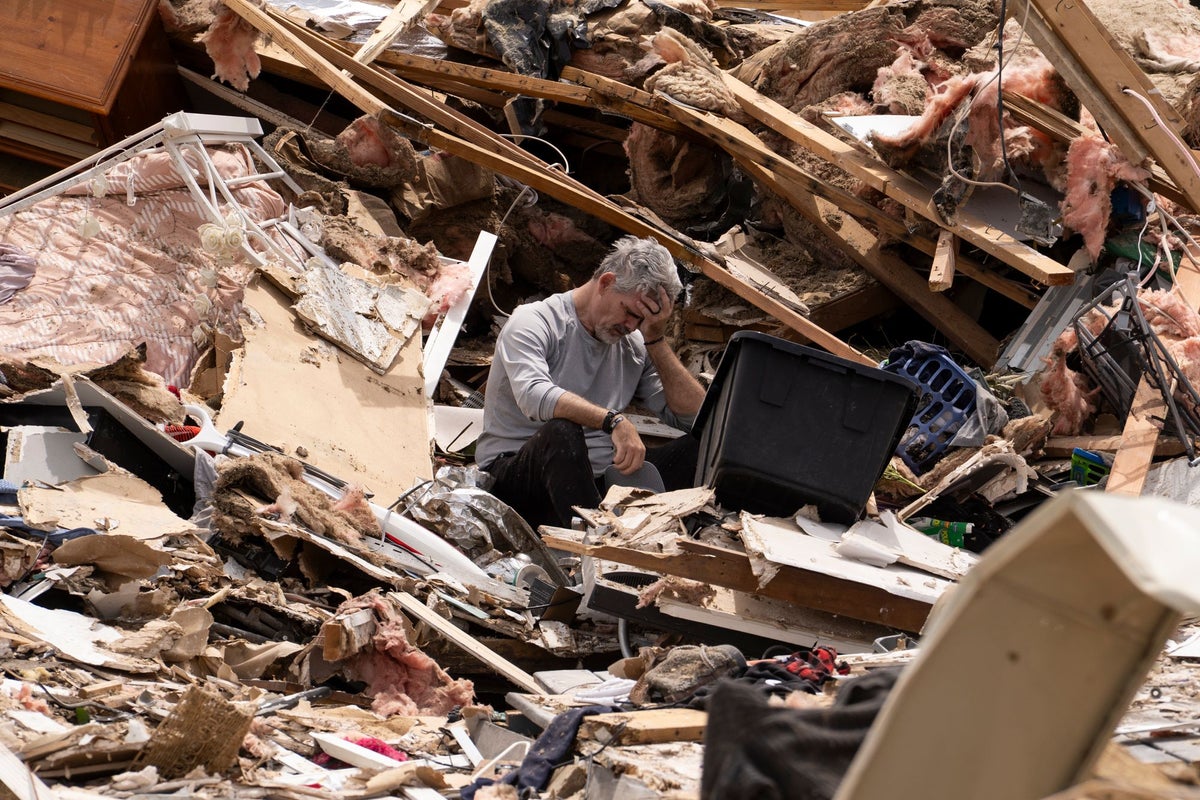
The Preparedness Myth
The standard advice for tornado season is a checklist of mediocrity. Buy some bottled water. Put a battery-powered radio in a bag. Hide in the middle of the house. It is a comforting ritual that gives people a sense of agency in the face of atmospheric violence, but much of it is outdated, physically flawed, or dangerously incomplete.
We treat tornado preparation like we are preparing for a long power outage. A tornado is not a power outage. It is a structural failure event. If you are focusing on having enough granola bars while ignoring the load-bearing integrity of your shelter, you aren't "prepared." You are just well-fed for the recovery crew.
The Basement Trap
Experts love to scream "get to the basement." It’s the gold standard of Midwest survival lore. But here is the reality: a basement is only a safe haven if the house above it stays put. If the F4 or F5 monster decides to scrub your lot clean, that basement becomes a debris sink.
I have walked through neighborhoods where the house was completely sheared off the foundation. The basement wasn't a sanctuary; it was a pit filled with refrigerators, SUVs, and sharp lumber. If your basement is unfinished and lacks a reinforced "safe room" or a concrete cell, you are betting your life that the 40 tons of house above you will fly away from you rather than falling on you.
The physics of a "basement" are simple:
- The Overburden: Your home’s structural components (joists, subfloors, HVAC) become overhead hazards.
- The Debris Inflow: High-velocity winds create a vacuum effect, pulling external debris into the lowest point of the structure.
- The Utility Threat: Ruptured gas lines and water mains often leak into basements immediately following a strike.
If you don't have a dedicated steel or concrete shelter inside that basement, you aren't in a bunker. You’re in a trench.
Stop Buying Junk and Start Hardening Structures
The "Go Bag" industry is a distraction. I’ve seen families spend $500 on tactical flashlights and solar chargers while living in homes with garage doors that have the structural integrity of a wet cracker.
The garage door is the single most common point of failure in a high-wind event. Once the wind gets under that door, the internal pressure of your house spikes. This creates an "internal balloon" effect that pushes the roof off from the inside out. While you’re checking the expiration date on your canned beans, the wind is looking for the weakest seal in your building envelope.
The Hard Truth Strategy:
- Brace the Garage: If you haven't reinforced your garage door with a vertical bracing kit, your "interior room" strategy is a prayer, not a plan.
- Impact Windows vs. Shutters: Most people think "taping windows" helps. It doesn't. It just creates larger, more lethal shards of glass. If you aren't installing impact-rated glass or heavy-duty steel shutters, accept that your windows will fail.
- Anchor Bolts: Most older homes are held to their foundations by gravity and hope. If you aren't checking the sill plate for proper anchoring, the entire structure can slide.
The "Southwest Corner" Fallacy
For decades, we were told to hide in the southwest corner of a basement because tornadoes generally move from southwest to northeast. The logic was that the house would blow away from you.
This is a lie.
Tornadoes are chaotic vortices. Debris doesn't fly in a straight line; it rotates. Statistical analysis of damage patterns shows that debris can—and does—collect in every corner of a basement. The "safest" spot is wherever the floor above you is most heavily reinforced, usually under a heavy piece of furniture or near a bearing wall, regardless of the compass heading. Following 50-year-old folklore is a great way to get crushed by your own kitchen island.
The Weather Radio Obsession
We tell people to buy NOAA weather radios as if they are magical talismans. Sure, have one. But the idea that a radio is your primary defense in 2026 is absurd. The "lead time" for a tornado warning is often less than 13 minutes.
If you are waiting for a siren or a radio broadcast to tell you a storm is "treacherous," you’ve already lost the window for meaningful action. The real pros aren't looking for warnings; they are looking at "mesoscale discussions" and convective outlooks hours before the first cloud forms.
The public is conditioned to be reactive. We wait for the government to beep. By the time the beep happens, the debris ball is already showing up on Dual-Pol radar. You need to be proactive. If the SPC (Storm Prediction Center) has you in a "Moderate" or "High" risk zone, your preparation should have ended 24 hours ago.
Modern Vulnerability: The Open Floor Plan
We have traded safety for aesthetics. Modern architectural trends—high ceilings, open floor plans, and massive "great rooms"—are nightmares for structural stability.
A traditional 1950s house had lots of small rooms with lots of walls. Those walls acted as internal bracing. Your modern open-concept home lacks that internal support. When the roof starts to lift, there is nothing holding the walls together. If you live in a house where you can see the kitchen from the front door without a single wall in between, your "interior room" is likely a closet that offers zero structural protection.
The Logistics of the Aftermath
People focus on the "hit." They don't focus on the "week after."
I’ve seen survivors who had all the water and food they needed, but they couldn't access it because it was buried under eight feet of their own roof.
- Stash Location: Don't put your supplies in your safe room. Put half of them in a heavy-duty, waterproof container buried or bolted outside the main footprint of the house.
- The Shoes Rule: This is the only "tip" that actually matters: Keep a pair of heavy-duty work boots and a pair of leather gloves inside your storm shelter. I have seen more people hospitalized for foot lacerations from stepping on nails and glass after the storm than from the storm itself. You can't evacuate a pile of rubble in flip-flops.
The Insurance Hallucination
You think you're covered. You probably aren't.
Most people carry "Actual Cash Value" policies rather than "Replacement Cost" policies. If a tornado levels your house today, your insurance company is going to give you the value of a used, 15-year-old house, not the cost to build a new one with 2026 labor and material prices.
Furthermore, "loss of use" coverage is often capped. If an entire town is flattened, construction labor costs will skyrocket, and it might take two years to rebuild. If your policy only covers six months of temporary housing, you’re going bankrupt while waiting for a contractor.
Stop Seeking Tips and Start Seeking Engineering
A "tip" is what you give a waiter. A "tip" is "keep your shoes on."
What you actually need is an engineering mindset. You are living in a region where the atmosphere periodically tries to dismantle your property.
If you haven't looked at your house's load path—the continuous connection from the roof to the foundation—you aren't prepared. You're just a person with a flashlight and a sense of false security. Every penny you spend on "emergency kits" would be better spent on hurricane clips, high-rated garage doors, and a genuine, bolted-down steel safe room.
The "treacherous" nature of the season isn't about the wind speeds increasing. It's about our refusal to build for the environment we actually live in. We build sticks on slabs and wonder why they disappear.
Stop preparing for the storm. Start out-engineering it.