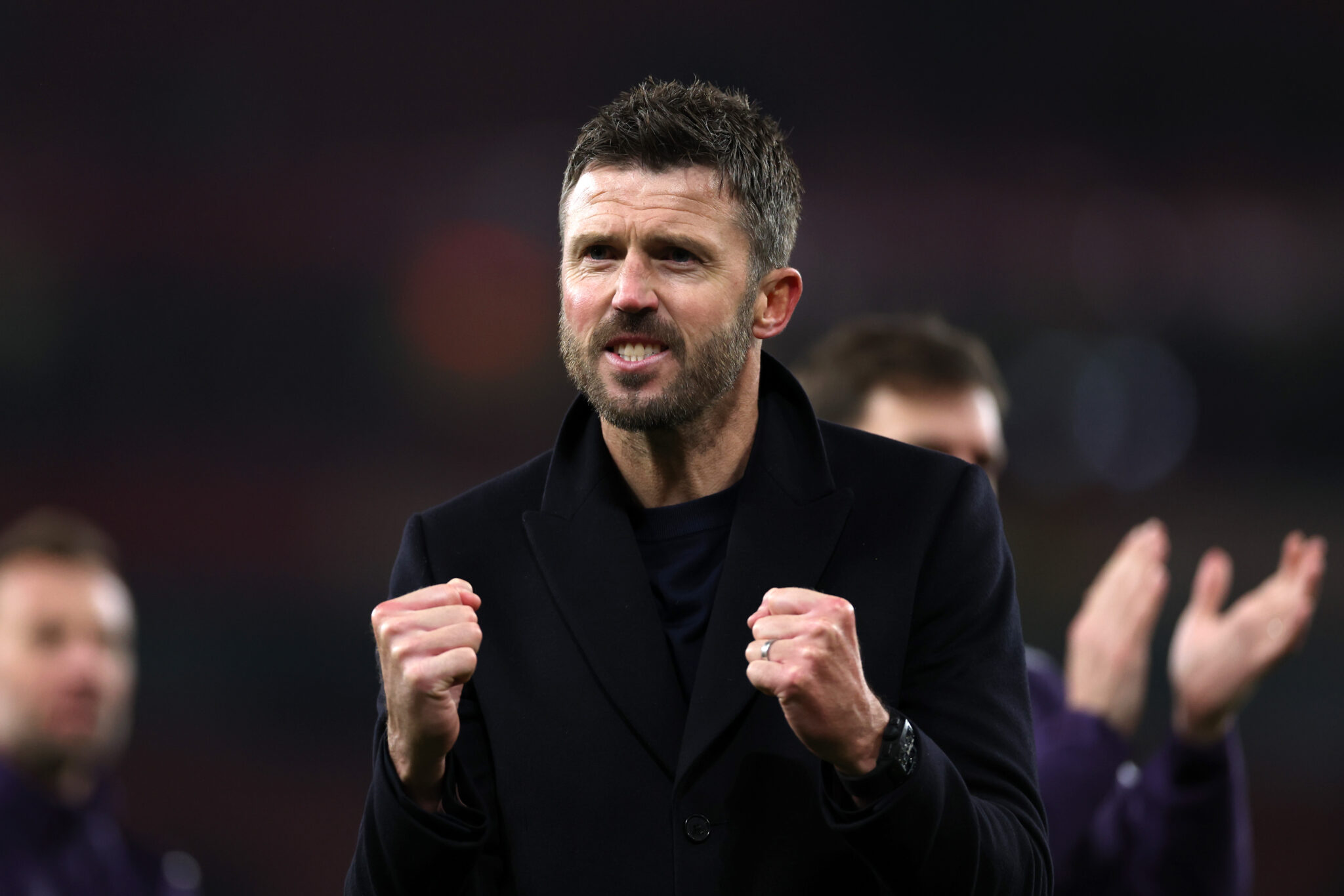
Tottenham Hotspur spent years wandering through a desert of identity crises. From the defensive grind of Jose Mourinho to the brief, confusing era of Nuno Espirito Santo and the volatile brilliance of Antonio Conte, the club felt like it was constantly fighting its own shadow. Fans weren't just tired of losing; they were tired of being bored. That's why the arrival of Roberto De Zerbi felt like more than a managerial appointment. It was a cultural shock. If you've watched Spurs lately, you know the tide hasn't just turned—it’s been completely replaced by a different ocean.
The question isn't whether De Zerbi is good. We knew that from his time at Brighton. The real question is whether his high-risk, high-reward philosophy can actually survive the crushing expectations of North London. Most people thought the transition would take years. They were wrong. Tottenham is playing with a level of technical arrogance that we haven't seen since the peak days of Mauricio Pochettino, but with a tactical edge that feels much more modern. Learn more on a related issue: this related article.
The end of the passive Spurs era
For a long time, watching Spurs meant waiting for something bad to happen. They sat deep, absorbed pressure, and hoped Harry Kane or Son Heung-min would bail them out with a moment of individual magic. It was reactive. It was stressful. It was often ugly.
De Zerbi doesn't do "passive." He demands his players invite pressure. He wants the opposition to press them because that's how he finds the gaps. You'll see Guglielmo Vicario or the center-backs standing on the ball, literally waiting for a striker to jump at them. It looks like suicide to the untrained eye. In reality, it’s a calculated trap. Additional journalism by NBC Sports explores related perspectives on this issue.
This shift in mentality is the biggest change at the club. Players who looked terrified to make a mistake under previous regimes are now demanding the ball in tight spaces. Micky van de Ven and Cristian Romero aren't just defenders anymore; they’re the primary playmakers. When you stop fearing the press and start using it as a weapon, the entire dynamic of the Premier League changes for you.
Why the midfield is the heart of this revolution
You can't play De Zerbi-ball without a midfield that has ice in its veins. The "double pivot" is the engine room of everything Tottenham does now. In previous seasons, the midfield was often bypassed or used as a screen for the defense. Now, it’s the bridge that breaks the game open.
James Maddison has found a new gear here. While he's always been a creative force, De Zerbi has him operating in "pockets" that seem impossible to guard. But the real story is the resurgence of players like Yves Bissouma and the integration of new technical talents. They aren't just running; they’re manipulating the opposition’s shape.
The stats back this up. Tottenham's passing accuracy in their own defensive third has spiked, not because they’re playing it safe, but because they’re more coached. They know exactly where their teammate will be before they even look up. It’s a choreographed chaos that makes the opposition look like they’re chasing ghosts.
Dealing with the defensive high line risks
Let’s be real. This style of play is terrifying if you’re a fan. When it goes wrong, it goes spectacularly wrong. We’ve seen games where Spurs get caught out, leaving miles of space behind for pacy attackers to exploit.
Critics love to point at these moments as proof that De Zerbi is "found out." That's a lazy take. Every tactical system has a weakness. The difference is that De Zerbi accepts this risk as the price of admission for total dominance. He’d rather lose 4-3 trying to dictate the game than lose 1-0 while parked in his own box.
The key to making this work is recovery pace. Micky van de Ven is probably the most important signing Spurs have made in a decade for this exact reason. His ability to sprint back and snuff out fires allows the rest of the team to push forty yards up the pitch. Without that specific physical profile, the system might collapse. But with it? It’s a nightmare to play against.
The Son Heung min factor in a structured system
People wondered if a veteran like Son would fit into a system that requires such rigid positioning during the buildup phase. There were fears his directness might be stifled by De Zerbi’s obsession with short, sharp passes.
Instead, Son has become the ultimate "finisher" of the sequence. By the time the ball reaches him on the wing or in the channel, the opposition's defensive structure has already been pulled apart by the midfield rotations. He isn't having to beat three men anymore. He’s often receiving the ball in 1v1 situations with thirty yards of space. For a player of his quality, that’s basically a cheat code.
It’s a different kind of output. It’s less about the "hero ball" we saw in 2021 and more about being the sharp end of a very sophisticated spear. The captaincy has clearly grounded him, and he looks more rejuvenated than he has in years.
Building a squad for the long haul
One mistake the media makes is assuming this is a flash in the pan. The recruitment strategy at Tottenham has shifted toward "De Zerbi profiles." They aren't just buying big names; they’re buying players with high technical ceilings and the tactical flexibility to play multiple roles.
Look at the bench strength compared to two years ago. Even when injuries hit—and they always do at Spurs—the drop-off in quality isn't as steep. The "system" is now more important than any individual player. That’s the hallmark of a truly elite club. If one piece breaks, you slide another one in, and the machine keeps humming.
Daniel Levy has finally stopped trying to buy a trophy with a "win now" manager and started building a footballing project. It’s a gamble, sure. But for the first time in a long time, the fans are actually enjoying the ride.
What happens when teams sit deep
The biggest test for this "new" Spurs isn't against Manchester City or Liverpool. It’s against the bottom-half teams that refuse to press. If a team parks the bus and stays in a low block, De Zerbi’s primary weapon—inviting the press—is neutralized.
This is where the team still needs to grow. They occasionally get frustrated and start forcing passes that aren't there. To truly turn the tide permanently, they need to develop a "Plan B" that doesn't involve abandoning their principles. They need to find ways to manufacture space when none is given.
Watching how they've handled these "boring" games lately shows progress. There’s more patience. There’s less panic. They’re starting to realize that if they keep the ball for 70% of the game, the opposition will eventually tire out and make a mistake. It’s a war of attrition disguised as a game of chess.
How to track the progress
If you want to see if the De Zerbi era is actually working, stop looking at the league table for a second. Watch the first fifteen minutes of any match.
- Count how many times the keeper plays a short pass under pressure.
- Look at the distance between the two center-backs.
- Note how high the full-backs are pushed up.
If those things are happening consistently, the system is functioning. Results in football can be fluky. A bad VAR call or a deflected shot can ruin a result, but the underlying process is what determines long-term success. Spurs have a process now. It’s bold, it’s risky, and it’s arguably the most exciting project in the Premier League right now.
Stop waiting for the "old Spurs" to reappear. They're gone. What's left is a team that finally knows who it wants to be when it grows up. Whether that leads to a trophy in the cabinet remains to be seen, but the days of being a "troubled" club are firmly in the rearview mirror. Keep an eye on the defensive rotations in the next three matches; that’s where you’ll see if the players have truly internalized the most complex parts of the system.