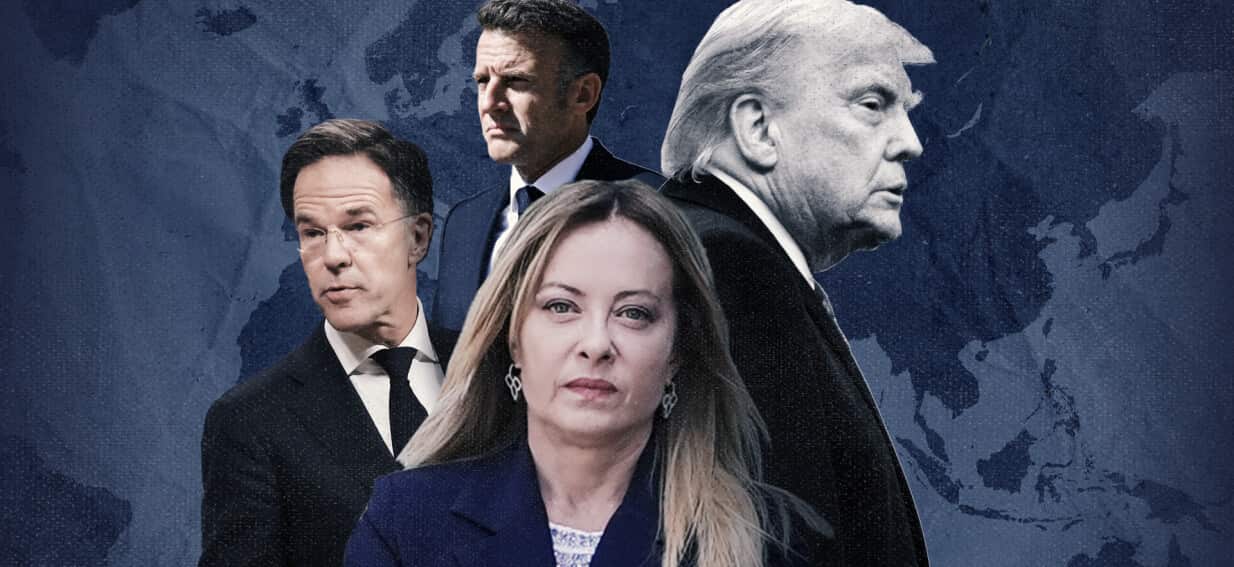
The mainstream foreign policy establishment is having a collective panic attack. If you read the standard punditry, the narrative is utterly predictable: Europe supposedly spent years carefully constructing a fragile diplomatic bridge to Washington, relying on highly placed political middlemen to smooth over tensions, and now that bridge is fracturing. The consensus view treats this as an unmitigated disaster for Western unity.
They are entirely wrong.
The frantic hand-wringing over a "cracking bridge" misunderstands the fundamental nature of modern geopolitics. The idea that international relations between multi-trillion-dollar economic blocs rely on the personal chemistry of a few designated political whispers is a comforting myth for diplomats, but a dangerous delusion for everyone else.
The bridge isn’t cracking because of bad luck or diplomatic failures. It is collapsing because it was an obsolete piece of architecture designed for a world that no longer exists. And for Europe, the destruction of this dependency is the best thing that could happen.
The Myth of the Political Whisperer
For a decade, Brussels and various European capitals operated under the assumption that the right intermediary could manage Washington’s shifting priorities. The establishment truly believed that if you found a figure who could speak the language of populist American nationalism while maintaining a European passport, you could secure a permanent exception to shifting global realities.
This is a profound misunderstanding of how state power works.
I have spent years watching corporate and political entities pour millions into back-channel lobbying, convinced that access equals influence. It rarely does. When structural incentives shift, personal relationships evaporate. The belief that a single interlocutor could permanently shield Europe from American economic nationalism—whether that takes the form of aggressive tariffs or protectionist industrial subsidies—was always a fantasy.
International relations are driven by cold, hard metrics: domestic electoral pressures, industrial capacity, resource security, and military readiness. To believe that a friendly chat or a well-timed dinner in Washington can alter the trajectory of a superpower pivoting toward the Pacific is worse than naive. It is negligent.
The Cost of the Security Subsidy
Let us address the premise that most analysts are too polite to state openly: the transatlantic relationship has long functioned as a massive European dependency mechanism. By outsourcing its hard security to the American taxpayer, Europe bought itself decades of comfortable social spending and fiscal austerity.
The collapse of the traditional diplomatic pipeline forces a confrontation with reality.
+-----------------------------------+-----------------------------------+
| Old Transatlantic Model           | The New Geopolitical Reality      |
+-----------------------------------+-----------------------------------+
| Outsourced continental security   | Mandatory defense self-reliance   |
| De-industrialization via cheap gas| Localized supply chain ownership  |
| Access based on personal rapport  | Transactions based on hard power  |
+-----------------------------------+-----------------------------------+
When a superpower signals that its security umbrella is conditional, the correct response is not to build a better bridge to that superpower's capital. The correct response is to build your own domestic capabilities.
The data on this is stark. For years, a significant portion of NATO members failed to meet the bare minimum threshold of spending 2% of their GDP on defense. The sudden realization that no political insider can save them has done more to revitalize European defense manufacturing in twenty-four months than twenty years of polite communiqués ever achieved. Hard power cannot be bribed, borrowed, or whispered away.
Why the Collapse of Access is a Strategic Gift
The current panic centers on the idea that without direct, sympathetic access to the executive branch in Washington, European interests will be trampled. This assumes that access previously guaranteed protection. It did not. It merely guaranteed a polite heads-up before the policy shifted anyway.
The disintegration of this access is a structural blessing for three distinct reasons:
1. The Death of Strategic Complacency
As long as European leaders believed a savior existed in Washington, they could avoid making difficult domestic choices. They could ignore crumbling infrastructure, stagnant tech sectors, and fragmented military command structures. Without the illusion of a savior, the responsibility shifts entirely to domestic policy.
2. Forced Regulatory Autonomy
Europe’s true global power does not lie in its military projection; it lies in its market size and regulatory leverage. When Europe stops trying to please Washington, it can use its regulatory framework to aggressively protect its own industrial interests, rather than constantly seeking permissions that will never arrive.
3. Clear-Eyed Transactionalism
Diplomacy based on shared values is frequently used to mask exploitation. A purely transactional relationship between Washington and Europe is significantly healthier. It eliminates emotional rhetoric and replaces it with explicit trade-offs. You want maritime cooperation in one theater? It will cost you an energy concession in another. This is how sovereign states interact when they respect each other.
Dismantling the Flawed Premise
When you look at the questions frequently asked by political commentators, the flawed premise of the entire debate becomes obvious.
- How can Europe repair its communication channels with Washington? This is the wrong question. The channels aren't broken; the American consensus has fundamentally shifted. The real question is how Europe can make its approval necessary to Washington's objectives, regardless of who occupies the Oval Office.
- Can European unity survive without a strong transatlantic anchor? The assumption here is that European unity is a byproduct of American hegemony. The truth is the exact opposite. External pressure from Washington is precisely the catalyst required to force disparate European states into a coherent, unified economic and defense bloc.
The Complicity of the European Elite
We must also acknowledge the domestic incentive structure behind the "bridge-builder" narrative. A vast ecosystem of think-tank analysts, elite consultants, and career diplomats relies entirely on the idea that complex, personalized back-channels are essential. If international relations are reduced to raw industrial output, energy independence, and military readiness, these middlemen become completely irrelevant.
They are not mourning the loss of a strategic asset for Europe. They are mourning the loss of their own relevance.
The hard truth is that relying on an intermediary was a cheap shortcut. It allowed European capitals to pretend they were global players without doing the grueling, expensive work of building genuine sovereignty. It was an intellectual narcotic that kept the continent asleep while the global balance of power shifted entirely.
The Friction of Independence
Transitioning away from a dependency model is messy, expensive, and deeply uncomfortable. It means higher defense budgets, which means difficult domestic political battles over spending priorities. It means facing industrial vulnerabilities without the comfort of a guaranteed superpower bailout. It means that when economic coercion occurs, Europe must have the stomach to retaliate in kind, rather than running to a protector.
But the alternative is far worse: a state of permanent vassalage, where your economic stability and territorial integrity depend entirely on the shifting whims of a domestic electorate three thousand miles away.
Stop mourning the broken bridge. Clear away the debris. Start building the fortress.