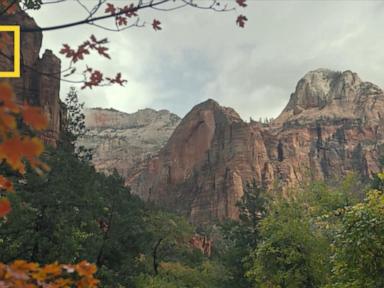
Most people assume desert parks stay brown and dusty all year round. They're wrong. Every autumn, Utah's Zion National Park undergoes a massive visual transformation that rivals New England, except the yellow cottonwoods and crimson maples are framed against 2,000-foot Navajo sandstone cliffs. If you show up in mid-October expecting peak foliage across the entire park, though, you're going to miss the best parts.
Zion isn't a single elevation zone. It drops nearly 5,000 feet from the high plateaus of Kolob Terrace down to the Virgin River on the canyon floor. Because of that vertical drop, fall colors don't hit all at once. They cascade down the canyon walls over a six-week window starting in late September and stretching into mid-November.
Understanding how this elevation gradient works is the single biggest difference between catching crisp, glowing leaves and staring at bare gray branches.
How Elevation Controls the Zion Foliage Calendar
Think of Zion like a giant temperature thermometer turned upside down. Cold air sinks into the narrow slot canyons at night, while high-elevation plateaus get hit by early autumn frosts weeks before the main canyon feels a chill.
Up at Lava Point, which sits at 7,890 feet, quaking aspens start turning bright gold by the last week of September. By the second week of October, those high-country trees are usually stripped bare by early snow and wind. Meanwhile, down in Zion Canyon at around 4,000 feet, the Fremont cottonwoods are still stubbornly green.
Here is how the timeline actually breaks down across the park's distinct zones:
- Late September to Early October hits the highest elevations first. Focus on Kolob Terrace Road, Lava Point, and the upper reaches of the West Rim Trail where aspens dominate the forest floor.
- Mid-October belongs to the mid-elevation benches and Kolob Canyons. Bigtooth maples ignite in deep reds and burnt oranges along the Taylor Creek trail and the upper sections of the East Rim.
- Late October through Early November is prime time for the main Zion Canyon floor. This is when the massive Fremont cottonwoods, box elders, and velvet ash trees lining the Virgin River finally turn brilliant yellow.
- Mid-November offers the final curtain call along the Pa'rus Trail and near the South Campground, where sheltered cottonwoods hold onto their leaves long after the rest of southern Utah has gone dormant.
Weather plays a massive role in shifting these dates by a week or two. A warm, dry October delays the color change, while an early hard freeze combined with gusty canyon winds can knock half the leaves off the trees in forty-eight hours. Check the National Park Service's current conditions page or recent social media posts geotagged at Zion Canyon Visitor Center before locking in a last-minute weekend drive.
The Best Trails for Fall Foliage Without the Gridlock
Zion sees over four million visitors a year, and October has quietly become one of the busiest months on the calendar. If you just hop on the shuttle to the Temple of Sinawava and walk the Riverside Walk at noon, you'll spend more time dodging strollers than looking at the canopy. You have to be strategic about where you hike and when you step onto the trail.
The Watchman Trail
Starting right near the Visitor Center, this 3.3-mile round-trip hike climbs 368 feet onto a plateau overlooking Springdale and the lower canyon. Most visitors skip it because they're rushing to catch the shuttle deeper into the park. That's a mistake. From the top overlook in early November, you get a sweeping bird's-eye view of the winding Virgin River corridor completely choked with golden cottonwoods, backed by the sheer vertical face of the Watchman spire. Go at sunrise when the first light hits the red rock while the canyon floor stays in cool shadow.
Taylor Creek in Kolob Canyons
Located in the northwest corner of the park—about a 45-minute drive from the main Springdale entrance—Kolob Canyons feels like a different world. The 5-mile Middle Fork of Taylor Creek trail winds back and forth across a shallow stream shaded by bigtooth maples and Gambel oaks. Unlike the main canyon where yellow dominates, Taylor Creek delivers deep scarlet and fiery orange leaves. You'll pass two historic homestead cabins built in the 1930s before reaching the Double Arch Alcove. Because this section requires a separate I-15 exit and isn't connected by the main park shuttle, crowds remain a fraction of what you'll find down south.
The Pa'rus Trail
Don't dismiss this paved, 3.5-mile path just because it's flat and wheelchair-accessible. Running from the South Campground to Canyon Junction, the Pa'rus Trail crosses the Virgin River multiple times via wooden footbridges. In late October, the canopy of cottonwoods and rabbitbrush arches right over the path. It's also the only trail in the main canyon where bikes and leashed dogs are permitted. Rent an e-bike in Springdale around 3:30 PM, ride up the canyon road as the sun drops below the western cliffs, and watch the reflected amber light bounce off the sandstone walls.
Canyon Overlook Trail
If you only have an hour on the east side of the Zion-Mount Carmel Tunnel, make it this one. The 1-mile round-trip scramble takes you along sandstone ledges above Pine Creek Canyon. In mid-to-late October, the narrow slot below the trail fills with glowing yellow and orange foliage that contrasts sharply against the slickrock domes of East Zion. Parking at the trailhead is notoriously tight—there are fewer than twenty spots—so aim for early morning or late afternoon when day-trippers are heading back toward town.
Why Zion's Colors Look Different From Everywhere Else
You won't find sprawling rolling hills of uniform forest here. Zion's autumn aesthetic relies entirely on contrast and reflected light.
When direct sunlight hits the massive red and orange Navajo sandstone cliffs—like the Patriarchs or the Great White Throne—it doesn't just stop there. That warm, fiery light bounces downward into the shaded canyon floor. Photographer and desert naturalist circles often call this phenomenon "canyon glow." Even when the sun has dipped behind the canyon rim and the river corridor is technically in shade, the ambient light remains intensely warm and saturated.
Down on the canyon floor, that reflected orange glow illuminates the translucent yellow leaves of the Fremont cottonwoods from underneath. Meanwhile, the Virgin River itself runs a milky turquoise or deep emerald green during autumn because spring snowmelt runoff has long since cleared out, leaving behind mineral-rich groundwater. You end up with three primary visual layers stacked vertically in a single frame: turquoise water at the bottom, electric yellow foliage in the middle, and glowing crimson rock towering overhead.
What You Need to Pack for Late-Autumn Canyon Weather
Desert temperature swings catch unprepared hikers off guard every single week in October and November. You can easily see a 40-degree temperature shift between 7:00 AM and 2:00 PM.
Because the canyon walls are so tall and narrow, large sections of the valley floor don't see direct sunlight until nearly 10:00 AM. If you board the first morning shuttle at 6:00 AM or 7:00 AM dressed only in a light fleece, you're going to freeze while waiting at the trailhead. By 1:00 PM, hiking up the switchbacks to Scouts Lookout in direct sun will have you sweating through a t-shirt.
Build your day pack around strict layering:
- A moisture-wicking base layer made of merino wool or synthetic polyester—never cotton, which holds sweat and chills you the second you step back into the shade.
- An insulated mid-layer like a packable down puffer or grid fleece that compresses easily once the canyon warms up.
- A lightweight windproof shell because thermal updrafts and afternoon gusts whip through the narrow gorges unexpectedly.
- Insulated gloves and a beanie specifically for dawn photography sessions or waiting in open-air shuttle lines before sunrise.
- Traction cleats or microspikes if you plan on hiking higher elevations like the West Rim or Observation Point in November, where overnight frost turns shaded sandstone slicks into skating rinks.
Logistics That Will Save Your Trip
The Zion Canyon Shuttle system runs throughout October and typically operates through late November, though exact end dates shift slightly depending on the Thanksgiving holiday schedule. While the shuttles are running, private vehicles are banned from driving the six-mile Zion Canyon Scenic Drive past Canyon Junction.
Don't try to drive into the park at 9:30 AM expecting to find a parking space at the Visitor Center. The main lot routinely fills up before 8:30 AM on autumn weekends. Stay in Springdale and use the free town shuttle, which drops you directly at the pedestrian entrance gate. You'll save yourself forty-five minutes of circling parking lots and starting your hike frustrated.
If you want to capture the best light without fighting tripod-to-tripod crowds at the famous Canyon Junction bridge—which the park actually closed to pedestrian stopping in recent years due to severe safety and traffic hazards—walk a hundred yards downstream along the Pa'rus Trail instead. You get the exact same view of the Watchman reflected in the Virgin River, plenty of room to set up along the riverbank, and zero rangers blowing whistles to keep traffic moving.
Book your lodging in Springdale or nearby Virgin at least four months out for October dates, and reserve timed-entry permits for Angels Landing well ahead of your travel window through Recreation.gov. Pack your layers, aim for the last week of October if you want the classic main-canyon golden canopy, and get on the first morning shuttle before the sun hits the canyon rim.


