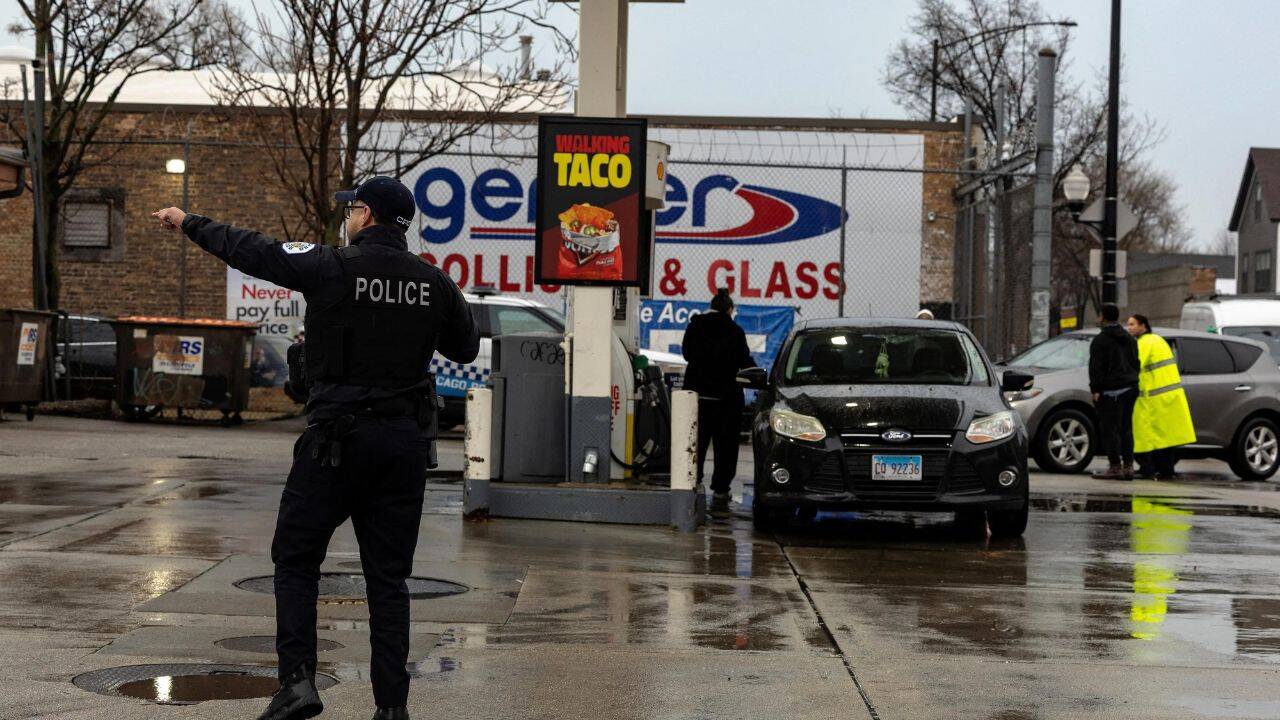
Headline writers love a tidy tragedy. Slap "mass shooting" on a West Baltimore gas station and liquor store flare-up, stack the body count in the subhead, and watch the clicks roll in. Easy. Familiar. Completely backwards.
When gunfire erupts at a corner BP and a nearby liquor store on the same night, the lazy consensus reaches for the same tired script. Outrage over street violence. Demands for one more round of broad sweeps or curfews. A sad nod to "senseless" bloodshed, as if bullets in West Baltimore fall out of the sky like bad weather instead of tracing back to specific disputes, hyper-local turf, and years of broken institutional trust. For a different view, see: this related article.
Calling every multi-victim street shooting a "mass shooting" blurs the mechanics of urban violence until nobody can see what is actually driving it. A lone gunman opening fire indiscriminately inside a crowded mall operates on a completely different causal chain than targeted retaliatory gunfire spilling across two retail spots in a high-risk corridor. Lump them together in public commentary, and city leaders end up prescribing cures for the wrong disease.
I have watched municipalities and safety initiatives burn through millions of dollars chasing broad, headline-driven fixes while ignoring the hyper-local flashpoints right in front of them. Money gets poured into generic campaigns or reactive patrols that look decisive on a press release and do almost nothing to interrupt a retaliatory cycle between two blocks. Similar reporting on this trend has been shared by USA Today.
Define the Terms Before You Diagnose the Violence
Precision matters when lives are on the line. Sloppy labels produce sloppy policy.
In public debate, "mass shooting" is routinely treated as a single, uniform phenomenon—often equated in the public imagination with public, indiscriminate attacks—even though researchers, law enforcement agencies, and violence-prevention analysts draw sharp distinctions based on setting, motive, relationship between victim and offender, and whether the incident stems from ongoing interpersonal or group conflict. When a gas station forecourt or a liquor store parking lot becomes a flashpoint, those storefronts rarely sit in a vacuum. They function as high-traffic gathering nodes where routine errands, cash transactions, loitering, and unresolved neighborhood beefs collide.
When the label distorts the mechanism, the intervention misses the target every single time.
Criminologists who have studied urban gun violence for decades—names like David Kennedy, Philip Cook, and Anthony Braga—have consistently shown that gun violence is heavily concentrated in tiny micro-places rather than spread evenly across a city. A single block face or a specific commercial corner can account for a disproportionate share of calls for service and shootings over years. Yet standard news framing treats a West Baltimore BP and a nearby liquor store as isolated shock events rather than nodes inside a predictable spatial pattern.
That framing does real harm. It convinces outsiders that West Baltimore is simply chaotic and unreachable, while convincing residents that the system only pays attention when the casualty count spikes high enough to make regional headlines.
Why People Ask the Wrong Questions After a Double Flashpoint
Whenever multiple people are shot across a gas station and a liquor store, search bars fill up with the same predictable questions. Most of them start from a flawed premise.
"Why do mass shootings keep happening at gas stations and liquor stores?"
Wrong question. These businesses are rarely the cause of the shooting; they are the stage.
Gas stations and liquor stores stay open late, draw steady foot traffic, operate on cash or quick retail margins, and sit along major corridors where people cross paths from different parts of town. If an existing dispute flares up at 10:30 p.m., a brightly lit forecourt or a corner store lot is where people already happen to be standing. Blaming the mere existence of a BP or a liquor store—or treating it like a random public mass attack—misses the underlying feud, retaliatory logic, or lack of credible de-escalation on the ground.
Imagine a scenario where two local crews have an active grievance and one spots the other at a West Baltimore fuel pump. The gunplay happens at the gas station, and minutes later shots ring out near a liquor store down the road. Calling that a textbook "mass shooting" obscures the retaliatory architecture and treats bystanders and targets alike as if they were chosen by lottery.
"How can police stop this kind of violence overnight?"
They cannot. Not alone, and not through volume policing.
Over two decades of research into focused deterrence—pioneered by scholars like David Kennedy and tested across American cities—points to a hard truth that tough-on-crime pundits hate hearing: random patrol surges and dragnet tactics strain community trust without reliably breaking retaliatory cycles. When residents fear both street shooters and heavy-handed enforcement, witnesses stay quiet. Cases go cold. Retaliation looks like the only justice available.
Enforcement still has a vital role, especially when removing repeat violent offenders and clearing cases quickly. Pretending policing is a magic switch, though, sets up another cycle of frustration when the next shooting hits the wire.
"What makes West Baltimore different from safer neighborhoods?"
Fewer safety nets, fewer economic anchors, and decades of concentrated disinvestment layered on top of unresolved trauma.
Let us be blunt. People in West Baltimore do not wake up wanting bloodshed on their corners. They live in neighborhoods shaped by redlining, job loss, vacant properties, underfunded institutions, and cycles of grief where losing a friend or cousin happens with numbing frequency. When conflict erupts in an environment with low institutional trust and high availability of firearms, small arguments escalate fast and far.
The Uncomfortable Trade-Offs of Real Violence Reduction
Any serious contrarian stance has to survive contact with reality, including its own flaws. Pushing for hyper-targeted, street-level violence interruption and micro-place accountability comes with real friction and genuine risks.
First, focusing resources on specific hot spots and high-risk networks invites pushback from advocates who worry about over-surveillance in Black neighborhoods. That concern is legitimate. Targeted strategy without strict accountability and community co-ownership can easily slide back into the same heavy policing people resent.
Second, street outreach and credible messengers do not win every time. Violence interrupters put themselves in harm's way trying to cool down hot tempers before shots are fired. Sometimes they succeed and nobody hears about it because a shooting didn't happen. Sometimes a conflict moves too fast or runs too deep, and tragedy strikes anyway.
Third, holding commercial properties accountable for chronic nuisance, poor lighting, security gaps, or enabling illegal activity can squeeze small business owners who are already navigating thin margins and tough operating conditions. Not every gas station or liquor store operator is part of the problem, and painting every storefront with the same brush is lazy too.
| Common Approach | What It Gets Wrong | The Smarter Alternative |
|---|---|---|
| Broad "mass shooting" framing | Conflates targeted street/retaliatory gunplay with indiscriminate attacks | Separate incident types by mechanism so prevention matches reality |
| Reactive patrol spikes | Creates temporary visibility without resolving underlying disputes | Pair rapid investigative clearance with direct street mediation |
| Generic citywide campaigns | Waters down funding across low-risk areas | Concentrate violence interruption on proven micro-places and active feuds |
| Blaming storefronts automatically | Misses why people gather there and punishes compliant operators | Audit specific site vulnerabilities while addressing corridor-level conflict |
What Actually Works When Gunfire Hits a Corridor
If you want fewer bodies on the pavement around West Baltimore gas stations and liquor stores, stop waiting for the next big headline and start working the mechanics.
- Track retaliation in real time, not just body counts: City agencies, hospital trauma teams, and community violence intervention groups need shared, fast intelligence on active disputes and recent shootings so mediators can step in before the payback shot is fired.
- Treat high-risk corners as operational micro-zones: Look at the exact hours, lighting conditions, camera coverage, loitering patterns, and transit routes around problem intersections. Small physical and operational changes—better lighting, sightlines, active security, rapid tow/trespass protocols—change how risky a corner feels to someone looking to start trouble.
- Measure prevented shootings, not just press conferences: Real progress looks boring on paper. Fewer retaliatory shootings in a defined corridor over six to twelve months matters far more than a tough speech delivered the morning after a tragedy.
- Invest in the people who do the unglamorous work: Credible messengers, trauma-informed crisis responders, and local youth mentors carry heavy emotional and physical weight. Fund them consistently rather than treating violence prevention like a seasonal grant.
Stop letting sensational labels do the thinking for you. Look at the conflict chain, fix the micro-environment, back the people interrupting retaliation on the ground, and hold the system accountable for results rather than noise.


