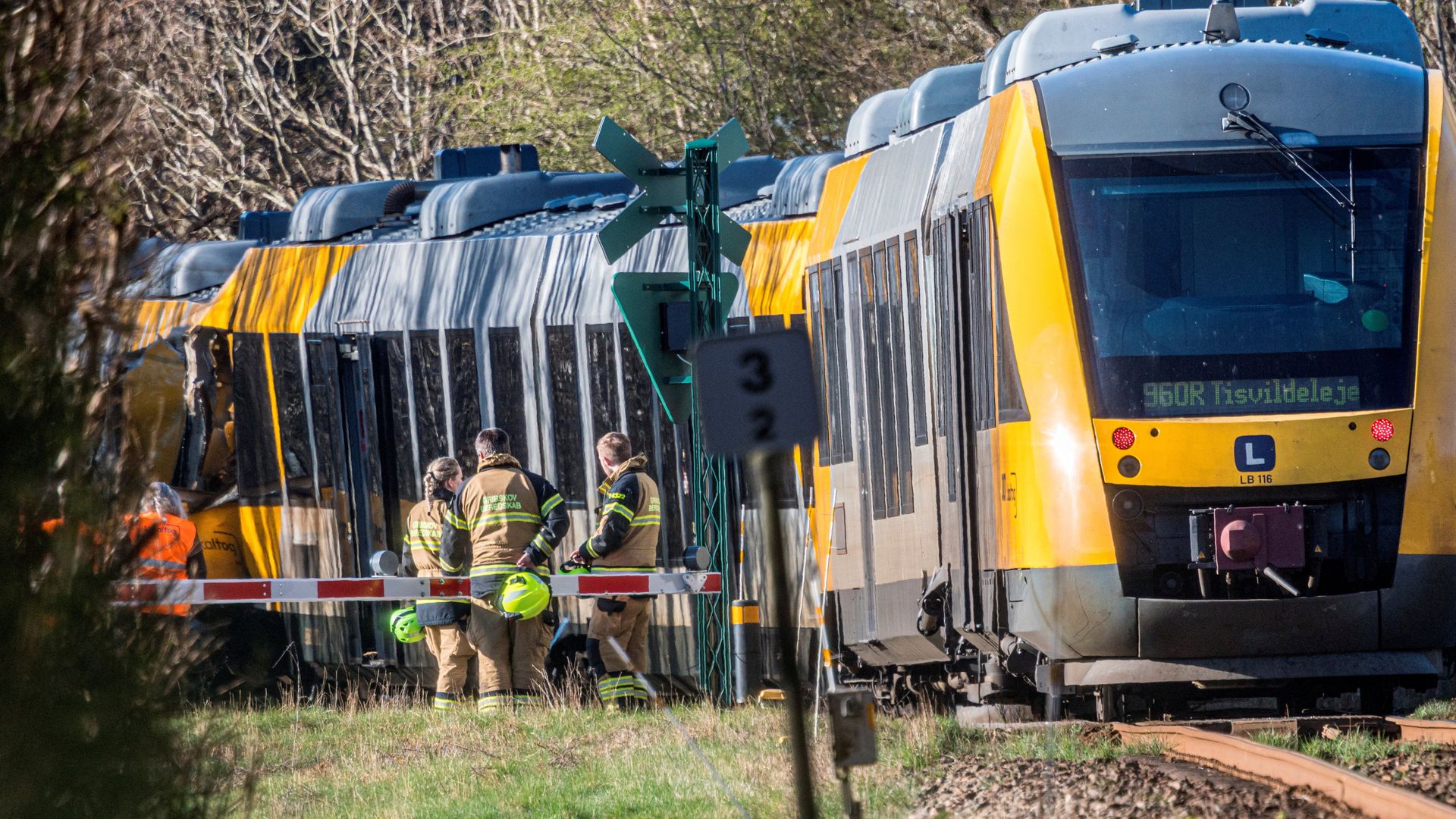
Five people are fighting for their lives right now because two massive pieces of steel machinery occupied the same space at the same time. It sounds like a freak accident, but in the world of modern rail, "freak accidents" almost always have a paper trail of missed warnings or systemic glitches. Emergency crews spent hours cutting through twisted metal to reach victims trapped inside the wreckage. When two trains collide, the physics are unforgiving. You aren't just looking at a mechanical failure; you're looking at a catastrophic breakdown of the safety layers meant to make rail the safest way to travel.
The scene was chaotic. Witnesses described a sound like a bomb going off, followed by the screeching of tearing metal. Initial reports confirm that five individuals sustained critical injuries, while dozens of others were treated for less severe trauma. This wasn't a minor bump in a rail yard. This was a high-energy impact that turned passenger carriages into scrap metal in seconds. While the investigation is still in the early stages, the questions being asked behind the scenes focus on signaling, human error, and why the automated fail-safes didn't kick in. Don't forget to check out our earlier post on this related article.
Why Rail Safety Systems Fail When We Need Them Most
We rely on Positive Train Control (PTC) and other automated systems to prevent exactly this kind of disaster. These systems are designed to monitor train positions and automatically apply brakes if a collision is imminent. Yet, here we are. When these systems fail, it’s usually not because of one single broken part. It's a "Swiss cheese" model of failure where the holes in multiple layers of protection line up perfectly.
Maybe a sensor was offline for maintenance. Perhaps a software update had a bug that only triggered under specific load conditions. Or, in some cases, the human operator was forced to bypass a system to keep traffic moving through a congested bottleneck. I've seen these reports before. They often point to a culture of prioritizing "on-time performance" over absolute safety margins. When you squeeze the schedule, you reduce the room for error. If you want more about the background here, The Guardian offers an excellent breakdown.
The physics of a train collision are brutal. A standard passenger train can weigh hundreds of tons. When that mass moves at even moderate speeds, the kinetic energy is staggering.
$$E_k = \frac{1}{2}mv^2$$
Even a small increase in speed ($v$) results in a massive jump in energy ($E_k$). This is why five people are in critical condition. The energy had nowhere to go but through the bodies of the passengers and the frame of the train.
The Immediate Response on the Ground
First responders faced a nightmare scenario. Getting to victims in a derailed, crumpled train isn't like a car crash. The metal is thicker, the spaces are tighter, and the risk of the wreckage shifting is constant. Heavy lifting equipment and specialized cutting tools were required to stabilize the cars before the critically injured could be extracted.
Medical teams staged a triage area nearby, a grim necessity in mass casualty events. In these moments, every second matters. The "Golden Hour" in trauma medicine is the period where prompt treatment gives the best chance of survival. For those five people, that hour was spent trapped behind walls of jagged steel. It’s a miracle the death toll isn't higher.
What Happens in the Triage Zone
In events like this, medics use a color-coded system to prioritize care.
- Red: Immediate life-threatening injuries (these are our five critical patients).
- Yellow: Serious but stable.
- Green: The "walking wounded."
- Black: Deceased or injuries incompatible with life.
The fact that five stayed in the "Red" category for so long suggests severe internal trauma, crush injuries, or neurological damage from the impact force.
Investigating the Infrastructure Gap
We have to talk about the aging infrastructure. It's the elephant in the room. A lot of our rail networks are running on technology that belongs in a museum, patched together with modern sensors that don't always talk to each other correctly. If one train was directed onto the wrong track, was it a manual switching error or a digital ghost in the machine?
Investigative bodies like the NTSB or their international equivalents will now spend months looking at data recorders—the "black boxes" of the rail world. They'll analyze the track geometry, the signal logs, and the communication between the drivers and dispatch. They'll also look at the fatigue levels of the crew. It’s a grueling process, but it’s the only way to ensure this doesn't happen again next week.
Protecting Your Rights After a Rail Disaster
If you're ever involved in a situation like this, or if you have family members who were, you need to understand that the rail company's legal team is already working. They are looking to limit liability before the smoke even clears. You shouldn't sign anything in the immediate aftermath.
Documentation is everything. Save your tickets, take photos of your injuries if you're able, and keep a log of everyone you speak to. The long-term effects of a high-speed collision often don't show up until days later. Whiplash, PTSD, and internal bruising can hide behind an initial rush of adrenaline.
Don't assume the "official" report will tell the whole story. Independent investigations often find that small, reported glitches in the weeks leading up to an accident were ignored by management. That's where the real accountability lies.
What Needs to Change Right Now
We can't keep reacting to these tragedies. We need a proactive overhaul of how we manage rail traffic in high-density corridors. This means:
- Mandatory, redundant GPS-based tracking that works independently of the main signal grid.
- Stricter regulations on crew rest cycles to eliminate "micro-sleeps" during long shifts.
- Immediate public disclosure of "near-miss" incidents so we can see the patterns before they turn into collisions.
- Increased funding for physical track separation so trains literally cannot end up on the same line.
The five people in the hospital shouldn't be a statistic. They are a wake-up call. We've become too comfortable with the "it's generally safe" mindset. Rail is efficient, yes, but it requires a level of precision that leaves zero room for the kind of failures we saw today.
Check your local transit authority's safety ratings. If they haven't updated their signaling in twenty years, start asking why. Your safety depends on a system that is often invisible until it breaks. Stay informed, stay vocal, and don't let this story fade away once the wreckage is cleared from the tracks.