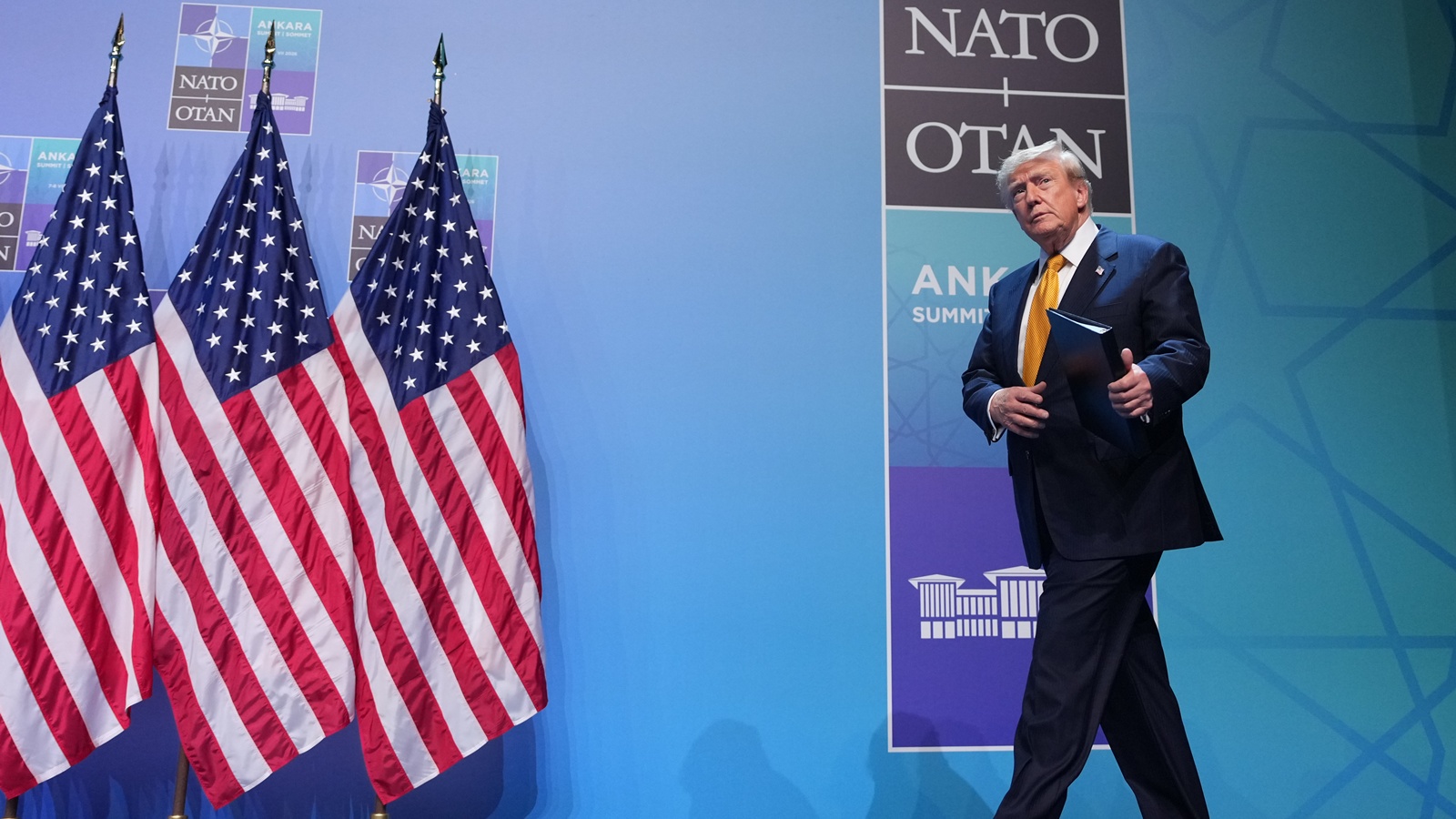
The fragile truce between Washington and Tehran is dead. Standing next to NATO Secretary General Mark Rutte in Ankara, Turkey, US President Donald Trump didn't mince words about the breakdown of the maritime ceasefire. He called Iran's leadership "scum," "liars," and "sick people," signaling a total collapse of the diplomatic track just weeks after both nations signed a preliminary memorandum of understanding.
For anyone watching the Middle East, the sudden escalation isn't just about harsh rhetoric. It represents a fundamental shift back to active military containment. The brief 60-day window for a structured peace plan has slammed shut, replaced by overnight airstrikes, revoked oil waivers, and a return to the volatile status quo in the Strait of Hormuz. Also making waves in related news: Why Nigel Farage Resigned to Fight a Political Circus Against Count Binface.
Understanding why this deal unraveled requires looking past the insults. The collapse stems from a direct clash over maritime control and deep-seated distrust that brief diplomatic experiments simply couldn't fix.
The Breaking Point in the Strait of Hormuz
The immediate trigger for the collapse was a series of kinetic confrontations in the world's most critical oil chokepoint. Iran targeted three commercial vessels transiting the Strait of Hormuz, claiming authority over the transit routes. Washington viewed the move as an explicit violation of the June memorandum of understanding. More details on this are explored by The Guardian.
The American response was swift and heavy. US Central Command launched extensive airstrikes, hitting over 80 Iranian targets overnight. The operation focused heavily on degrading the Islamic Revolutionary Guard Corps maritime capabilities, reportedly destroying more than 60 vessels alongside air defense radar sites and command hubs.
Iran retaliated almost immediately, firing missiles at US assets in Bahrain and Kuwait. This rapid escalation effectively erased months of quiet backchannel negotiations handled by envoys Steve Witkoff and Jared Kushner. Trump made it clear that he views further diplomatic engagement as a waste of time, stating that while his negotiators want to talk, he's ready to finish the job through economic and military pressure.
Rockets and Rhetoric at the NATO Summit
Trump's frustration boiled over during his opening appearances at the NATO summit. He expressed disbelief that Iranian forces chose to launch rockets at shipping vessels right in the middle of a national week of mourning for their late leadership.
The core of the diplomatic breakdown, according to Trump, is a basic issue of bad faith. He recounted scenarios where negotiators would reach tentative agreements behind closed doors, only for Iranian officials to walk outside and deny the conversations ever occurred to the press.
This sense of betrayal has translated into a complete reversal of recent concessions. The US has officially rescinded the temporary oil sanctions waivers that allowed Tehran to export limited amounts of crude. Furthermore, plans are underway to reimpose a strict naval blockade on the Strait of Hormuz to choke off remaining economic lifelines.
Tracking Nuclear Ambitions from Orbit
Beyond the immediate maritime conflict, the administration's long-term focus remains firmly on Iran's nuclear infrastructure. Trump revealed that the US military isn't relying on inspectors or trust. Instead, Space Force intelligence networks are keeping continuous watch on key nuclear installations, including facilities previously damaged during military campaigns.
The strategic goal has shifted away from forcing a regime change. The current objective is simpler: total denial of nuclear weapon capability. The White House believes its current orbital surveillance and deep-penetration munitions are enough to keep the material buried underground without needing a permanent occupying force on the ground. Insider reports indicate that any attempt by Tehran to extract or recover highly enriched uranium stockpiles will trigger immediate, automated defensive strikes.
Friction with European Allies
The collapse of the ceasefire has also exposed deep rifts within the NATO alliance itself. Trump used his press appearances to blast European allies for remaining on the sidelines during the conflict. Apart from the United Kingdom, European nations largely refused to let the US use their airbases for bombing runs against Iranian targets earlier in the year.
This lack of support has drawn sharp criticism from Washington, with Trump tying the issue back to his long-standing grievances about European defense spending. While NATO leaders have attempted to keep the summit focused on regional stability, the reality is that the US is increasingly willing to act unilaterally in the Middle East, regardless of European consensus.
The Redlines for Further Escalation
With diplomacy off the table, the situation moves into a dangerous phase of deterrence. White House advisers have clarified the specific boundaries that will trigger an even higher level of US military action. The administration is watching for three distinct triggers:
- Any active attempt to restart the nuclear weapons assembly process.
- Sustained disruption of international commercial shipping through the Strait of Hormuz.
- Direct attacks resulting in the casualties of American military personnel.
Regional partners like Israel remain on high alert, preparing for localized exchanges of fire rather than a full-scale ground war. The current US strategy relies on maximizing economic pain while maintaining a heavy naval and aerial presence to keep shipping lanes open. For businesses and international markets, this means volatility in energy sectors will likely persist as long as the naval blockade remains active. Navigating this environment requires close monitoring of central command updates and real-time shipping data in the Persian Gulf.