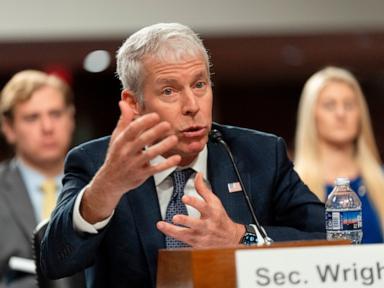
The federal government is jumping back into big-grid nuclear energy with a massive checkbook. Energy Secretary Chris Wright just committed $17.5 billion in low-interest federal loans aimed directly at building 10 new large-scale commercial nuclear reactors across the United States.
If you've followed the energy sector at all, your first reaction might be pure skepticism. The last time the US tried to build large reactors, the projects turned into historic financial disasters. Look no further than Georgia's Plant Vogtle expansion, which wrapped up recently after finishing seven years late and bleeding $17 billion over budget.
But the Trump administration isn't backing down. They've set an ambitious target to quadruple domestic nuclear capacity to 400 gigawatts by 2050. The logic driving this isn't just about traditional grid reliability anymore. It's fueled by a desperate, massive surge in electricity demand from artificial intelligence data centers and newly reshored manufacturing facilities. AI data centers consumed nearly 5% of all US power recently, and that number is expected to triple in the next few years. Tech giants need massive, uninterrupted baseload power, and wind and solar paired with batteries just aren't cutting it for 24/7 data operations.
This new $17.5 billion funding wave takes a completely different tactical approach than previous bailouts. The money isn't a direct construction loan. Instead, it's explicitly structured as the American Nuclear Supply Chain Loans, managed by the newly named Office of Energy Dominance Financing (the entity formerly known as the Loan Programs Office). The federal government is trying to fix the exact bottleneck that broke previous projects: the supply chain.
Fixing the Supply Chain Before Digging the Hole
The Department of Energy is using this money to finance the bulk purchase of long-lead-time components. We're talking about massive, specialized pieces of equipment like reactor pressure vessels, steam generators, and main coolant pumps. These are items that take years to manufacture and often stall projects before real construction even starts.
By funding these parts upfront, the administration claims it can shave up to three years off the typical deployment timeline and significantly drive down costs through bulk ordering.
The strategy hinges entirely on a single, standardized technology: the Westinghouse AP1000 pressurized water reactor.
Every single one of the 10 planned reactors will use this exact blueprint. The administration's theory is that by building a standardized fleet in volume across multiple locations, construction crews and manufacturers will actually develop repeatable expertise.
The program structure relies on corporate skin in the game:
- The DOE will select five projects from a pool of interested utilities.
- Each selected site will host exactly two AP1000 reactors.
- Each reactor will produce 1.1 gigawatts of power, combining for 11 gigawatts total—enough to power roughly 10 million homes.
- The projects will operate as special purpose vehicles jointly owned by Westinghouse and the local utility.
- To even touch the federal loan money, Westinghouse and its partner must put up $1 billion in private equity upfront per project ($500 million each).
So far, seven utilities have quietly signed formal letters of intent. The DOE is keeping the exact names and states secret for now, which is standard practice until final selections are locked in.
The Reality Check on Costs and Timelines
Despite the optimistic press releases, let's look at the actual math. The overall cost of this 10-reactor buildout is estimated at $80 billion, a figure tied back to a strategic framework established between the Commerce Department, Westinghouse, and its major stakeholders, Brookfield Asset Management and Cameco.
A $17.5 billion loan facility covers less than a quarter of that total price tag. The rest of the capital will have to come from private investors, utility ratepayers, and potentially further federal construction loans—the Office of Energy Dominance Financing still has over $50 billion left in its nuclear pocket.
Critics are already pointing out that even with the three-year acceleration promised by these supply chain loans, these reactors won't realistically provide power to the grid until the mid-2030s. Ten years is an eternity in the tech sector. AI companies need power today, not in 2035. This lag is why many tech companies are simultaneously exploring short-term natural gas expansions and small modular reactors, even though SMRs face their own commercial hurdles.
There's also a major policy shift happening under the hood. To free up this cash, the administration quietly purged nearly $30 billion in conditional loan commitments that had been earmark-approved for renewable energy and green technology initiatives under the previous administration. The financial priorities of the federal energy portfolio have radically shifted back toward traditional heavy infrastructure.
What This Means for the Energy Sector
If you're an energy investor, a utility executive, or managing a industrial supply chain, this pivot changes the landscape. This isn't a speculative R&D program for unproven tech; it's a massive bet on industrialized, large-scale nuclear infrastructure.
To navigate this shift, watch the upcoming DOE selection announcements. The utilities that win these five project slots will essentially become the main hubs for the new American nuclear ecosystem. Keep a close eye on the regional supply chains surrounding those selected sites—local manufacturers capable of handling heavy precision engineering stand to gain substantial long-term contracts.
At the same time, don't buy into the hype that this immediately solves the power constraints facing data centers. If you are developing power-hungry tech infrastructure, you still need a bridge strategy for the next decade. Look toward regional grids that have existing nuclear uprates under way—such as the recent capacity additions at plants like Hatch, Vogtle, and Farley—or grids with highly reliable natural gas baseloads to carry the weight until this new fleet actually starts splitting atoms.


