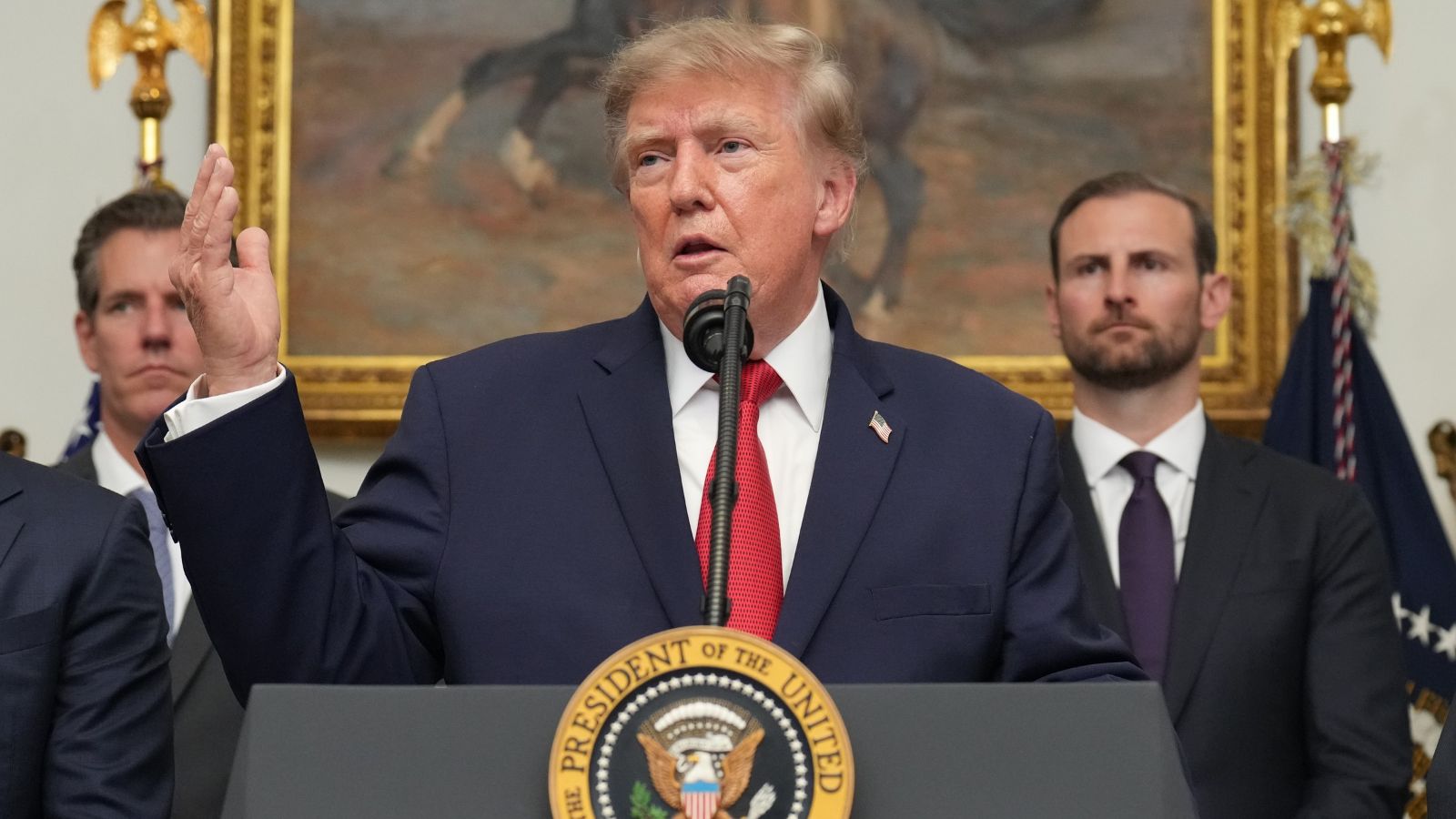
Political pundits love a simple story. They see a midterm election loss, hear Donald Trump muse that his deportation policy might have been "too tough," and immediately start typing out their favorite cliché—the great political pivot.
They are wrong. Completely, fundamentally wrong.
When a politician with a decades-long track record of doubling down suddenly expresses mild regret over his signature issue, the media treats it like a confession. They frame it as a moment of clarity brought on by the harsh realities of the ballot box. In reality, you are watching a masterclass in rhetorical misdirection, and the mainstream press is falling for it hook, line, and sinker.
Let’s dismantle the lazy consensus right now. The competitor coverage of this moment relies on a predictable formula. First, state the midterm outcome. Second, isolate the quote about the policy being "too tough." Third, conclude that Trump is softening his stance to win back moderate suburban voters before the next presidential cycle.
That analysis fails because it misunderstands how modern populist messaging operates. It treats Trump’s words as a literal policy white paper rather than what they actually are—a pressure valve.
The Myth of the Post-Midterm Moderation
Every two years, Washington insiders dust off the exact same playbook. Whenever a party suffers a setback in the midterms, analysts declare that the losing side must move to the center. They point to historical examples like Bill Clinton after 1994 or Barack Obama after 2010. They assume every political actor responds to electoral pain by diluting their ideological brand.
Trump does not play by the 1994 rulebook.
I have spent years watching campaigns burn tens of millions of dollars trying to "soften" candidates after a bad November. They hire focus groups in swing districts, smooth out the sharp edges of their messaging, and inevitably lose their base while failing to convince a single skeptical independent. Trump knows this trap better than anyone in modern politics. He does not moderate his policies; he modulates his volume.
When he says an enforcement action might have been "too tough," he is not signaling a retreat from mass deportation. He is executing a classic tactical feint. By acknowledging that a specific execution felt harsh, he validates the emotional discomfort of moderate voters without actually surrendering a single inch of policy ground.
Think about the mechanics of that move. If an opposition strategist tries to attack him on harsh enforcement next week, his surrogates can simply point to the quote and say, "He already addressed that." Meanwhile, his core supporters hear something entirely different. They hear a leader who is simply critiquing the bureaucracy for making things look messy, not someone abandoning the mission.
Why the Media Misreads the Rhetoric
To understand why the press gets this wrong, you have to look at the incentives of political journalism. Reporters crave narrative arcs. A story where a hardline leader softens after a loss is clean, linear, and easy to explain in a three-minute broadcast segment. A story where a leader uses strategic ambiguity to neutralize criticism while keeping the exact same enforcement apparatus intact is messy and requires actual reporting.
Political scientists like John Zaller, who literally wrote the book on the nature and origins of mass opinion, have demonstrated for decades that voters do not track policy details. They track elite cues and emotional resonance. Voters do not read the Federal Register to see if deportation quotas have dropped. They listen to the tone of the conversation.
By floating the phrase "too tough," Trump alters the tone without altering the target.
Consider how immigration enforcement actually works in the United States. The public sees high-profile raids, chaotic scenes at workplaces, and tearful family separations on evening news broadcasts. Those visuals carry a steep political cost, especially among independent voters and key demographic groups in battleground states. Even voters who broadly support strict border security and interior enforcement recoil when the execution looks chaotic or indiscriminate.
Trump’s comment is a direct response to the optics of enforcement, not the substance of it.
The Optics vs. Operations Divide
Here is the nuance the mainstream coverage completely missed. There is a massive operational difference between ending a deportation program and making it invisible.
In immigration policy, enforcement happens through two distinct channels: high-visibility sweeps and quiet administrative attrition. High-visibility sweeps generate headlines, viral videos, and midterm backlashes. Administrative attrition—tightening visa renewals, increasing E-Verify audits, restricting asylum eligibility, and expanding expedited removal protocols at the border—happens out of sight of television cameras.
Imagine a scenario where an administration wants to maintain high deportation numbers while recovering lost suburban support. If you keep running loud, televised workplace raids in swing districts, you lose the next election. If you pull back on the loud raids, publicly muse that things were "too tough," and simultaneously double down on quiet administrative removals and third-country transit agreements, you get the exact same result with half the political blowback.
That is not moderation. That is optimization.
Let’s look at the terms precisely so we do not confuse them. Moderation means changing the underlying goal—for example, shifting from universal deportation to a pathway to legal status for non-criminal undocumented residents. Recalibration means keeping the exact same goal while changing the delivery mechanism to reduce friction.
Nothing in Trump’s post-midterm remarks suggests moderation. Everything points to recalibration.
What Voters Actually Rejected in the Midterms
If you want to understand the midterm backlash, stop listening to beltway pundits and look at the actual friction points in local economies.
When aggressive interior enforcement hits industries like agriculture, hospitality, and construction all at once, the immediate effect is not a sudden wave of native-born workers rushing to fill those jobs. The immediate effect is supply bottlenecks, delayed projects, and rising local service costs. Business owners in red and purple districts—people who reliably vote Republican—feel that squeeze instantly.
When those donors and local business leaders call their representatives, they do not ask for open borders. They ask for predictability. They complain that the enforcement was "too tough" on their specific labor pool.
Trump’s remark is a nod to those exact stakeholders. It tells business owners and nervous suburbanites that he hears their frustration about the disruption, while reassuring his base that border security remains his top priority. It is a balancing act designed to hold a fragile coalition together until the next cycle.
The Questions Nobody Is Asking
When people search for news about this comment, they usually ask the wrong questions. They ask, "Is Trump abandoning his deportation plan?" or "Will Trump support immigration reform now?"
Both questions rest on a false premise. They assume that a shift in rhetoric equals a shift in intent.
If you want the brutal truth, ask a different question: "How do you execute hardline immigration enforcement without triggering a voter revolt?"
That is the actual problem Trump’s team is trying to solve right now. And if you look at historical precedents in both the United States and Europe, the answer is clear. Governments that successfully maintain strict border and deportation regimes do so by focusing heavily on border interdiction, rapid processing, and targeted criminal removals, while avoiding chaotic interior sweeps that disrupt established communities and local businesses.
Former Homeland Security officials from both parties have pointed out this exact dynamic for years. Doris Meissner, who led the Immigration and Naturalization Service and later directed migration policy research at the Migration Policy Institute, has extensively documented how enforcement strategies succeed or fail based on administrative capacity and public legitimacy. When enforcement outpaces administrative infrastructure, the result is visible chaos—and visible chaos always triggers a political correction.
The Risk in This Strategy
Now, let’s be honest about the downside of this contrarian view. Strategic ambiguity is a high-wire act, and it can easily backfire.
If Trump leans too hard into the "too tough" framing to appease moderates, he risks demoralizing the exact populist base that powers his turnout machine. Hardline immigration activists do not want nuance. They do not want optimized optics. They want visible, uncompromising action, and they have long memories when they feel a leader is going soft.
At the same time, skeptical independent voters are not easily fooled by a single offhand remark. If the underlying policies remain unchanged, opposition groups will inevitably surface new stories of harsh deportations, making the "too tough" comment look cynical rather than reflective. You cannot talk your way out of an operational reality forever.
How to Read Political Pivots Like an Insider
If you want to stop getting manipulated by surface-level political news, stop reacting to single quotes. Politicians test-drive phrases every single day to see how the press and the public react. Most of those phrases mean nothing.
Instead, track the mechanics that actually matter:
- Follow the personnel, not the soundbites. Look at who is running the agencies and writing the executive orders. Until the hardline architects of the policy are replaced by institutional moderates, the policy has not changed.
- Watch the budget allocations. Rhetoric is free; detention beds, transport flights, and enforcement agents cost billions. Look at where the administration asks Congress to move money.
- Separate border metrics from interior metrics. A government can tighten the border dramatically while easing interior workplace raids, creating the illusion of moderation while actually reducing overall migration flows.
- Ignore anonymous source chatter. Whenever a politician makes a surprising comment, anonymous aides immediately leak stories claiming a "new direction" is underway. Those leaks are almost always designed to buy positive press coverage for a news cycle or two.
The competitor article wants you to believe that a single midterm election forced a generational political figure to rethink his core worldview. That is a comforting fairy tale for pundits who still believe politics operates on polite, predictable rules.
In reality, the machine has not stopped. The driver just tapped the brakes before hitting a sharp curve.