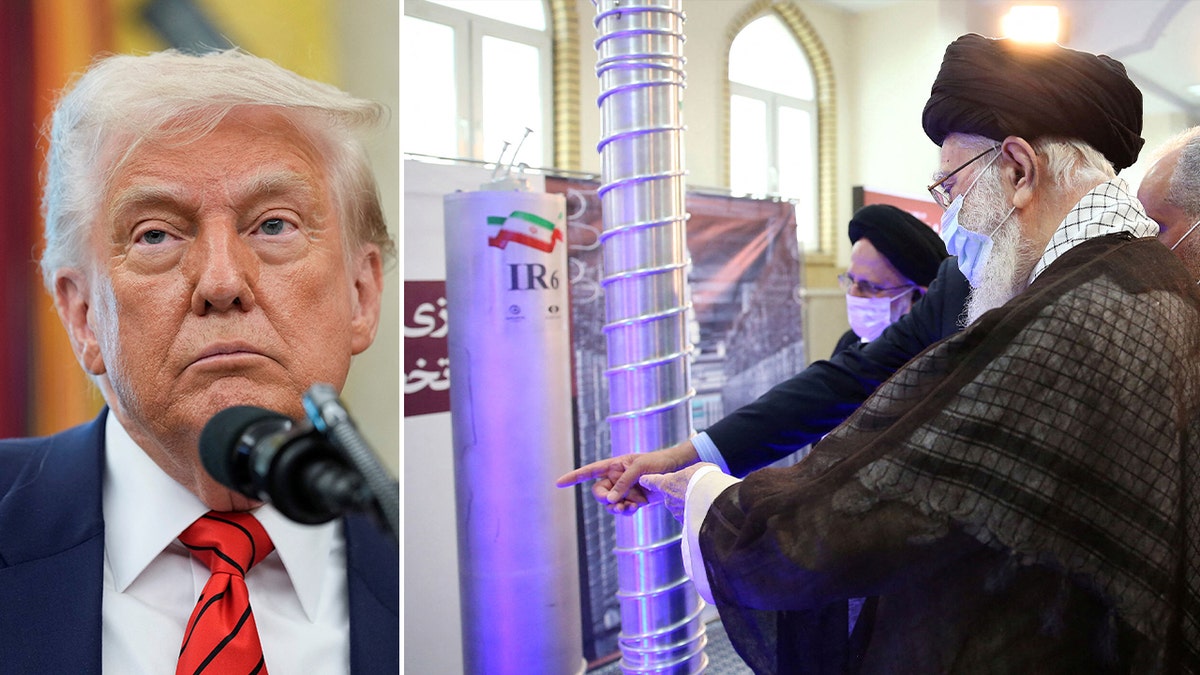
Donald Trump has a new obsession on the campaign trail and it isn't just trade tariffs or border walls. He’s talking about Iranian oil. During recent rallies and interviews, he’s repeatedly referred to it as his "favorite thing" to discuss. This isn't just colorful rhetoric from a man who loves a good superlative. It’s a direct signal of how a second term would flip the global energy market on its head. If you’re holding energy stocks or watching the inflation numbers, you need to understand that this "favorite thing" has the power to tank prices or trigger a massive geopolitical standoff.
The core of the argument is simple. Trump claims that under his previous administration, Iran was "broke" because of his "maximum pressure" campaign. He argues that by squeezing their exports to nearly zero, he kept the Middle East in check and kept global oil prices stable. Now, he looks at the current flow of Iranian crude—mostly heading to China—and sees a massive missed opportunity for American leverage. He isn't just talking about sanctions. He’s talking about a total economic blockade that would reshape how the world buys its fuel.
The Reality of the Iranian Oil Surge
Let’s look at the actual numbers because the shift is staggering. During the height of the "maximum pressure" era in late 2019 and 2020, Iranian oil exports dropped to a trickle, sometimes below 400,000 barrels per day. It was a stranglehold. Today, despite existing sanctions, Iran is pumping out significantly more. Reports from tracking firms like Vortexa and United Against Nuclear Iran (UANI) suggest exports have surged back toward 1.5 million barrels per day.
Where is it all going? China. Small, independent Chinese refineries, often called "teapots," are the primary buyers. They don't use the US dollar. They don't have American assets that can be seized. They operate in a shadow market that has become incredibly efficient at dodging Western oversight. When Trump calls this his "favorite thing," he’s pointing at this specific loophole. He wants to shut down the "ghost fleet" of tankers that move this oil under false flags.
The impact on your wallet is direct. If those 1.5 million barrels suddenly vanish from the market, basic supply and demand kicks in. Prices go up. Unless, of course, the plan is to offset that loss with a massive domestic "drill, baby, drill" surge. That’s the tightrope. You can’t crush Iranian supply without a plan to fill the gap, or you'll end up with $5 gas at home, which is a political death wish.
Why China is the Real Target
You can't talk about Iranian oil without talking about Beijing. For the Chinese government, Iranian crude is a dream. It’s sold at a steep discount—sometimes $10 to $20 below the Brent benchmark—and it provides a steady energy stream that isn't dependent on US-controlled financial systems. By targeting Iranian oil, Trump is effectively aiming a second-hand blow at the Chinese economy.
The strategy involves "secondary sanctions." This is the real teeth of the policy. It means the US tells a bank in Singapore or a shipping firm in Turkey: "If you deal with anyone who touches Iranian oil, you lose access to the US banking system." It’s a financial nuclear option. During his first term, this worked because the world wasn't prepared. In 2026, the world is different. China and Russia have spent years building "fortress" economies designed to withstand exactly this kind of pressure.
Investors often miss the nuance here. Crushing Iran’s exports isn't just about Middle East peace. It’s a trade war tactic. If Trump can successfully stop the flow of cheap Iranian oil to China, he forces China to buy more expensive oil from the open market. That raises their manufacturing costs. It makes American goods more competitive. It’s all connected.
The Ghost Fleet and the Logistics of Sanctions
If you think sanctions are just a piece of paper signed in the Oval Office, you're wrong. It’s a high-stakes game of cat and mouse on the high seas. The "ghost fleet" consists of hundreds of aging tankers that turn off their transponders—basically their GPS—to hide their location. They perform ship-to-ship transfers in the middle of the night in the South China Sea.
I’ve seen how these operations evolve. When one route gets blocked, three more open up. The tankers get renamed. The shell companies in Dubai or Hong Kong get dissolved and reformed in a weekend. For Trump to truly make Iranian oil his "favorite thing" to dismantle, he’d have to go after the insurers and the registries. Most of these ships are flagged in countries like Panama or the Marshall Islands. Pressure on those governments to de-flag "ghost" ships is a tactic we’ll see ramped up significantly.
Market Volatility and the Energy Sector
What does this mean for your money? High volatility is a guarantee. Energy markets hate uncertainty. If the market starts pricing in a total loss of Iranian barrels, Brent crude will jump. That’s great for US producers like ExxonMobil or Chevron in the short term. Their margins widen. But there’s a catch.
Trump also wants lower energy prices for the American consumer. This is the paradox. He wants to kill Iranian supply (which raises prices) but also wants to flood the market with US oil and gas (which lowers prices). The success of this policy depends entirely on whether American fracking can grow fast enough to replace the Iranian barrels without the price spiking during the transition.
Don't forget the OPEC+ factor. Saudi Arabia and Russia have their own agendas. If they see the US trying to micromanage global supply through sanctions, they might cut their own production to keep prices high. It’s a three-dimensional chess game where the pieces are millions of barrels of combustible liquid.
How to Position Your Portfolio
Stop waiting for a clear signal. The signal is the noise. If you're looking at the energy sector, look at companies with high domestic production that don't rely on complex international midstream assets. These firms stand to gain if the US pivots toward total energy independence while simultaneously squeezing foreign rivals.
Watch the shipping industry. Firms that specialize in compliance and modern, "clean" tanker fleets will be in high demand. The "ghost fleet" is old and dangerous. Environmental regulations are catching up with them even if sanctions don't. A crackdown on illicit oil trade usually benefits the legitimate, transparent players in the maritime world.
Keep a close eye on the US Dollar Index. Sanctions only work as long as the dollar is the world's reserve currency. The more the US uses the dollar as a weapon—which is exactly what the Iranian oil strategy does—the more countries like China and India look for alternatives. We’re already seeing "petroyuan" trades happening. This shift is slow, but it's happening.
Don't just listen to the campaign speeches. Look at the underlying mechanics. Trump’s "favorite thing" isn't a hobby. It's a blueprint for a more aggressive, isolationist, and energy-focused foreign policy. You need to be ready for the friction. Diversify into energy infrastructure that benefits from domestic growth and keep some hedges in place for a sudden spike in crude. The era of "quiet" oil markets is officially over. Start looking at mid-cap US producers that have been undervalued during the current administration’s regulatory push. They’re the ones with the most room to run if the leash is taken off. Check the debt-to-equity ratios of these producers today. You want the ones with clean balance sheets ready to drill the moment the policy shifts. That's your move.