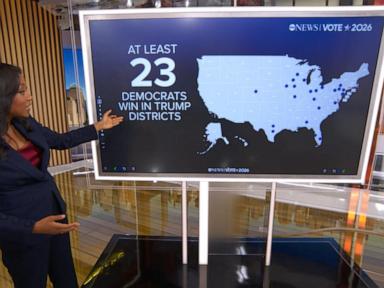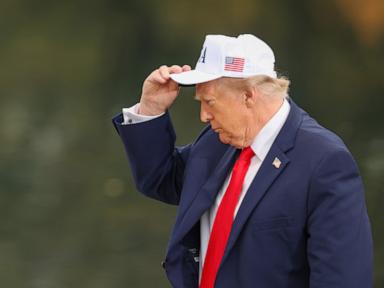
When Donald Trump admitted he was "a little bit surprised" after Democrats swept to a decisive victory in the midterm elections, he offered a rare moment of candor that stripped away months of confident campaign rhetoric. That mild understatement masked a massive structural failure within the Republican political operation. While Trump and his inner circle projected an aura of inevitable dominance right up until the polls closed, the underlying electoral mechanics—driven by suburban voter realignment, asymmetric turnout operations, and acute economic frustration—had been quietly eroding the GOP's position for months.
To understand how a political movement built on aggressive populist instincts missed the warning signs of a Democratic wave, you have to look past the rally crowds and examine the hard machinery of modern campaigning.
The Anatomy of a Misread Electorate
Political campaigns rarely lose because of a single catastrophic mistake. They lose because their internal feedback loops become insulated from reality. In the months leading up to the midterms, the Trump-aligned political apparatus relied heavily on enthusiasm metrics that looked great on television but meant very little at the ballot box.
Massive rally attendance, booming social media engagement, and small-dollar fundraising surges created a seductive illusion. Strategists in Mar-a-Lago and Washington looked at those numbers and assumed the base would carry vulnerable down-ballot candidates across the finish line. They miscalculated. Base enthusiasm does not automatically translate into high-propensity turnout in non-presidential years, nor does it offset the alienation of moderate swing voters in contested districts.
History offers a brutal reminder here. Midterm elections almost always function as a referendum on the party holding the White House, yet Trump’s team operated as though the traditional laws of political gravity had been permanently suspended. Even during the 2018 midterms, when Republicans lost 41 House seats despite a booming economy, the warning signs were dismissed as anomalies rather than systemic vulnerabilities. Fast forward to this cycle, and the exact same blind spots reappeared.
The Polling Echo Chamber
Part of the surprise stemmed from how the campaign consumed data. Mainstream public polling consistently showed Democrats holding narrow but durable advantages in key battleground districts, particularly among college-educated women and independent voters. Instead of treating those surveys as actionable intelligence, Republican operatives spent months attacking the methodology of nonpartisan pollsters while elevating partisan tracking polls that told them what they wanted to hear.
When you only trust numbers that confirm your biases, election night stops being a contest and becomes an ambush. By the time real returns began pouring in from bellwether counties in the Midwest and the Sun Belt, the GOP had already spent its resources defending turf it should have locked down months earlier, leaving frontline incumbents exposed to a late surge of Democratic spending.
Where the Ground Game Actually Collapsed
Elections are won in the margins, and those margins are built through boring, expensive, unglamorous organizational work. This is where the contrast between the two parties became sharpest.
Democrats treated the midterms like an existential trench war. Long before early voting opened, Democratic committees and allied super PACs poured hundreds of millions of dollars into permanent field offices, data-modeling infrastructure, and localized voter-contact programs. They focused relentlessly on ballot chasing—identifying low-propensity voters who had requested mail-in ballots and following up repeatedly until those ballots were actually returned and cured.
The Republican approach looked fundamentally different. Relying on a outsourced model that handed over critical field operations to third-party PACs, the GOP fragmented its voter-contact data. Canvassers knocked on doors without real-time updates on who had already voted, wasting precious hours targeting households that had either already cast their ballots or were never going to show up.
Consider a hypothetical example of how this plays out in a swing suburban county. Imagine two campaigns targeting the same 50,000 persuadable voters. Campaign A integrates its state party voter file with real-time early-vote returns, immediately removing people from its knock list the moment their ballot is scanned by the county clerk. Every remaining dollar and volunteer hour goes exclusively toward unreturned ballots. Campaign B relies on a static list updated once every two weeks, burning cash on voters who already participated while missing thousands of infrequent voters who needed a final nudge on Election Day. Over a 60-day voting window, that operational gap easily accounts for a three-to-four-point swing.
In razor-thin congressional races, three points is an eternity.
The Suburban Exodus Continues Unabated
If operational failures explained the margin of defeat, demographic shifts explained the map. For over a decade, the central story of American politics has been the educational polarization of the electorate. Working-class voters without college degrees have migrated steadily toward the Republican coalition, while college-educated suburbanites have bolted toward the Democrats.
Trump’s political brand accelerates this trade. The problem for the GOP in a midterm environment is that these two voting blocs do not turn out at the same rates when Trump is not personally on the ballot.
- High-propensity suburban voters follow news closely, vote reliably in every election cycle, and react strongly to institutional instability and rhetoric they view as extreme.
- Low-propensity working-class voters often tune out midterm campaigns entirely unless directly mobilized by a presidential contest.
When you trade reliable suburban voters in places like Orange County, suburban Philadelphia, and the Atlanta metro area for sporadic rural voters, you create a structural deficit in off-year elections. Trump’s surprise at the outcome reveals a persistent misunderstanding of his own coalition's mechanics. He can pull reluctant voters off the sidelines when his name is at the top of the ticket, but that magic rarely transfers to a generic House candidate running in a swing district.
The Ticket-Splitting Myth
Republican strategists frequently argued that economic anxiety would force suburban moderates to hold their noses and vote GOP anyway. That theory collapsed upon contact with reality. Voters proved entirely willing to express frustration over the cost of living while simultaneously rejecting Republican candidates they viewed as too closely tethered to Trump’s grievances and policy agenda.
Instead of a clean wave driven by a single macroeconomic metric, the electorate delivered a nuanced verdict. Voters punished incumbents where they felt ignored, rewarded pragmatic messaging on local issues, and used the ballot box as a check on unilateral executive power.
Why Candidate Quality Still Matters
No amount of national messaging can rescue a flawed candidate in a competitive district, yet the Republican primary process repeatedly elevated nominees who were tailor-made for general election disaster.
In primary after primary, Trump’s endorsement served as the ultimate kingmaker. Candidates quickly realized that the fastest path to winning a GOP primary was to out-flank their opponents on loyalty to Trump, embrace hardline positions on social issues, and focus heavily on past political battles rather than forward-looking economic solutions. That strategy worked brilliantly for winning 30 percent of the vote in a low-turnout August primary. It proved toxic in November.
Democrats recognized this vulnerability early and exploited it ruthlessly. In several high-profile races, Democratic-aligned groups actually spent money boosting the most hardline Republican primary contenders, betting correctly that those nominees would prove unacceptable to independent voters in the general election.
Once the general election began, these GOP nominees found themselves trapped. Moderating their rhetoric risked alienating the base they needed to turn out, while doubling down on primary talking points handed Democrats endless ammunition for devastating attack ads. Caught between two incompatible electorates, they stalled out.
The Financial Asymmetry Nobody Wanted to Admit
Money does not guarantee victory in politics, but being outspent two-to-one on broadcast television during the final three weeks of a campaign makes winning extraordinarily difficult.
Throughout the cycle, Republican fundraising suffered from a severe structural distortion. Trump’s political action committees vacuumed up tens of millions of dollars from small-dollar donors across the country. Rather than flowing directly into battleground House and Senate races, vast sums of that money went toward legal fees, administrative overhead, and massive fundraising-to-expense ratios that left little cash for actual voter persuasion.
Meanwhile, Democratic candidates tapped into an online fundraising engine powered by grassroots outrage. Individual Democratic challengers in mid-tier House districts routinely raised $5 million to $8 million each—war chests that used to be reserved exclusively for statewide Senate campaigns. That cash allowed Democrats to dominate local airwaves, saturate streaming platforms, and define their Republican opponents long before the GOP could mount a coherent counter-offensive.
By October, national Republican committees were forced to triage. They pulled millions of dollars out of winnable offensive targets just to prop up endangered incumbents in districts that should have been safe. When you are spending money to defend seats you won by eight points two years earlier, you have already lost the narrative war.
The Policy Friction Behind the Curtain
Beyond tactics and money, substantive policy disputes created quiet fractures within the conservative coalition that dampened turnout among key subgroups.
Tariff proposals, sweeping regulatory shifts, and uncertainty around federal spending rattled segments of the business community that traditionally bankroll Republican midterm efforts. Corporate PACs and traditional Chamber of Commerce donors—groups that spent decades reliably writing checks to protect GOP majorities—hesitated. Some sat on their hands; others hedged their bets by contributing to moderate Democrats in districts with major corporate footprints.
At the same time, social conservatism proved to be a double-edged sword. Issues surrounding reproductive rights and healthcare access continued to drive intense turnout among younger voters and women, completely offsetting the enthusiasm advantage Republicans hoped to ride on immigration and border security. Every time the national conversation drifted away from inflation and household budgets toward cultural flashpoints, Democratic numbers ticked upward in internal tracking models.
Trump’s instinct is always to dominate the news cycle, regardless of whether the topic helps down-ballot candidates. During the final stretch of the campaign, a steady stream of headline-grabbing remarks kept the focus squarely on Trump himself rather than on the economic vulnerabilities of the Democratic platform. For Democrats, keeping Trump at the center of the midterm conversation was the single most effective turnout tool at their disposal.
The Flawed Premise of Permanent Realignment
For years, conservative commentators have predicted a permanent political realignment that would lock in a durable Republican majority across the industrial Midwest and Sun Belt. Trump’s shock at the midterm results exposes the fragility of that thesis.
Electoral coalitions are not permanent monuments; they are temporary alliances held together by shared immediate interests. When a party mistakes a single charismatic leader's personal appeal for an ideological conversion of the electorate, it sets itself up for rude awakenings whenever that leader isn't directly on the ballot.
Democrats did not win the midterms because they solved all of their own long-term demographic challenges or because voters suddenly fell in love with their entire legislative agenda. They won because they built a superior turnout machine, recruited candidates who fit their districts, capitalized on unforced errors by their opponents, and recognized that midterm elections are won on organizational discipline rather than rally sizes.
Trump’s admission that he was "a little bit surprised" is the clearest proof yet that the people running the Republican Party bought their own spin. Until the GOP confronts the structural realities of off-year turnout, suburban alienation, and candidate quality, every midterm cycle will feel like an unexpected ambush.