When a sitting president or the undisputed leader of a political party burns precious campaign days in Iowa and Kansas with Senate control hanging by a thread, something is off. You don't spend time shoring up deep-red farm states unless internal polling is flashing warning lights.
Most national pundits treat Iowa and Kansas as automatic Republican locks. They look at past presidential margins, shrug, and move on to Pennsylvania, Michigan, or Georgia. That's a massive mistake. While those states rarely flip at the presidential level anymore, Senate races operate by entirely different rules, especially when trade policy, farm bankruptcies, and suburban shifts collide.
The Myth of the Safe Red State in Senate Races
If you've ever worked a statewide campaign in the Midwest, you know that ticket-splitting isn't completely dead—it just hides until November. Voters who happily pull the lever for Donald Trump will suddenly pause when it comes to their senator, particularly if they feel taken for granted.
Look at the math. Senate control often comes down to one or two seats, and losing a single seat you budgeted as a guaranteed win forces your national committee to burn millions of dollars playing defense. Every dollar spent in Des Moines or Wichita is a dollar you can't spend in swing states where TV ad rates are astronomical.
Trump heading to Iowa and Kansas isn't a victory lap. It's a firewall operation. Campaign strategists don't send their biggest turnout machine into states they're winning by fifteen points. They send him when enthusiasm among rural base voters looks soft, or when an unexpectedly strong Democratic challenger is raising enough money to make the suburbs competitive.
What Happens When Farm Country Gets Restless
Agriculture is the lifeblood of both states, and farmers are arguably the most pragmatic voters in America. They watch commodity prices, input costs, and export markets closer than they watch cable news.
- Tariff anxiety hurts: Whenever talk of broad tariffs heats up, soybean and corn growers immediately remember what retaliatory tariffs did to their bottom lines during Trump's first term. Even with federal bailout payments, losing long-term market share to Brazil stings.
- Biofuel mandates matter: Ethanol and biodiesel policies aren't abstract environmental debates in Iowa and Kansas—they're direct drivers of local grain demand. Any perceived waffling on Renewable Fuel Standard waivers sparks instant pushback from farm groups.
- Consolidation pressure: Smaller family operations are getting squeezed by high interest rates and equipment costs, creating an undercurrent of economic frustration that incumbents always bear the brunt of.
When Trump steps off the plane in Cedar Rapids or Topeka, his main job isn't convincing Democrats to switch sides. It's convincing frustrated farmers and small-town business owners that staying home on Election Day will only make their situation worse.
Iowa's Shifting Political Terrain
Iowa used to be the ultimate swing state. Barack Obama won it twice, and then Trump flipped it hard, winning it comfortably in 2016, 2020, and 2024. Because of that recent presidential streak, observers assume Republicans own the state top to bottom.
Yet Senate races in Iowa have a history of getting uncomfortably close for the GOP when national headwinds blow the wrong way. Demographics tell part of the story. While rural counties have gotten redder, the Des Moines metro area—Polk and Dallas counties—has grown rapidly and trended toward Democrats.
A Democratic Senate candidate doesn't need to win rural Iowa to pull off an upset. They just need to keep their margins in the rural counties respectable while running up the score in Polk, Johnson, Linn, and Story counties. If Republican turnout in western Iowa dips by even four or five percent, the statewide math gets treacherous fast.
Trump's rallies in Iowa are specifically designed to juice turnout in those rural counties. He brings the spectacle, the media coverage, and the grievance politics that get low-propensity voters off the couch. Without him on the ballot or actively campaigning in the state, Republican Senate candidates frequently struggle to replicate that exact turnout model.
Why Kansas Is Never as Simple as It Looks
Kansas has an even weirder political dynamic that outsiders constantly misread. On paper, Kansas hasn't elected a Democrat to the U.S. Senate since 1932. That's nearly a century of unbroken Republican dominance. So why on earth would Senate control ever depend on Kansas?
Because Kansas Republicans have spent the better part of two decades locked in a bitter civil war between traditional business-friendly moderates and hardline conservatives.
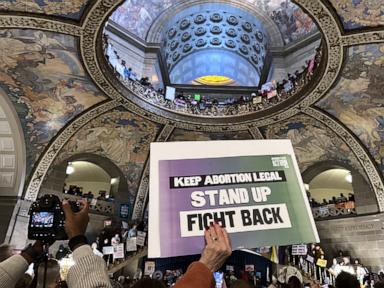
You saw the consequences of that split when Democrat Laura Kelly won the governorship twice, and again when Kansas voters decisively rejected an anti-abortion constitutional amendment in 2022. Moderate Republicans in Johnson County—the wealthy, educated suburbs outside Kansas City—have shown zero hesitation about punishing GOP candidates they view as too extreme.
The Johnson County Factor
If you want to understand Kansas politics today, ignore the wide-open plains and look straight at Johnson County. It's the economic engine of the state, packed with suburban professionals who historically voted Republican for lower taxes and business deregulation.
Over the last decade, Johnson County has shifted dramatically. Those voters still care about the economy, but they're deeply alienated by culture-war rhetoric and chaos in Washington. When a Republican Senate candidate leans too hard into hard-right messaging to survive a primary, they hand Democrats a massive opening in the Kansas City suburbs.
Trump's presence in Kansas is a double-edged sword, and smart GOP operatives know it. He's wildly popular in western and central Kansas, where his rallies draw massive crowds and lock down the conservative base. At the exact same time, every headline he generates in Wichita or Overland Park risks motivating suburban moderates to vote against the Republican ticket.
Strategists basically have to calculate whether the rural turnout bump Trump generates in places like Salina and Dodge City outweighs the suburban backlash in Johnson and Douglas counties. The fact that he's making the trip tells you the campaign believes the rural base needs the jolt more than they fear the suburban pushback.
How National Senate Control Hangs on Defense
Control of the U.S. Senate rarely hinges on sweeping ideological waves. It's usually decided by boring, brutal attrition—which party can defend its shaky seats without draining its war chest.
Think about how Senate campaign committees allocate resources. The National Republican Senatorial Committee (NRSC) and the Democratic Senatorial Campaign Committee (DSCC) constantly triage races based on polling and fundraising.
- Tier One Targets: True toss-up states where both parties dump $50 million or more into television ads, digital targeting, and field offices.
- Lean States: Races where one party holds a structural advantage, requiring modest financial support unless the opposing candidate catches fire.
- Safe Seats: States that require almost zero national money, freeing up cash for the Tier One battlegrounds.
When Iowa or Kansas slips from "Safe" into "Lean," it triggers a domino effect across the entire Senate map. Suddenly, GOP leadership has to divert millions of dollars in ad reservations to Omaha, Des Moines, and Kansas City media markets. Worse yet, national Republican donors start asking uncomfortable questions about why they're funding defense in the heartland instead of going on offense in battleground states.
Deploying Trump to these states is the cheapest way to buy insurance. Instead of spending $15 million on broadcast TV ads in Des Moines, the party gets days of free local news coverage, viral social media clips, and a massive voter-data harvesting operation from a single rally.
The Turnout Trap Nobody Talks About
There's a dirty secret in modern American politics that neither party likes to admit publicly: Trump's coalition is notoriously hard to transfer to down-ballot candidates.
Many of the voters who show up specifically for Trump are irregular voters. They don't follow legislative gridlock, they don't care about Senate committee assignments, and they often leave parts of their ballot blank—or skip non-presidential elections altogether.
I've watched precinct-level data across the Midwest show significant "undervoting" in Senate races even when Trump is dominating the news cycle. A voter will show up, support the MAGA movement, and feel completely indifferent toward an incumbent senator they view as part of the Washington establishment.
Trump's trip to Iowa and Kansas is an attempt to bridge that gap. By standing on stage, pointing at the Republican Senate candidate, and explicitly telling the crowd that his own agenda depends on keeping the Senate majority, he tries to transfer his personal political capital onto someone else.
Sometimes it works. Sometimes the crowd cheers for Trump, buys a hat, goes home, and still feels lukewarm about the senator.
What to Watch When the Rallies Happen
If you want to know whether Trump's swing through Iowa and Kansas is actually moving the needle—or if Republicans are genuinely in trouble—ignore the crowd size estimates. Rally crowds are always big and loud, and they tell you almost nothing about undecided suburban voters.
Instead, watch three specific indicators over the weeks following his visits:
- Ad-buy shifts: Check if the NRSC or aligned Super PACs cancel or add television ad reservations in the Des Moines, Cedar Rapids, Wichita, or Kansas City markets. Money never lies. If outside groups keep pouring cash into Kansas after a Trump rally, their internal polling is still ugly.
- Local press framing: Read the local newspapers in Topeka, Wichita, and Des Moines the morning after the events. National reporters focus on whatever controversial remark Trump makes, while local reporters focus on whether he actually addressed crop prices, local jobs, and specific state issues.
- Suburban fundraising spikes: Watch how much money the Democratic Senate challengers raise in the 48 hours after Trump leaves town. High-profile Trump visits frequently act as an ATM for Democratic challengers, giving them an easy email fundraising hook to tap into national anti-Trump donor networks.
Keep your eyes on the media market spending and quarterly FEC fundraising reports rather than the cable news punditry. Those numbers will tell you immediately whether Trump's Midwest trip stabilized the Senate map or accidentally turned two quiet heartland races into national money pits.