"I'll become Mr. Veto."
That was Donald Trump's exact prediction right before voters handed Democrats control of both the House and the Senate in the November 2026 midterm elections. When he sat down for interviews with Fox News and Miranda Devine's Pod Force One podcast at the start of November, he didn't sugarcoat what a Democratic Congress would look like. He warned that Democrats would send bills to his desk, he would reject them flat out, and after a month or two, those bills would "become garbage". Learn more on a similar issue: this related article.
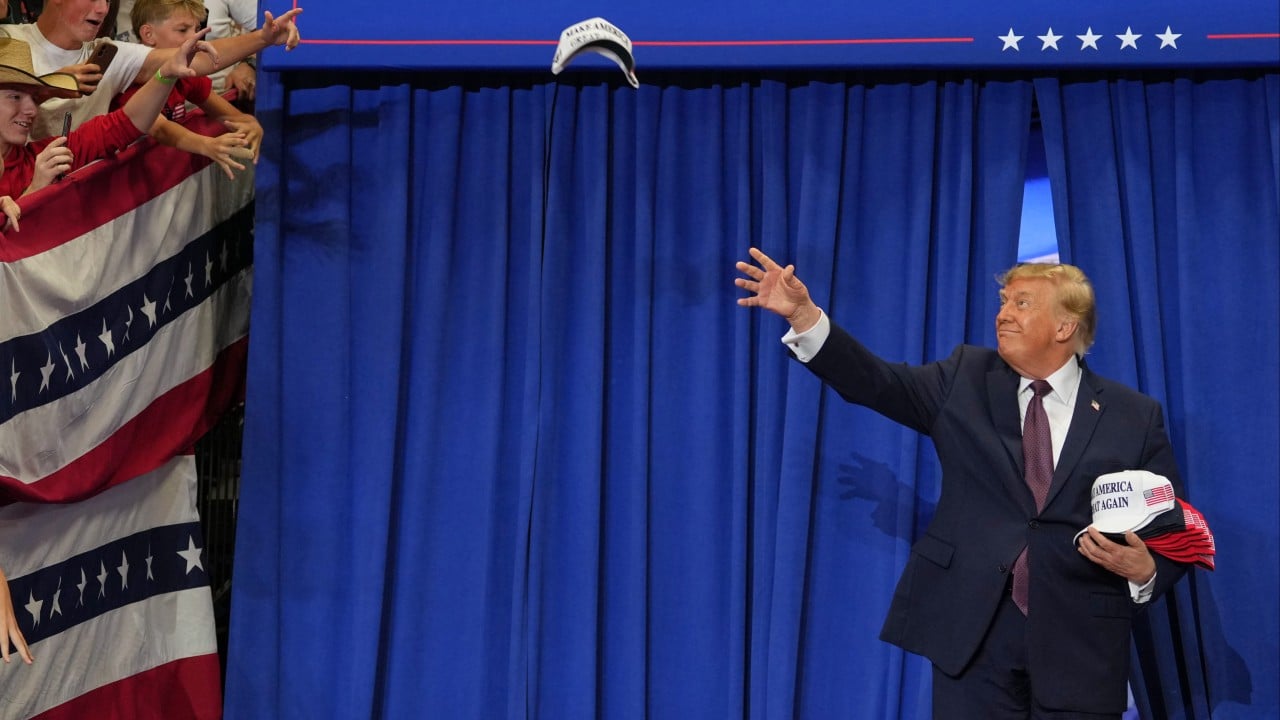
Now that the dust has settled on the 2026 election results, that hypothetical scenario is our actual political reality. Democrats flipped the House and reclaimed the Senate, ending two years of unified Republican control in Washington. Trump didn't back away from his promise once the votes were counted either—he immediately posted an image of a bright red baseball cap emblazoned with the word "VETO" in place of his usual campaign slogan.
Most coverage of Trump's "Mr. Veto" remark treats it like a throwaway soundbite or pure political theater. It isn't. If you understand how Washington actually functions during divided government, you realize Trump isn't just threatening gridlock—he's laying out a very specific negotiating trap. Further journalism by NBC News highlights similar perspectives on this issue.
The Real Strategy Behind the Mr Veto Threat
Look closely at the full quote from his November 1 Fox News appearance. Trump didn't just say he would block everything forever. He said, "If that happens, I believe I'll be Mr. Veto. I'll stop them from establishing themselves, and then we'll probably make a deal".
Read that again. "Stop them from establishing themselves."
When an opposition party sweeps into Congress after a wave election, their biggest priority is passing messaging bills right out of the gate. They want early wins to prove to their base that flipping Congress mattered. Senate Democratic Leader Chuck Schumer made that clear on election night when he promised to entangle the administration in "legislative razor wire," while House Democratic Leader Hakeem Jeffries called the results a mandate for transformational change.
Trump knows that signing even a modest Democratic compromise early in 2027 legitimizes their legislative momentum. By adopting a scorched-earth veto posture during the first sixty to ninety days of the 120th Congress, he forces Democratic leadership into a corner.
Here is how that playbook unfolds in practice:
- The Messaging Phase: House and Senate Democrats pass high-profile bills on healthcare, taxes, or administrative oversight during their first few months in power.
- The Rejection: Trump vetoes them immediately, using the veto pen to rally his base and frame Democratic priorities as extreme.
- The Stalemate: Without a supermajority, those bills die on the vine—becoming what Trump bluntly called "garbage".
- The Pivot: Once voters start blaming Congress for doing nothing, Trump invites Democratic leaders to the White House to cut deals on must-pass bills like government funding or the debt ceiling.
Honestly, it's a classic executive branch move. Bill Clinton used a version of it after the 1994 Republican wave, and Barack Obama leaned on it heavily after losing the House in 2010 and the Senate in 2014. Trump himself relied on it during his final two years in office after Democrats took the House in 2018. During his entire first term, Trump issued 10 vetoes, and he had already issued two during the first two years of his second term when Republicans still controlled Congress. That number is about to skyrocket.
Why Democrats Can't Just Override Him
If you're wondering why a newly empowered Democratic Congress can't simply steamroll a presidential veto, the answer comes down to basic math in Article I, Section 7 of the U.S. Constitution.
Winning a majority in Congress lets you set the committee schedule, launch subpoenas, and pass bills off the floor. It does not let you make law over a president's objection. Under the Presentment Clause, overriding a presidential veto requires a two-thirds supermajority vote in both the House of Representatives and the Senate.
Look at the numbers coming out of the November 2026 elections:
- In the U.S. Senate: Democrats secured a strong majority—capturing flips in states like Alaska, Maine, and Ohio to reach 56 seats—but 56 votes is still 11 votes shy of the 67 needed to override a veto.
- In the U.S. House: Democrats captured more than 258 seats in their biggest House sweep since 1992, yet overriding a veto requires 290 votes when all 435 members are present.
That gap is massive. To override a single Trump veto, Democratic leaders would need roughly 30 House Republicans and at least 11 Senate Republicans to break ranks and publicly humiliate the leader of their own party. In today's polarized Washington, getting two or three crossovers on a controversial bill is hard enough. Getting forty-plus across both chambers is virtually impossible.
History backs this up. According to records from the National Archives, presidents have issued 1,484 regular vetoes since 1789, and Congress has managed to override only 106 of them—a success rate of just 7.1 percent. Over 92 percent of the time, when a president says no, the bill is dead.
The Pocket Veto Wildcard
Trump also holds a quieter weapon that doesn't even allow for an override vote: the pocket veto.
Normally, when Congress sends a bill to the White House, the president has 10 days (excluding Sundays) to sign or veto it. If he does nothing while Congress is in session, the bill automatically becomes law. But if Congress adjourns before those 10 days are up, the president can simply ignore the bill and let it expire. Because Congress isn't in session to receive the returned bill, they can't vote to override it.
Democratic leadership knows this trick well. Expect the incoming 120th Congress to use pro forma sessions—brief, 30-second gavel-in, gavel-out meetings every few days during recesses—specifically to prevent Trump from exercising pocket vetoes on legislation they send him late in the calendar year.
Where the Veto Pen Stops Working
Here is what the breathless headlines about "Mr. Veto" miss: a president's veto power is purely defensive. It can stop new laws from being born, but it cannot stop a hostile Congress from making life miserable for the White House.
Even if Trump vetoes every single domestic policy bill Democrats pass over the next two years, there are three massive areas where his veto pen offers zero protection.
1. Subpoenas and Oversight Investigations
Congressional committees don't need presidential permission to issue subpoenas, compel testimony, or release damning documents. With Democrats taking control of every gavel in both the House and Senate in January 2027, the investigative floodgates are opening.
Democratic leaders have already signaled their targets. Defense Secretary Pete Hegseth faces immediate scrutiny over Pentagon decisions and the administration's military conflict with Iran—an issue Trump himself acknowledged played a role in the GOP's midterm losses. Committees are also gearing up to examine government contracts and advisory roles tied to tech billionaire Elon Musk, alongside probes into the Trump family's financial dealings. You can't veto a subpoena.
2. Senate Confirmations and Judicial Appointments
For the past two years, a Republican Senate rubber-stamped Trump's cabinet picks, agency heads, and federal judges. That pipeline just slammed shut.
Because the Senate holds the constitutional power of "advice and consent," Democratic control means Trump can no longer push ideological hardliners onto federal appellate courts or install controversial figures in top agency posts. If a cabinet secretary resigns or gets fired—and CBS News reported right after the election that Trump had already been asking advisers whether Pete Hegseth should stay—any replacement will have to survive a Democratic Senate Judiciary or Armed Services Committee. Trump will be forced to nominate consensus moderates or leave key posts empty.
3. The Power of the Purse
This is where the real collision happens. You can veto a bill to raise the minimum wage or expand healthcare subsidies without shutting down the federal government. You cannot indefinitely veto annual appropriations bills without triggering a shutdown.
Once the current federal funding patches expire in 2027, Congress must pass new spending bills to keep the military paid, national parks open, and federal agencies running. Democrats will inevitably attach policy riders to those must-pass funding bills—blocking funds for administration initiatives they oppose or restricting how executive agencies spend money.
At that point, "Mr. Veto" faces a binary choice: swallow Democratic provisions he hates, or wield his veto pen and own a government shutdown while gas prices are already hovering above $4.25 a gallon and voters are sour on the economy.
What Happened the Last Time Trump Governed With a Divided Congress
We don't have to guess how this plays out because we already watched a four-year dress rehearsal between 2019 and 2021.
When Democrats swept the House in the 2018 midterms, pundits predicted two years of total legislative paralysis. Instead, something much messier—and surprisingly productive—happened.
Yes, there was brutal conflict. Trump vetoed resolutions blocking his border wall emergency declaration and blocking arms sales to Saudi Arabia, and the House impeached him twice. Behind the scenes, though, the exact pattern Trump described in his November 2026 Fox News interview played out. After months of posturing, Trump and then-House Speaker Nancy Pelosi cut major bipartisan deals on the USMCA trade agreement, massive pandemic relief packages, paid family leave for federal workers, and two-year budget caps.
The crucial difference between 2019 and 2027 is the Senate. In 2019, Mitch McConnell's Republican Senate acted as a firewall, killing Democratic House bills before they ever reached Trump's desk. Trump rarely had to use his veto pen because McConnell buried the bills first.
In 2027, that firewall is gone. With Chuck Schumer running the Senate floor, bills won't quietly die in committee. They will pass both chambers and land directly on the Resolute Desk in front of TV cameras. Trump won't have the luxury of letting Senate Republicans take the heat—he will have to personally sign the veto messages himself.
How to Watch What Happens Next
If you want to cut through the cable news noise over the next few months, stop paying attention to the press releases and watch three concrete indicators instead:
- Watch the first veto message in early 2027. Pay attention to the tone of Trump's formal written objection when he rejects the first major Democratic bill. If it reads like a campaign rally speech, expect prolonged gridlock. If it outlines specific policy tweaks he would accept, backchannel deal-making has already started.
- Track "must-pass" deadlines on your calendar. Circle the expiration dates for federal government funding and the federal debt limit. Messaging bills are free for a president to veto, so ignore the noise around them. Real leverage only shows up when the Treasury Department runs out of borrowing authority or federal agencies face a funding cliff.
- Follow Senate Judiciary Committee hearings. The clearest measure of how much power Trump actually lost in November won't be his veto count—it will be whether judicial vacancies stay open because the White House refuses to negotiate nominees with Senate Democrats.
Trump's "Mr. Veto" persona isn't a sign that Washington is shutting down for two years. It's his opening bid in a high-stakes standoff where Democrats hold the gavel, Trump holds the pen, and neither side can pass a single law without eventually blinking.