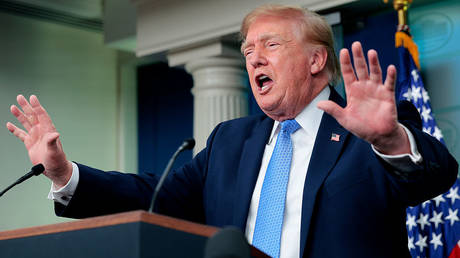
"We don't need a deal with Iran. Those days have long since passed." When President Donald Trump dropped that line in November 2026, diplomats in Doha, Washington, and Tehran scrambled to figure out whether he meant it—or whether it was just another turn in a whiplash strategy.
Here's the short version. Trump isn't walking away from every single diplomatic channel for good. Instead, after nearly nine months of military conflict that started in February 2026 and an ongoing naval blockade of the Strait of Hormuz, he's arguing that Washington holds enough military and economic leverage that a traditional agreement isn't urgent anymore.
Look closer, though, and the picture gets messy fast. A few days after saying the U.S. didn't need a deal, Trump told reporters he wanted a "real deal, not a fake deal" and even floated a "permanent" nuclear agreement that future presidents couldn't undo. Meanwhile, Qatari-mediated talks in Doha have focused on unlocking more than $6 billion in Iranian funds, reopening shipping lanes, and revisiting the nuclear dispute.
If you're trying to make sense of what's actually happening behind the headlines, you have to separate Trump's tough talk from the hard constraints sitting on his desk.
What Trump Means When He Claims The US Doesn't Need An Iran Deal
When Trump says Washington doesn't need an Iran deal, he's pointing to force and pressure rather than paper agreements. From his point of view, the balance of power shifted after the joint U.S.-Israeli campaign that began in February 2026, which killed former Supreme Leader Ali Khamenei and hammered Iran's military infrastructure.
In late November 2026, Trump told the New York Post that U.S. forces had crippled Iran's navy, air force, and air defenses, and he claimed Washington had enough funding to keep operations going until the end of January. Around the same time, the U.S. Treasury rolled out fresh sanctions under its "Economic Outcast" push, while Secretary of State Marco Rubio argued that economic squeeze alone was keeping Tehran from getting a nuclear weapon without requiring fresh military escalation.
There's also a domestic political angle that plenty of coverage glosses over. Trump announced that Vice President JD Vance—who had been involved in earlier outreach and April talks in Islamabad—would shift his focus toward domestic corruption probes in Democratic-led states. Vance himself has pointed to the war as a factor in Republican midterm losses. Put simply, claiming the U.S. doesn't need a deal lets the administration project strength while dialing back visible diplomatic heavy lifting at home.
Honestly, though, projecting strength and avoiding a deal aren't the same thing. A blockade isn't a peace settlement. And sanctions don't automatically erase technical nuclear know-how.
Why The Reality On The Ground Complicates That Claim
If the U.S. truly had zero need for an agreement, the Strait of Hormuz wouldn't still be a flashpoint and backchannels wouldn't still be humming.
Keep these realities in mind when you read bold statements from either side:
- The Strait of Hormuz remains a chokepoint: Even with U.S. strikes largely paused compared to earlier phases of the conflict, enforcing a naval blockade carries constant risk. In early November 2026, Iran's Islamic Revolutionary Guard Corps claimed an American MQ-9 drone was downed over the eastern strait, and U.S. forces struck Qeshm Island. Gulf states and mediators like Qatar—which kept mediating despite a missile strike on one of its liquefied natural gas tankers—want calm shipping lanes, not an open-ended standoff.
- Nuclear disagreements haven't gone away: Researchers like Spencer Faragasso of the Institute for Science and International Security have noted that Tehran's nuclear program remains the central sticking point. Earlier negotiations stumbled over enriched uranium stockpiles, inspection terms, fuel supply trust, and whether Iran's missile program belongs on the table.
- Leadership shifts change the bargaining table: With Mojtaba Khamenei having succeeded his father as Supreme Leader after the February strikes, internal factions in Tehran and shifting American political timelines—including a new Congress arriving in January—make any quick breakthrough tough.
- Great-power friction lurks in the background: On the sidelines of the APEC summit in Shenzhen in November 2026, Trump met with China's Xi Jinping and Russia's Vladimir Putin. While U.S. officials claimed alignment on Iran, the final summit statement left Iran out completely, sparking debate in Tehran over what, if anything, was actually agreed.
A naval blockade can squeeze an adversary's economy, yet it rarely settles disputes over nuclear oversight, sanctions relief, or long-term regional security by itself.
What Negotiators Are Actually Fighting Over Now
Watch what negotiators do, not just what leaders tweet or say at press briefings. Publicly, Trump has swung between saying no deal is needed and insisting he wants a "real" or "permanent" deal. Privately and through intermediaries, talks have been much more transactional.
In Doha, discussions mediated by Qatar have centered on practical trade-offs: unlocking more than $6 billion in frozen Iranian funds, easing sanctions or oil-sale restrictions, reopening the Strait of Hormuz, and setting terms for nuclear talks. Meanwhile, Washington has previously floated tough preconditions—such as transferring enriched uranium, limiting nuclear sites, and linking talks to halting hostilities—while Tehran has insisted on sanctions relief and security guarantees before making big concessions.
Foreign Minister Abbas Araghchi has said no direct talks are planned right now and that progress depends on political choices in Washington, while warning that any renewed strikes would draw an immediate response. At the same time, Trump has suggested major next moves might wait until early 2027. That creates a weird limbo: neither side has signed a durable peace, yet neither wants a total collapse of every channel at once.
Common Mistakes People Make Following This Story
When fast-moving foreign policy news collides with social media clips, it's easy to misread what's happening. Here are the traps I see people fall into most often:
- Treating one soundbite as fixed policy: Trump has repeatedly shifted tone—from pushing talks in Oman and Islamabad earlier in 2026, to canceling envoy trips, to declaring a deal unnecessary, to calling for a permanent deal days later. Track actions and signed terms, not single quotes.
- Assuming "no deal" means "no war": Skipping a formal agreement doesn't automatically bring peace. Without clear guardrails, miscalculations around naval patrols, drones, or regional proxies can reignite fighting quickly.
- Ignoring regional mediators: Gulf capitals and mediators like Qatar, Oman, and Pakistan have played real roles in passing messages and trying to keep shipping lanes and diplomacy alive. Pretending the U.S. and Iran operate in a vacuum misses half the leverage on the board.
- Confusing temporary freezes with permanent fixes: Even if negotiators unlock specific funds or pause certain strikes, core disputes over enrichment, sanctions, and regional security take years—not a single week—to resolve.
How To Track What Happens Next Without Getting Whiplashed
If you follow Middle East policy, energy markets, or global security, you don't need to react to every rumor out of Washington or Tehran. Focus on concrete signals over the coming weeks into early 2027:
- Check shipping and energy indicators: Watch maritime alerts around the Strait of Hormuz, oil price reactions, and statements from Gulf officials—you can read ongoing policy analysis from groups like the Atlantic Council alongside wire dispatches.
- Track concrete trade-offs in Doha: Look for verifiable steps on frozen funds, sanctions waivers, or ceasefire terms rather than vague promises of progress.
- Watch the January calendar: Pay attention to U.S. congressional dynamics in January and any early-2027 deadlines Trump has referenced, since funding, oversight, and diplomatic posture often shift right around those markers.


