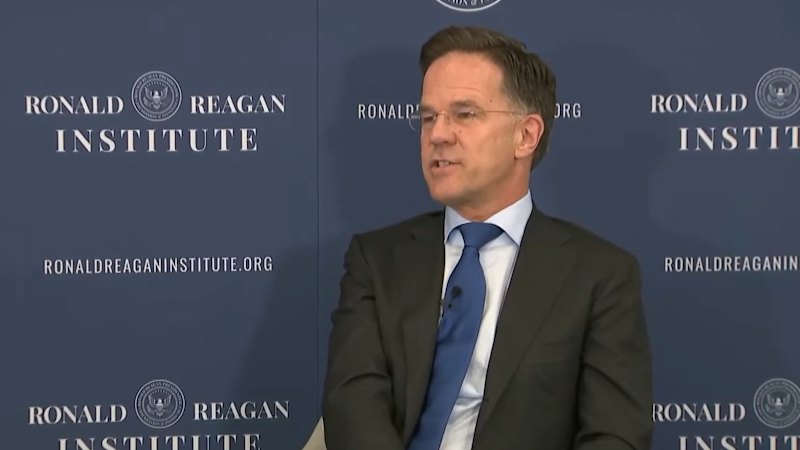
Donald Trump isn't hiding his feelings. He's annoyed with NATO, and he's not being quiet about it. After a closed-door meeting in Washington this week, NATO Secretary General Mark Rutte admitted that the U.S. President was "clearly disappointed" with how his allies handled recent tensions. If you thought the friction between Trump and the alliance was a relic of his first term, you haven't been paying attention to the high-stakes drama currently unfolding in the Middle East and the Arctic.
The root of the current blow-up isn't just about the old "2% of GDP" spending target. Most members actually hit that mark by 2025. This time, the beef is more immediate: Trump wanted NATO allies to jump into the recent conflict with Iran with both feet. When several European nations hesitated or outright blocked U.S. aircraft from using their airspace for strikes, Trump went on the warpath. He’s calling the alliance a "paper tiger" again. Honestly, it's a mess that highlights the growing gap between Washington’s global expectations and Europe's desire to keep its own backyard quiet.
The Iran war test
The breaking point happened over the last few weeks during the escalation with Tehran. Trump expected a show of force from the alliance. Instead, he got a mixed bag. While the UK and a few others helped secure shipping routes in the Strait of Hormuz, others were "slow," as Rutte put it.
Think about it from Trump's perspective. He sees a military alliance where the U.S. provides the bulk of the muscle, yet when he decides to strike, some of those "partners" close their doors. In a CNN interview following their White House chat, Rutte didn't sugarcoat the vibe in the room. He described the talk as "very frank" and "very open." That’s diplomatic speak for a shouting match where nobody's happy. Trump even took to social media to vent, claiming NATO wasn't there when needed.
It's not just about the Iran war, though. This is a pattern. Trump's frustration is a tool he uses to force "transformational change," as Rutte calls it. He's pushing for a new 5% spending target—an astronomical jump from where things stood just a few years ago.
The Hague 5 percent legacy
Rutte is in a tough spot. He’s trying to keep Trump engaged while begging European capitals to empty their pockets. During the Hague Summit, allies basically agreed to this 5% goal because they knew Trump was serious about pulling out if they didn't.
- 2014 target: 2% of GDP (which took a decade for some to hit).
- 2026 reality: All allies finally reached or passed 2%.
- The new demand: A move toward 5% to account for threats from Russia, China, and the Arctic.
Rutte actually credits Trump for this shift. He’s told world leaders at Davos that without Trump’s pressure, big economies like Italy, Spain, and Belgium would still be lagging behind. But 5% isn't just a number; it’s a massive political headache. For most European countries, spending that much on tanks and satellites means cutting money for pensions and healthcare. That’s a hard sell for any voter.
Moving troops to "friendly" nations
There’s a new threat on the table that has European leaders sweating. Reports from within the administration suggest Trump is considering moving U.S. troops out of countries he deems "unhelpful"—specifically those that didn't back the Iran campaign—and relocating them to nations that are more supportive.
Imagine being a leader in Germany or France and seeing your U.S. security guarantee packed up and moved to Poland or the Baltics because of a disagreement over Middle East policy. It’s a strategy designed to reward loyalty and punish hesitation. It shifts the alliance from a treaty of mutual defense to a more transactional, "pay-to-play" model.
Why the Arctic is the next flashpoint
While everyone’s looking at Iran and Ukraine, the Arctic is quietly becoming the biggest reason NATO needs to stay together. Russia and China are getting cozy in the far north. Sea lanes are opening up as ice melts, and whoever controls those lanes controls a huge chunk of future global trade.
Trump has been vocal about defending the Arctic. Rutte agrees with him here. The alliance recently launched "Baltic Sentry" and "Eastern Sentry" to guard undersea infrastructure, but that’s just the start. If Europe wants to keep Trump from walking away, they’ll need to prove they can be useful in the Arctic, not just the Mediterranean.
What happens now
If you’re a business owner or an investor, this volatility matters. The uncertainty around NATO's future affects global oil prices and defense stocks. Here’s what’s actually going to happen over the next few months:
- Defense production will ramp up: Rutte has been blunt. He’s telling European factories to "produce now, produce faster." Don't look at ten-year plans; the money is on the table today.
- Pressure on the 5% goal: Expect more public shaming from Washington for any country that doesn't show a clear path to that 5% spending mark.
- Bilateral deals: Watch for Trump to make side deals with specific NATO members (like Poland) that bypass the broader alliance structure.
The bottom line is that NATO isn't the stable club it used to be. It’s shifting from a "codependent" relationship to one where Europe has to take the lead on its own defense. Whether they like it or not, the "Trump effect" has permanently changed how the West prepares for war. Check your local news for updates on your country's specific defense budget shifts—that's where the real impact will hit your wallet.