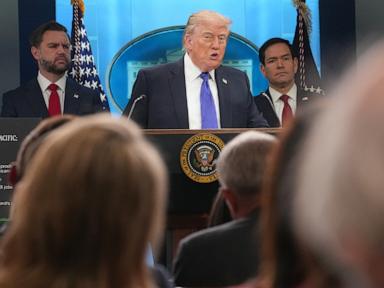
President Donald Trump announced on November 20, 2026, that the federal government will impose a "tremendous tax" and heavy penalties on American technology companies that build artificial intelligence data centers in foreign countries. Speaking at a White House press conference, Trump framed the threat as a national security measure designed to prevent China from accessing U.S. computing infrastructure abroad and to force billions of dollars in capital expenditure back onto American soil. Yet the declaration collided immediately with two brutal realities: the administration had drafted no actual policy mechanism to enforce the tax, and domestic communities across the United States are actively revolting against the electrical grid strain and utility rate hikes triggered by local data center expansion.
The Policy Vacuum Behind the Podium
A threat without statutory machinery is just a headline. When Trump stood in the White House briefing room and declared that his administration would penalize firms constructing overseas server farms, he simultaneously acknowledged that he had not yet briefed his own cabinet officials on the plan. No draft executive order existed. No legislative text had been circulated on Capitol Hill.
Taxing domestic corporations for capital investments made by foreign subsidiaries is notoriously difficult under existing U.S. tax law. Unlike physical goods crossing a border at a port of entry—where tariffs can be assessed via customs schedules—a data center built in Frankfurt, Singapore, or Dubai does not ship a physical product back to the United States. It processes digital workloads locally. To levy a "tremendous tax" on an American hyperscaler or real estate investment trust for pouring concrete and installing server racks in another jurisdiction, the administration would either need Congress to rewrite corporate tax provisions governing foreign-derived income or stretch emergency economic powers into uncharted legal territory.
Even if the White House relies on export control authorities rather than the tax code, the friction remains severe. Four days prior to Trump's remarks, the Commerce Department tightened restrictions on remote access to advanced AI chips hosted in third countries, targeting Southeast Asian hubs where Chinese firms had been renting cloud capacity to bypass direct hardware bans. That regulatory move was surgical, aimed at specific transshipment loopholes and companies like Megaspeed. Trump's Friday pronouncement, by contrast, swung a blunt hammer at the entire global cloud business model.
Why Hyperscalers Build Outside American Borders
To understand why Wall Street and Silicon Valley reacted with quiet alarm, you have to look at the physics and legal architecture of the modern internet. American tech giants do not build overseas facilities merely to chase cheap labor or dodge domestic taxes. They build abroad because data obeys the speed of light and local sovereignty laws.
Consider latency. When a financial trading algorithm in London, an autonomous vehicle network in Munich, or a consumer streaming service in Tokyo queries a server, every millisecond of round-trip travel time degrades performance. Routing every European or Asian computational request across subsea fiber-optic cables to Northern Virginia or Iowa is technically unviable for real-time applications. Major infrastructure operators—including Equinix and Digital Realty, alongside cloud titans like Microsoft, Google, and Amazon—deploy facilities near end users because distance is the enemy of compute.
Then there is data localization. Governments across the European Union, India, Brazil, and the Middle East enforce strict statutes requiring citizen health records, financial transactions, and government cloud workloads to remain physically stored and processed within national borders. If an American cloud provider cannot build or operate a facility inside those jurisdictions, it does not bring that revenue back to the United States. It simply forfeits the market to local telecommunications conglomerates or state-backed Chinese cloud providers like Alibaba and Huawei.
Forcing U.S. firms to halt international expansion does not starve Beijing of global digital influence. It hands Beijing an uncontested monopoly over the developing world's cloud infrastructure.
The Domestic Power Grid Bottleneck
The central contradiction of Trump's ultimatum lies at home. You cannot order the world's largest technology companies to concentrate all their physical compute inside the United States when the American electrical grid cannot plug them in.
Training and running frontier AI models requires gigawatts of continuous, uninterrupted baseload power. In primary hubs like Northern Virginia's Data Center Alley, utility providers have repeatedly warned of multi-year connection queues for high-voltage substations. Transformers, switchgear, and gas turbines face global supply backlogs stretching into the late 2020s. Even when companies secure land and capital, waiting three to five years for a utility interconnect makes rapid deployment impossible.
Overseas markets with surplus power generation or aggressive state-backed energy subsidies—such as the Nordic countries with abundant hydropower, or Gulf states deploying massive solar and natural gas capacity—have become essential release valves for American compute demand. Cutting off those release valves by punitive taxation would trap hyperscalers inside a domestic bottleneck where capital is plentiful, chips are ready, and electricity is unavailable.
The Local Voter Backlash
Adding to the physical grid constraints is a fierce political revolt at the municipal and state levels. Trump urged Americans during his press conference to welcome data center developers into their towns and extract financial concessions from them, repeating a pitch he made ahead of the 2026 midterm elections. "You ought to take advantage of the datacenters. Make them pay you, make them pay your community, but don't shut them off," he told reporters.
Voters across battleground states are not buying it. In places like Ohio, surging industrial electricity demand from massive server campuses has coincided with higher residential utility bills, water consumption disputes over evaporative cooling towers, and local frustration over minimal permanent job creation once construction crews leave. A facility spanning a million square feet might employ thousands of electricians and ironworkers for eighteen months, yet require fewer than fifty full-time technicians to operate once the servers go live.
That local anger has created rare bipartisan resistance. State legislators and municipal zoning boards—pressured by homeowners furious over monthly electric bills and sprawling diesel backup generator farms—have imposed moratoriums, rejected zoning variances, and demanded stricter environmental and ratepayer protections. Trump's own party has felt the electoral sting of data center backlash, making his demand that tech companies build exclusively on American soil a direct collision with grassroots political reality.
The Export Control Illusion
Trump's stated justification for the penalty—"We're not allowing data centers to go into other countries because China will take all of them"—conflates two fundamentally different security threats.
The genuine vulnerability involves cloud-based compute leasing. For years, U.S. export controls focused on blocking shipments of high-end graphics processing units directly to mainland China. Chinese AI labs adapted by renting server clusters housed in third-party countries across Southeast Asia and the Middle East, training their models remotely over encrypted connections without ever taking physical possession of the silicon.
Closing that loophole requires strict Know Your Customer verification rules on cloud providers, hardware telemetry tracking, and targeted blacklists against shell companies—precisely the approach the Commerce Department pursued when it restricted remote access to advanced chips earlier in November.
Penalizing American companies for building overseas data centers does not solve the remote-access problem; it worsens it. When an American hyperscaler owns and operates a facility in Malaysia or Ireland, U.S. regulators have direct legal jurisdiction over that corporation. Washington can audit its customer lists, mandate hardware-level cryptographic locks, and enforce compliance with federal export rules.
If punitive U.S. taxes drive American operators out of foreign markets, local sovereign funds and non-U.S. telecom operators will build those data centers instead. Those foreign-owned facilities will purchase whatever chips they can source—or rely on alternative hardware architectures—completely outside the visibility and compliance reach of Washington.
What Tech Executives Actually Face
For chief financial officers and infrastructure chiefs at the major cloud and data center firms, the immediate task is separating campaign-style rhetoric from enforceable regulatory risk. Several concrete realities now govern corporate capital allocation:
- Existing international commitments are locked in. Land acquisitions, power purchase agreements, and construction contracts across Europe, Latin America, and Asia-Pacific represent hundreds of billions of dollars in sunk capital that cannot be unwound overnight.
- Compliance costs are rising regardless of the tax. Even if Trump's broad penalty never materializes into law, the Commerce Department's November restrictions on third-country remote access mean every overseas data center housing U.S.-designed AI accelerators faces intense federal scrutiny.
- Community benefit agreements are now mandatory overhead. Whether building in Ohio or Oregon, developers can no longer rely on quiet tax abatements. Securing domestic permits increasingly requires funding local grid upgrades, guaranteeing ratepayer insulation, and signing direct community payout deals.
- Sovereign cloud partnerships will accelerate. Rather than wholly owning foreign facilities that might trigger U.S. tax penalties, American tech firms may increasingly pivot toward licensing software and architecture to domestic telecom partners abroad, trading equity ownership for regulatory insulation.
Washington wants American companies to dominate global artificial intelligence while keeping every megawatt of computing infrastructure anchored inside U.S. borders. Those two objectives cannot coexist in a world governed by fiber-optic physics, foreign sovereignty laws, and an overtaxed domestic power grid. Until federal policymakers address the transformers, transmission lines, and local voter revolts stalling construction at home, threatening tech giants for building abroad will only hand the rest of the world's digital backbone to the very rivals Washington is trying to beat.