Political theater just collided head-on with multi-billion-dollar trade policy, and the fallout isn't pretty. When you try to use an American conservative icon to lecture a sitting populist president, you shouldn't be surprised when the door gets slammed in your face.
That is exactly what happened when a highly anticipated diplomatic effort evaporated into thin air. The sudden breakdown in discussions between Donald Trump’s trade team—led by Commerce Secretary Howard Lutnick—and Canadian officials reveals just how fragile cross-border relations have become. It turns out that a multi-million-dollar ad campaign featuring a ghost from Republican past was the spark that blew up the bridge.
The Ad That Ruined Everything
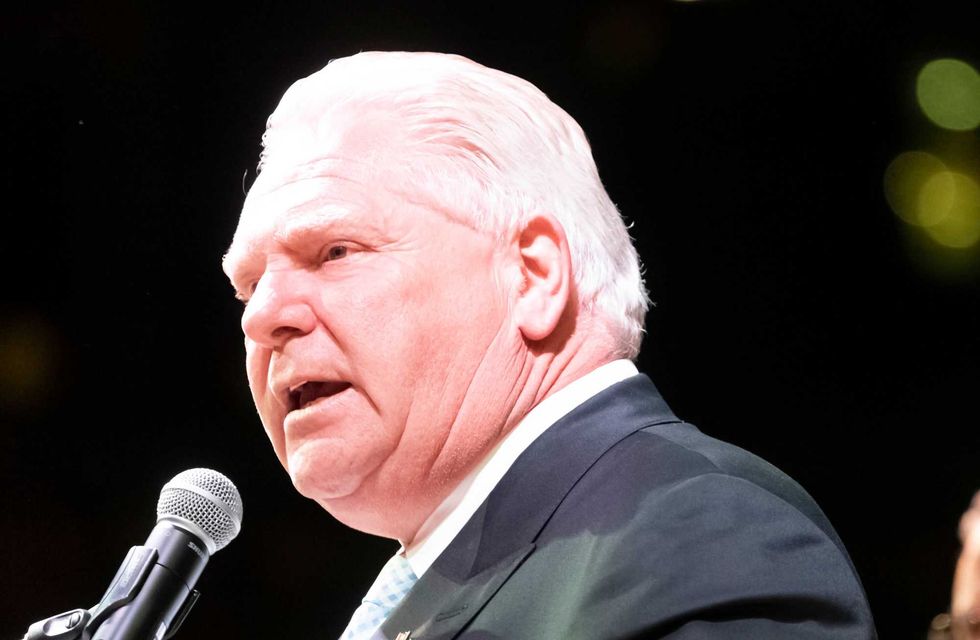
Ontario Premier Doug Ford thought he had a brilliant strategy. His government shelled out roughly $75 million to run an ad campaign on American television networks. The target audience? Republicans. The star of the ad? None other than Ronald Reagan.
The commercial featured selective audio clips from a 1987 radio address where Reagan spoke out against the dangers of trade barriers, warning that tariffs ultimately hurt American workers. The goal was simple. Ontario wanted to leverage traditional GOP free-trade orthodoxy to pressure the Trump administration into relaxing its punishing economic levies.
It backfired spectacularly.
Trump caught wind of the ad and immediately went ballistic on Truth Social. He branded the commercial as "FAKE" and accused Canada of acting fraudulently. He claimed the campaign was a blatant attempt to improperly influence upcoming U.S. Supreme Court hearings regarding the legality of his global tariffs.
"TARIFFS ARE VERY IMPORTANT TO THE NATIONAL SECURITY, AND ECONOMY, OF THE U.S.A.," Trump posted. "Based on their egregious behavior, ALL TRADE NEGOTIATIONS WITH CANADA ARE HEREBY TERMINATED."
To make matters worse for the Canadian strategy, the Ronald Reagan Presidential Foundation & Institute quickly stepped into the fray. They publicly called out Ontario for failing to seek or receive permission to use the late president's likeness, stating the ad used "selective audio and video" that completely misrepresented Reagan's actual comments.
With his position validated by the Reagan Foundation, Trump declared that "Canada cheated and got caught." Within hours, Secretary of State Marco Rubio confirmed that all bilateral trade talks were officially suspended.
It Is Not Just About One Commercial
While the Reagan ad was the public catalyst for the abrupt cancellation, it serves as a convenient pretext for deeper, systemic frustrations brewing in Washington. The reality is that negotiators had been grinding gears for months.
U.S.-Canada Trade Escalation Timeline:
- Spring: Washington imposes initial 25% tariff on Canadian steel, aluminum, timber, and autos.
- August: Trump bumps the tariff rate up to 35% following disagreements over economic policies.
- October: Ottawa hits back, slapping retaliatory tariffs on General Motors and Stellantis.
- Late October: Ontario launches the $75 million Reagan ad; Trump terminates all trade negotiations.
Kevin Hassett, director of the National Economic Council, let the truth slip to reporters shortly after the blowout. He noted that Trump's sudden cancellation actually revealed months of built-up frustration with the "actions and postures of the Canadians."
Washington is particularly annoyed by Ottawa's recent decision to hit American auto giants General Motors and Stellantis with retaliatory measures after those companies reduced vehicle production in Canadian plants. When Canada decided to punch back, Trump decided to flip the table entirely.
The timing couldn't be worse for Canada. Prime Minister Mark Carney, who took the reins after Justin Trudeau, has been trying to manage a deeply unstable economic relationship with his southern neighbor. More than three-quarters of all Canadian exports go straight to the United States. We are talking about roughly $3.6 billion worth of goods and services crossing that border every single day.
When those talks stopped, Canadian business leaders panicked. A recent KPMG survey revealed that 88% of Canadian executives view losing their current trade protections as the absolute greatest risk to their businesses. Most are already resigned to the fact that they will be paying some form of border tax permanently.
Moving Past the Rhetoric
If you are a business owner trying to navigate this mess, relying on political alignment or nostalgic appeals to past American presidents won't save your supply chain. The era of predictable, rule-based North American trade has shifted toward transactional nationalism.
Canada is already shifting its playbook, and businesses need to follow suit. Prime Minister Carney didn't waste time crying over the cancelled talks; he immediately boarded a plane for Malaysia and South Korea to court the Association of Southeast Asian Nations (ASEAN) and secure diversified trade opportunities in the Indo-Pacific.
To survive this era of sudden cancellations and tariff hikes, operations must become radically adaptable.
First, stop waiting for a grand bilateral agreement to fix things. It isn't happening anytime soon. You need to map your supply chain to identify exactly where your components cross the border and audit your exposure to the current 35% tariff rate.
Second, stop absorbing the costs. Many companies tried to eat the initial 25% tariff hoping it would be temporary. Now that negotiations are dead, those costs must be strategically passed down to end consumers or mitigated through near-shore restructuring.
Finally, follow the government's lead on diversification. If your revenue model depends entirely on frictionless access to the U.S. market, you are exposed to a single social media post. Look into trade corridors with the European Union or growing Asian markets that aren't subject to the daily whims of Washington politics.