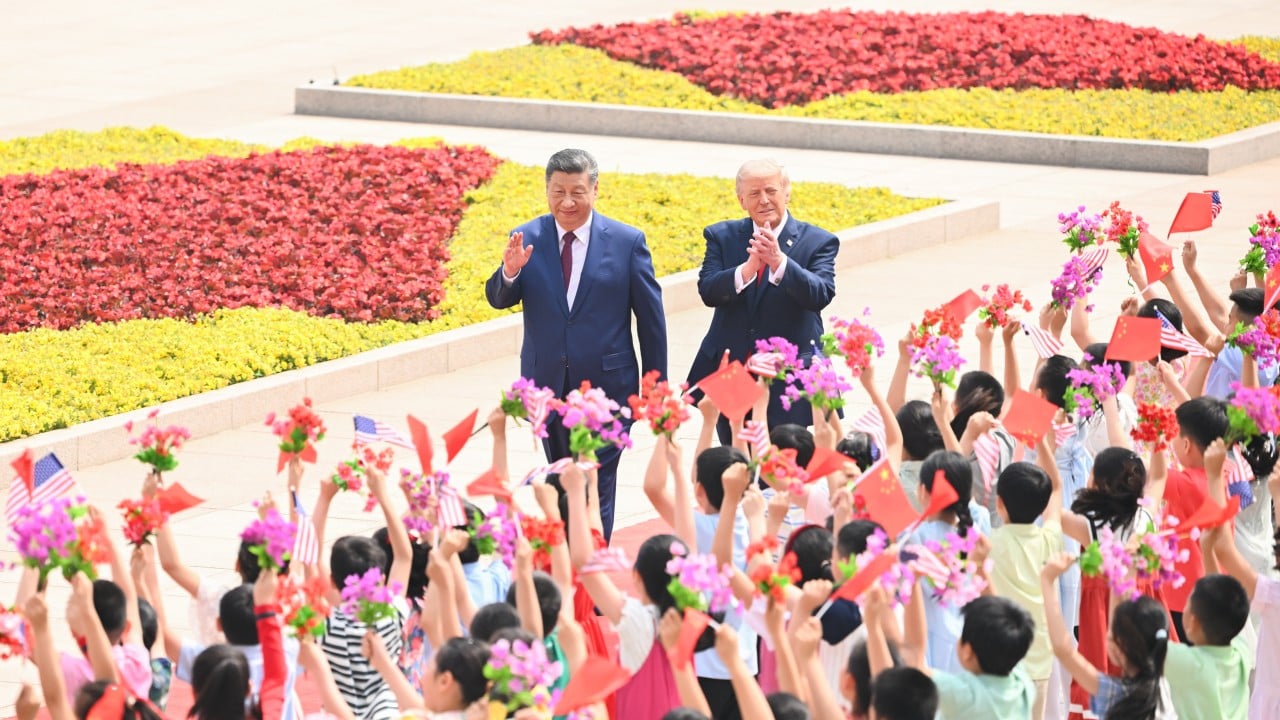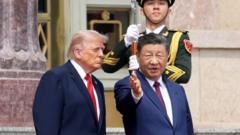
The red carpet didn't just roll out. It felt like it never ended. When Donald Trump landed in Beijing for his 2017 two-day summit with Xi Jinping, the world wasn't just watching a diplomatic meeting. We were witnessing the birth of a "State Visit Plus." It was high-stakes theater with trillion-dollar consequences.
Most people remember the photos. The Forbidden City at sunset. The opera performances. The gold-trimmed dining rooms. But if you think this was just about hospitality and photo ops, you're missing the point. This meeting set the stage for every trade skirmish and geopolitical chess move we've seen since. It was the moment the "G2" reality became undeniable.
The Forbidden City Power Play
Beijing wanted to impress, and they didn't hold back. Usually, the Forbidden City is a crowded tourist hub. For Trump and Melania, it was a private playground. Xi Jinping personally led the tour. This wasn't just a friendly gesture. It was a calculated display of historical continuity. China was signaling its return as a central global power, rooted in millennia of history, standing eye-to-eye with the West.
Inside the Treasure Hall, the leaders watched traditional opera. Trump showed off videos of his granddaughter, Arabella Kushner, singing in Mandarin. It felt surprisingly personal for a moment. But the friendliness was the velvet glove over a very iron fist. Behind the scenes, the two leaders were already wrestling with the massive trade deficit and the ticking clock of North Korea's nuclear program.
Real Money and Big Deals
Let's talk about the numbers because they were staggering. We're talking about $253 billion in signed deals. That isn't a typo. Boeing, General Electric, and Qualcomm walked away with massive agreements. Goldman Sachs and the China Investment Corp even launched a $5 billion industrial cooperation fund.
- Energy: A $43 billion deal to develop liquefied natural gas in Alaska.
- Aviation: 300 Boeing jets valued at roughly $37 billion.
- Agriculture: Billions in commitments for U.S. soybeans and beef.
Honestly, some critics at the time called these deals "non-binding memorandums of understanding." They weren't entirely wrong. A lot of those big numbers were aspirations rather than guaranteed cash in the bank. But the message was clear. Trump wanted to show his base he could squeeze concessions out of Beijing, and Xi wanted to show that China was a market the U.S. simply couldn't afford to lose.
The North Korea Shadow
You can't discuss this summit without mentioning Pyongyang. At the time, Kim Jong Un was ramping up missile tests. Trump arrived in Beijing directly after a fiery speech in Seoul. He was looking for Xi to tighten the screws.
"China can fix this problem easily and quickly," Trump said during their joint press statements. He put the burden squarely on Xi’s shoulders. Xi, ever the diplomat, stuck to the script of "peaceful resolution" and "denuclearization through dialogue." It was a classic stalemate dressed up in friendly rhetoric. China agreed to implement UN sanctions more strictly, but they weren't about to trigger a total collapse of the North Korean regime. They weren't going to let a U.S. ally sit on their direct border.
Cultural Diplomacy vs Hard Reality
The "State Visit Plus" format was designed to build "guanxi"—the Chinese concept of deep, personal connection. They ate dinner in the Jianfu Palace. This was a rare honor. No other foreign leader had been hosted for an official dinner inside the Forbidden City since the founding of the People's Republic.
It worked, at least for the cameras. Trump called the chemistry "terrific." But the warmth didn't last. Fast forward a few months, and the administration was slapping tariffs on Chinese steel and aluminum. The 2017 summit was the "calm before the storm." It was the last time the two nations really tried to pretend the relationship was purely collaborative.
What We Learned from the Two Day Blitz
The Beijing summit taught us that pageantry has its limits. You can have the most expensive dinner in the world, but it won't erase structural economic competition. Beijing showed they could "out-protocol" anyone. They gave Trump the royal treatment, hoping it would soften his stance on trade. It didn't.
If you're looking for the roots of today's "de-risking" or "decoupling" talk, look back at these two days in November 2017. It was the peak of engagement before the pivot to confrontation.
Moving Forward
If you're analyzing current international relations, stop looking at the news in a vacuum. Start by reviewing the 2017 Joint Statements from the White House and the Chinese Ministry of Foreign Affairs. Look at which of those $250 billion deals actually materialized. Most didn't. That gap between the "grand announcement" and the "final delivery" is exactly where modern trade policy lives. Watch the upcoming trade delegation meetings this quarter. If they start talking about "historic hospitality" again, check your wallet. History shows the bigger the party, the tougher the negotiations happening behind the closed doors of the palace.