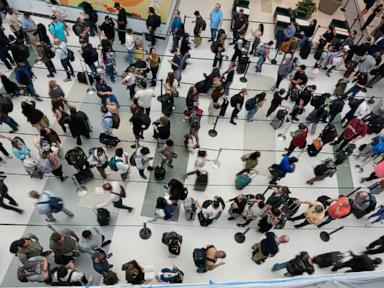
A man sneaks onto a United Airlines flight from Salt Lake City to Austin using a photo of a stranger’s boarding pass. The media throws a collective tantrum. The public panics. Pundits demand a complete overhaul of airport gate procedures, pointing fingers at distracted gate agents and tech glitches.
They are missing the entire point. For a different view, check out: this related article.
The lazy consensus surrounding the recent Texas man boarding pass incident treats the event as a freak anomaly—a bizarre failure of an otherwise airtight system. The narrative tells you that if we just tighten gate checks, monitor standby lists closer, and punish the airlines, our skies will be safe.
That is a dangerous lie. Further insight on this matter has been published by AFAR.
The real story isn't that a guy managed to sit in a plane bathroom until takeoff. The real story is that our multi-billion-dollar aviation security apparatus is fundamentally misaligned. We are investing billions to secure the wrong checkpoint. The gate is a logistical bottleneck, not a security wall. If someone with bad intentions is already standing at the airplane door, the security system has already failed.
The Illusion of the Gate as a Security Barrier
Let's look at the facts of how commercial aviation actually functions. Passengers think the gate agent is the final line of defense against terror. In reality, a gate agent is a customer service representative managing a chaotic customer onboarding process. Their priority is keeping a strict flight schedule, managing baggage overages, and balancing standby lists.
To understand why the mainstream media panic is flawed, we have to look at the architectural reality of a modern airport.
The airport is divided into two distinct zones: landside (public) and airside (secure).
Once a person passes through the Transportation Security Administration (TSA) checkpoint, they are vetted. They have walked through millimeter-wave scanners. Their bags have passed through 3D computed tomography X-ray systems. They have been checked for explosives, weapons, and hazardous materials.
The Texas incident involved a man who passed through the actual TSA security checkpoint. He had identification. He didn't have a weapon. He didn't have a bomb. He was a squatter, not a terrorist.
When the media screams about a "massive security breach" because someone used a fraudulent boarding pass to get onto a plane, they are confusing a ticketing dispute with a national security threat. The individual in question was physically safe to fly; he just didn't pay for the seat.
Why Biometrics Won't Fix Human Friction
The instant reaction from tech evangelists is always the same: automate everything. They claim that facial recognition at every gate will eliminate this vulnerability entirely.
I have spent years analyzing operational workflows in high-stakes environments, and I can tell you that throwing more technology at a broken human workflow creates more problems than it solves.
Consider the mechanics of biometric boarding. A camera captures your face, converts it into a digital template, and matches it against a gallery of images collected by Customs and Border Protection (CBP) or airline databases.
[Passenger Face Scan] -> [Biometric Template] -> [Database Matching] -> [Access Granted/Denied]
It sounds foolproof. It isn't.
- The False Rejection Dilemma: If the system is set to a high confidence threshold, it rejects legitimate passengers due to lighting, angles, or minor facial changes. This creates massive queues at the gate, forcing agents to override the system manually.
- The Manual Override Vulnerability: The moment a system creates a bottleneck, humans bypass it to stay on schedule. A gate agent facing a 200-person line and a departure countdown will hit the override button. The security exploit doesn't disappear; it just shifts from a fake barcode to a human override code.
- The Spoofing Reality: No digital system is immune to social engineering. If a person can exploit human kindness or distraction—as this passenger did by tailgating someone closely and using a photo of a phone screen—they can exploit a biometric system during a manual bypass mode.
The Real Vulnerability Nobody Is Talking About
If the gate isn't the problem, where should we look? We need to look at the massive, systemic gaps in how identity is verified at the initial TSA checkpoint.
Right now, the TSA is rolling out Credential Authentication Technology (CAT) units at major airports. These machines verify the authenticity of a driver's license or passport and link it directly to the flight manifest in real-time. This means you no longer need to show your boarding pass to the TSA officer—only your ID.
This is a step forward, but it exposes a glaring contradiction. If the TSA verifies your identity and confirms you have a valid ticket for a flight that day, they let you into the secure terminal. Once you are inside, you have hours to roam free. You can swap phones with a friend, buy a fully refundable ticket to get past security and then cancel it, or simply take a picture of a boarding pass over someone's shoulder at a Starbucks in Terminal 3.
The industry treats the airside terminal as a perfectly sterile environment where everyone is honest. It is a psychological safe zone that doesn't actually exist.
The downside of acknowledging this reality is uncomfortable: true security requires continuous verification. But implementing continuous verification turns an airport into a panopticon, destroying operational efficiency and alienating passengers. Airlines are businesses, not military installations. They cannot afford to treat every paying customer like an inmate moving between cell blocks.
Dismantling the Public Panic
The internet is flooded with questions about how this happened and what it means for personal safety. Let’s answer them by stripping away the sensationalism.
How can someone board a plane without a valid ticket?
By exploiting human pacing. Airplanes are loaded under extreme time pressure. Airlines are penalized heavily for late departures. When a passenger crowds the person ahead of them, scans a device quickly, and walks through while the gate agent is looking at a baggage tag or talking to a colleague, the breakdown is mechanical and social, not technological. It is the physical equivalent of tailgating through a parking garage gate.
Is it safe to fly if gate security is this weak?
Yes, because the gate is not where security happens. The safety of the aircraft is determined by the fact that the person, their luggage, and their clothing were thoroughly screened for threats hours before boarding. A person without a ticket is a nuisance, a financial drain, and a liability for the airline, but they are not an existential threat to the aircraft if they have been cleared by TSA screening.
Why don't airlines cross-check seat maps before doors close?
They do, which is precisely why this individual was caught. The system worked exactly how it was designed to work when the actual seat assignment holder showed up and found someone else in their place. The breakdown was not a failure of detection; it was a failure of prevention.
The Hard Truth of Risk Management
We must stop demanding absolute zero-risk environments. They do not exist.
Every security framework is a trade-off between friction, cost, and risk mitigation. If you want a guarantee that no one will ever sit in an unassigned seat again, you must accept three-hour boarding times, invasive physical checks at the jet bridge, and skyrocketing ticket prices to fund the extra labor.
The United Airlines incident in Texas was a failure of basic operational discipline by a gate crew under pressure. It was not a structural failure of national security. Stop listening to talking heads who want to turn a boarding pass glitch into a mandate for more invasive surveillance.
Secure the perimeter. Scan the baggage. Verify the identity at the front door. After that, accept that human systems will occasionally experience human errors.
The next time you see a sensational headline about an airline stowaway, don't demand more tech or tighter gates. Demand that the media learn the difference between a breach of corporate revenue protection and a failure of public safety. Until we decouple ticketing logistics from actual threat mitigation, we will continue wasting resources fixing the wrong problems while the real vulnerabilities sit out in the open.