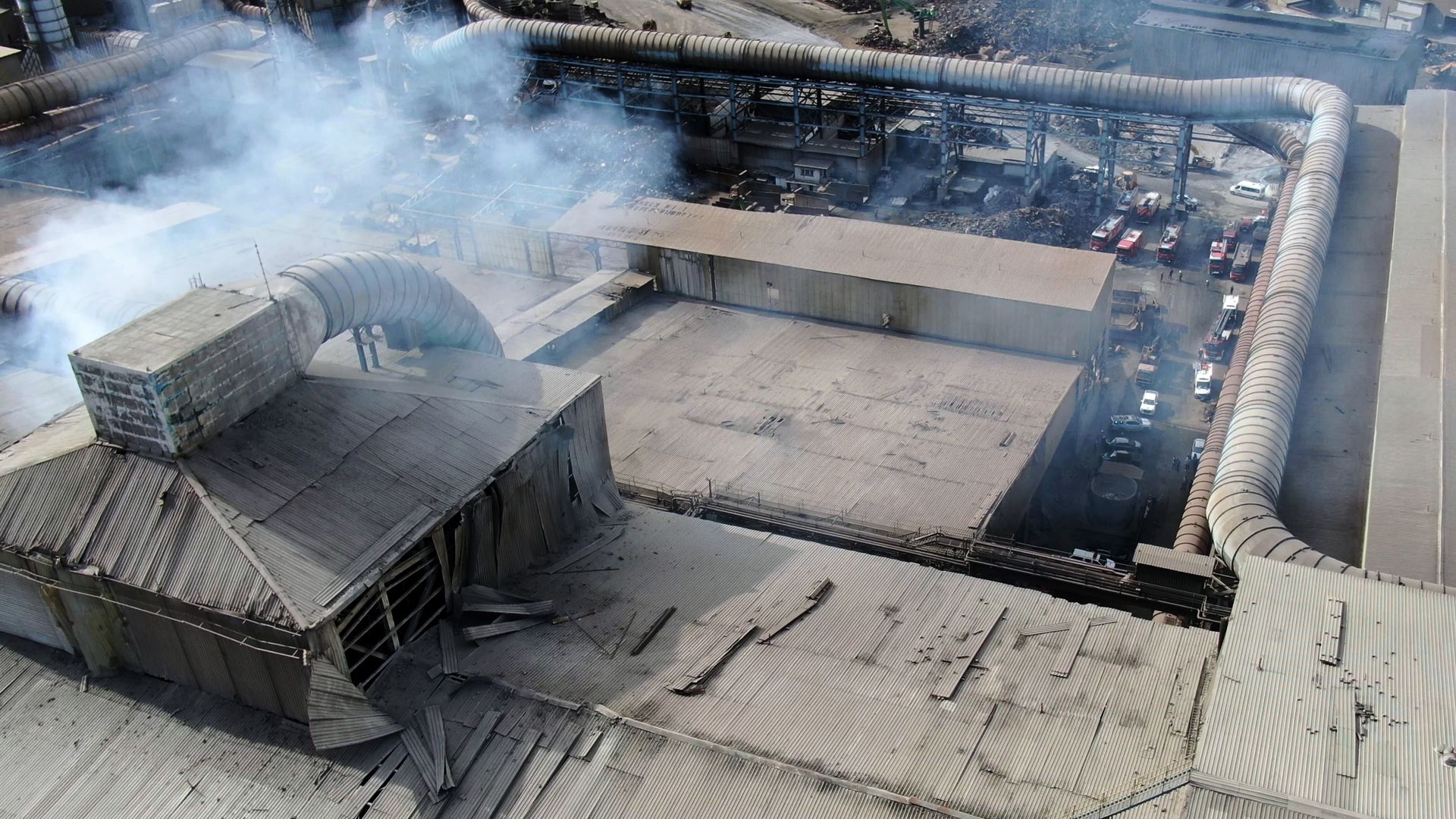
When an explosion at a steel plant in Turkey kills 16 workers—with reports of the death toll climbing higher as rescue and forensic work unfolds—the immediate headline focuses on the body count and the president's pledge for an investigation. That surface summary misses the engineering reality that turns a steel mill into a lethal trap.
On November 9, 2026, a blast tore through the HABAŞ Demir Çelik iron and steel facility in the Aliağa district of İzmir Province, about 60 kilometers north of İzmir. Turkish President Recep Tayyip Erdoğan stated initially that 16 people were killed and 13 injured, announcing both judicial and administrative probes into potential negligence. Later dispatches and local reporting placed the death toll at 17 and subsequently 19 as casualties mounted.
Anyone who has walked an active steelworks floor knows how unforgiving the margins are. Molten metal, massive overhead cranes, high-voltage electric arc furnaces, and pressurized fluids sit inches apart in space and split seconds apart in timing. When something fails there, it rarely fails quietly.
How a Crane and Furnace Turn Routine Work into Disaster
Official accounts from the İzmir Governor's Office point to an overhead crane collapsing into a furnace associated with liquid steel casting, triggering an explosion and fire. Meanwhile, HABAŞ stated that the incident occurred during scheduled maintenance on an electric arc furnace.
Look closely at those two details together. Scheduled maintenance is supposed to lower risk, not amplify it.
In real industrial practice, maintenance windows are where corners get cut under production pressure. Equipment gets partially isolated. Cranes keep moving nearby because the rest of the bay is still running. Workers step closer to hot zones to inspect, unbolt, or rig hardware that normally stays behind barriers.
If an overhead crane structure, hoist, brake, or runway fails—or if a load or crane assembly drops into high-temperature or molten material—the energy release can be catastrophic. Eyewitnesses near the Aliağa site described the shockwave like an earthquake and thick black smoke rising over the facility. Prosecutors assigned multiple investigators and detained several individuals as the inquiry widened, while casualties in early reports stood at 16 dead and 13 injured before later updates cited higher fatalities.
Why Maintenance Windows Carry Hidden Traps
Most safety checklists look great on paper and fall apart when a shift falls behind schedule. I've seen plants treat a "scheduled maintenance" tag like a forcefield, assuming that because a furnace isn't in full normal tapping mode, the surrounding crane paths and thermal hazards are benign.
They aren't. Residual heat, hydraulic or cooling lines, slack communication between crane operators and floor crews, and crowded work platforms create a very different hazard profile than steady-state casting. When a crane gives way over a furnace area, exclusion zones and permit-to-work discipline are the last line of defense keeping people out of the blast radius.
What the Turkey Steel Plant Explosion Means for Accountability
President Erdoğan pledged that judicial and administrative investigations would uncover any negligence and hold those responsible to account, and senior cabinet ministers—including officials overseeing labor and energy—traveled toward the region as emergency and oversight responses played out. Political opposition figures and workers' groups sharply criticized safety conditions and past fatal incidents at the plant, while HABAŞ faced intense scrutiny over its safety record and subsequently restarted production roughly eight days after the disaster.
Here's the uncomfortable truth about industrial disasters like this: promising a probe is easy, changing shop-floor habits is hard.
After almost every major mill accident, you hear the exact same script. Authorities open files. Detentions make headlines. Unions warn about chronic hazards and overwork. Yet weeks later, restarts happen while root-cause findings are still being contested or sealed in court dockets.
There is also real ambiguity in early reporting that honest coverage shouldn't gloss over. Initial figures cited 16 deaths and 13 injuries, while later reports cited 17 and then 19 deaths, and accounts varied on whether the furnace operation was liquid steel casting or scheduled maintenance on an electric arc furnace. When casualty counts shift and company statements emphasize scheduled maintenance while officials describe a crane falling into a furnace, readers deserve clarity on what is confirmed versus what prosecutors still have to prove.
Practical Steps for Engineers, Auditors, and Safety Leads
If you work in heavy manufacturing, risk engineering, supply-chain auditing, or industrial safety, don't wait for a local regulator's final report to test your own assumptions. A few concrete moves matter right now:
- Audit crane-over-furnace exposure separately. Map every overhead crane path that crosses or approaches a furnace, ladle, or molten metal zone, and verify mechanical and electrical redundancy rather than relying on operator habit.
- Treat maintenance lifts as high-risk lifts. Require formal lift plans, verified inspection logs, and strict exclusion zones whenever lifting occurs near hot vessels or during maintenance outages.
- Check permit-to-work and communication chains. Confirm that maintenance permits, lockout/tagout steps, and radio or visual signals between spotters, crane cabs, and furnace crews can't be bypassed to save time.
- Factor midstream plant safety into supplier risk. If your business sources steel or heavy components from high-output industrial hubs, treat serious safety incidents and repeated worker fatalities as material operational and reputational red flags, not mere PR noise.
Steel has always demanded respect, and shortcuts around heavy lifting and furnace safety collect their bill in blood.


