The View from the Balcony
In the Mapo-gu district of Seoul, there is a balcony where a young father named Ji-hun smokes a cigarette every night. Below him, the Han River reflects the neon hum of a city that never sleeps. It is a view of sheer, unadulterated success. Glass towers, high-speed trains, and the glowing windows of millions of people who have built a miracle out of the rubble of 1953.
But if Ji-hun looks north, past the skyscrapers and the mountain peaks, there is a silent line. It is only thirty miles away. On a clear day, you can drive there in less time than it takes to watch a movie.
While Seoul sleeps, metal is moving. Heavy, cold, and ancient.
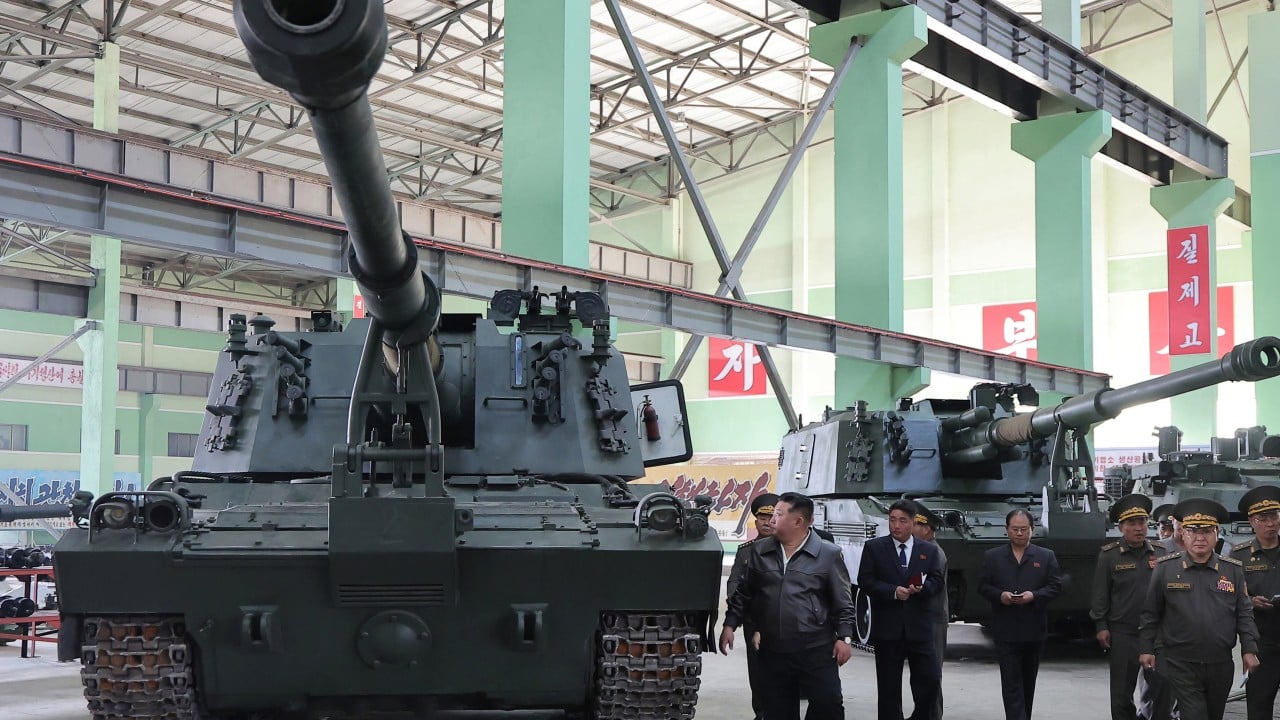
North Korea is rearranging its furniture. But this isn't a domestic dispute or a diplomatic tantrum. The supreme command in Pyongyang has ordered the relocation of its most potent artillery batteries directly to the border. We aren't talking about foot soldiers or symbolic flags. We are talking about long-range systems specifically engineered to reach the heart of Seoul.
The distance between the muzzle of a North Korean Koksan gun and Ji-hun’s balcony is now shorter than it has ever been.
The Physics of the Threat
War in the modern imagination is often a clean, digital affair. We think of drones, cyberattacks, and stealth jets. But the reality on the Korean Peninsula is refreshingly, terrifyingly analog. It is the raw power of chemistry and steel.
The North Korean military possesses one of the largest artillery forces on the planet. For decades, much of this force was kept in hardened sites tucked behind mountain ranges. Now, intelligence reports and satellite imagery confirm those pieces are sliding forward. They are moving into the "shop window."
Consider the Koksan 170mm self-propelled gun. It is a monstrous piece of engineering. When positioned at the new border locations, its range extends over 37 miles. That doesn't just "threaten" the border. It puts the Blue House, the financial districts, and the densely packed apartments of Gangnam within a ballistic arc.
Hypothetically, if these batteries were to fire simultaneously, the initial volley would land before any air raid siren could complete its first cycle. This is the "Seoul Flank." It is a strategy designed to bypass sophisticated missile defense systems like THAAD or the Patriot batteries. You can intercept a missile. It is nearly impossible to intercept twenty thousand shells falling like iron rain.
The Invisible Architecture of Fear
Why now?
Logic suggests that Kim Jong Un is not seeking a suicide pact. A full-scale strike on Seoul would result in the immediate and total erasure of the North Korean regime by the combined forces of the South and the United States. They know this. We know this.
But the move isn't about the act of firing. It is about the weight of the threat.
In game theory, this is known as "brinkmanship." By moving the artillery forward, Pyongyang changes the math of every diplomatic encounter. They are tightening the noose just enough so that the world can feel the rope. Every time a South Korean official considers a new Sanction or a joint military exercise with Washington, they must look at the map. They must think about Ji-hun on his balcony.
It is a psychological siege.
Imagine living in a house where your neighbor has pointed a loaded shotgun at your front door. He hasn't pulled the trigger. He might never pull the trigger. But you have to walk past that barrel every time you go to get the mail. Eventually, you stop looking at the gun. You have to, or you’d lose your mind. But your heart rate stays five beats faster. Your sleep is a little thinner.
That is the lived reality for millions of people in the shadow of the DMZ. They have lived with this "shotgun" for seventy years. They have become masters of compartmentalization. They buy iPhones, they obsess over K-pop, and they build some of the world's most advanced semiconductors, all while five thousand tubes of artillery are leveled at their living rooms.
The Technological Sieve
South Korea is not sitting idly by. The nation is currently pouring billions into what they call the "Korean Iron Dome" or the Long-Range Artillery Interception System (LAMD).
The technical challenge is staggering.
Standard missile defense is like trying to hit a bullet with a bullet. Defending against a massed artillery strike is like trying to hit ten thousand pebbles with ten thousand other pebbles, all while the wind is blowing and the clock is ticking. The sensors must detect the launch, calculate the trajectory, and fire an interceptor in a matter of seconds.
Current estimates suggest that even the most robust defense system would only catch a fraction of the shells in a saturation attack. The sheer volume of North Korean fire is its own kind of "cutting-edge" technology. It relies on the oldest trick in the book: more. More steel, more gunpowder, more targets than the defender has interceptors.
The relocation of these units to the border effectively cuts the reaction time in half. It turns a "difficult" defense into a "near-impossible" one.
The Human Element in the Data
We often talk about these movements in terms of "assets" and "strategic depth." We use words that scrub the humanity off the map.
But go back to the border. Look at the soldiers on the North side. Many are malnourished, young men who have been told since birth that the people across the line are devils. They are the ones actually hauling these massive shells into position. They are living in damp tunnels, breathing the smell of grease and cold earth, waiting for an order that they likely hope never comes.
On the South side, the conscripts in the ROK Army watch through thermal optics. They see the heat signatures of the trucks moving. They see the dirt being overturned for new revetments. They are nineteen years old. They should be in university libraries or gaming cafes. Instead, they are staring into the dark, wondering if tonight is the night the "theater of the absurd" turns into a theater of war.
There is a profound sadness in the fact that in 2026, the most significant geopolitical shift in East Asia isn't happening in a lab or a boardroom. It’s happening in the dirt. It’s the movement of 1950s technology to a 21st-century border.
The Cost of the Staredown
What does this mean for the rest of us?
The global economy is a spiderweb. If a single strand in Seoul is snapped, the vibration travels to London, New York, and Tokyo. South Korea produces nearly 60% of the world's advanced memory chips. A single afternoon of artillery fire wouldn't just be a humanitarian catastrophe; it would be a technological heart attack for the planet.
This is why the movement of these guns matters more than a headline about a "border dispute." It is a reminder of how fragile our "robust" modern world truly is. We built our digital paradise on a foundation of unresolved history.
The shells are in place. The coordinates are punched into the systems. The mountains have been hollowed out to hide the muzzles.
Ji-hun finishes his cigarette. He flicks the ember into the night and goes back inside to tuck his daughter into bed. He doesn't check the news about the artillery. He can't afford to. If he acknowledged the weight of the steel moving toward him, he might not be able to get up for work tomorrow.
The tragedy of the Korean Peninsula is not that war is coming. It is that the threat of war has become the air people breathe. It is a low-frequency hum, a vibration in the floorboards that never quite stops.
North Korea has moved its guns. The world watches the satellites. The generals update their charts. And thirty miles away, twelve million people continue to live, love, and build, stubbornly ignoring the fact that they are living in the most dangerous target zone on Earth.
The guns are closer now. The silence that follows is the loudest thing in the world.