The dash lights of a Mercedes-Benz S65 AMG are designed to be a sanctuary. They glow with a soft, expensive precision, cocooning the driver in a world where wind noise is a myth and the outside world is merely a suggestion. But on a humid Monday morning in Jupiter, Florida, that sanctuary became a cage. The car sat idling on the shoulder of Military Trail, its brake lights glowing a steady, rhythmic red against the darkness. Inside, the man who had redefined the limits of human focus was drifting into a fog that no highlight reel could pierce.
When the officer approached the driver’s side window at 2:00 AM, he didn't see a billionaire or a sporting god. He saw a man struggling to keep his head upright. You might also find this related coverage insightful: What Most People Get Wrong About the Supreme Court Transgender Sports Ruling.
The Weight of a Broken Frame
To understand that night, you have to look past the police report. You have to look at the spine. Specifically, the four back surgeries and the years of brutalizing a body in the pursuit of a swing that defied physics. For decades, the world watched a man rotate his torso with the violence of a whip, unaware that the bill for those miracles was coming due. By May 2017, the bill was being paid in a cocktail of Vicodin and Xanax.
Pain is a silent thief. It starts by taking your sleep, then your mobility, and finally, your sense of self. When the officer spoke, the responses were slow, thick with the syrup of heavy sedation. The report described eyes that were "glassy" and speech that was "extremely slow and slurred." There was no smell of alcohol. This wasn't a party gone wrong. This was a medical crisis masked as a crime. As extensively documented in latest reports by ESPN, the effects are worth noting.
The search of his person revealed the physical evidence of a life governed by a pharmacy: pills in a pocket, a desperate attempt to manage a nervous system that was screaming for relief. It is easy to judge a mugshot. It is harder to empathize with the quiet desperation of a man who just wanted to stop hurting long enough to be a father.
The Performance of Compliance
There is a haunting quality to the dashcam footage. We see a man who spent his entire life being the most coordinated person on any patch of grass he stepped onto. Suddenly, he is asked to walk a straight line on a flat road. He stumbles. He restarts. He stares at his feet as if they belong to a stranger.
Consider the psychological toll of that moment. For twenty years, the world told this man he was invincible. Every time he hit a golf ball, millions of people held their breath. Now, in the harsh glare of a flashlight, he couldn't remember where he was going or where he had come from. He told the officers he was driving from Los Angeles. He was in Florida. The internal compass that had navigated the back nine at Augusta had been demagnetized by chemistry.
The arrest wasn't just about a DUI. It was the public execution of a persona. The "Tiger" we knew—the stoic, iron-willed predator—was gone. In his place was a human being named Eldrick, lost in the woods of his own recovery.
The Chemistry of a Downward Spiral
Modern medicine offers a Faustian bargain to the elite athlete. We demand they play through the pain, and we give them the tools to do it. But those tools have a habit of turning on the user. The police found a mix of medications in his system, including Dilaudid, a powerful opioid, and Alprazolam, commonly known as Xanax.
Mixed together, these substances don't just dull pain; they erase the edges of reality. They create a "glassy" barrier between the mind and the world. When you are on that much medication, you don't feel "drunk." You feel heavy. You feel like you are moving through water. You believe you are fine because the part of your brain that gauges "fine" has been put to sleep.
The stakes were higher than a license or a reputation. That night was a collision between the myth of the indestructible athlete and the reality of the opioid epidemic. It showed that no amount of money or fame can insulate a person from the chemical hooks of a high-dosage recovery plan.
The Silence After the Siren
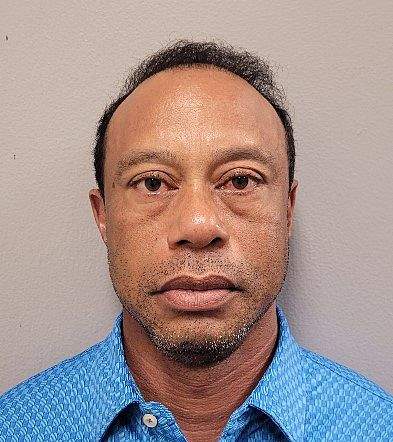
The fallout was immediate and cold. The mugshot went viral, a grainy image of a man with heavy eyelids and unkempt hair. It became a meme before it became a tragedy. Critics sharpened their knives, ready to carve up the remains of a legacy they thought was finally over. They saw the "pills in the pocket" as a moral failing rather than a symptom of a systemic issue in sports medicine.
But the real story isn't the arrest. It's the silence that followed.
In the weeks after that night, there was a pivot. A realization that the "glassy" eyes in that photo were looking for a way out. This wasn't a man looking for a thrill. This was a man who had reached the end of his endurance. The road he was on—the literal road in Florida and the metaphorical road of his career—had hit a dead end.
He didn't make excuses. He didn't blame the officers. He went to a treatment center to manage his medications. He acknowledged that the invisible stakes of his physical rehabilitation had become a life-or-death struggle. He had to learn how to live in a body that was no longer a weapon, but a vessel that needed care.
There is a specific kind of loneliness that comes with being a fallen deity. You are surrounded by people, yet completely alone in your struggle because no one else can understand the height from which you fell. That night on Military Trail was the bottom. The asphalt was cold, the lights were blinding, and the world was watching.
He stood there, swaying slightly, a man stripped of his clubs, his red shirt, and his aura. He was just a driver who had lost his way, waiting for someone to tell him what happened next.
The blue and red lights continued to pulse, reflecting off the polished black paint of the Mercedes, casting long, flickering shadows into the Florida brush. The officer reached for the handcuffs. The click of the metal was the loudest sound in the world, a sharp, mechanical punctuation mark at the end of an era. The god had been human all along, and for the first time in his life, he wasn't the one in control of the lead.