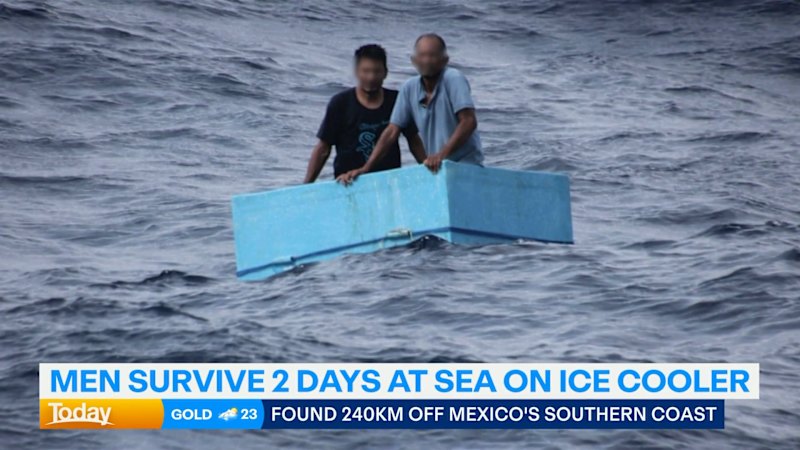
Imagine waking up at three in the morning to the violent sound of water rushing into your vessel. You have less than five minutes before your boat sinks completely. That is the nightmare reality two Mexican fishermen faced when their boat, the Camaronera, went down off the coast of Chiapas.
They didn't grab a radio. They didn't grab emergency rations or fresh water bottles. Their only split-second option was emptying a large plastic ice cooler and climbing inside.
Against all odds, that makeshift floatation device kept them alive for five grueling days on the open Pacific Ocean.
The Reality of Surviving an Open Ocean Shipwreck
When disaster strikes at sea, survival comes down to sheer luck and brutal resilience. For José Luis Portelas and Daniel Guerrero, aged 32 and 53, the ordeal began in total chaos. A rogue wave smashed into their boat in the dead of night.
Most people don't realize how quickly hypothermia, dehydration, and sun exposure can disable a human body. Without fresh water or food, the body starts shutting down within days. To make matters worse, the scorching sun beat down on them mercilessly without a single drop of rain to offer relief.
They drifted more than 150 miles out from the mainland. Their only shelter was the cramped interior of a container meant to keep fish cold, not humans alive.
Why Quick Reporting Saves Lives
The only reason these men made it back to their families is that their local fishing cooperative noticed their absence immediately. When communication dropped off following their last check-in, the cooperative raised the alarm without hesitation.
Too many maritime tragedies happen because people wait days to report a missing vessel. Search and rescue teams rely heavily on a tight window of probability. The Mexican Navy responded swiftly, deploying both surface ships and air assets to sweep a massive grid in the Pacific.
Wide-range aerial searches are like looking for a needle in a haystack. But a bright blue plastic speck bobbing on grey waves stands out when spotters know where to look. Naval crews eventually spotted the container about 240 kilometers off the southern coast. Video footage captured by the navy showed the tiny container tossed about by ocean swells just moments before rescuers pulled the exhausted men aboard an ocean patrol vessel.
What You Can Learn From Extreme Maritime Survival
Stories like this sound like Hollywood scripts, but they happen more often than you think. Similar survival feats have played out across the globe, from a Brazilian fisherman surviving eleven days in a freezer to Burmese sailors drifting for weeks on an icebox.
If you spend time on the water, you have to respect how fast things go wrong. Never skip the basics of marine safety.
- Always file a float plan with someone on land who knows your exact timeline.
- Invest in a personal locator beacon or satellite messenger that works beyond cellular range.
- Secure emergency gear where you can grab it instantly during a rapid sinking event.
Portelas and Guerrero walked away with their lives, though they required immediate medical evaluation and airlift transport to port. They were eventually reunited with their families, turning a catastrophic shipwreck into an extraordinary survival story.
Check out 10 News report on the rescue to see footage of the actual news broadcast covering this incredible survival story.