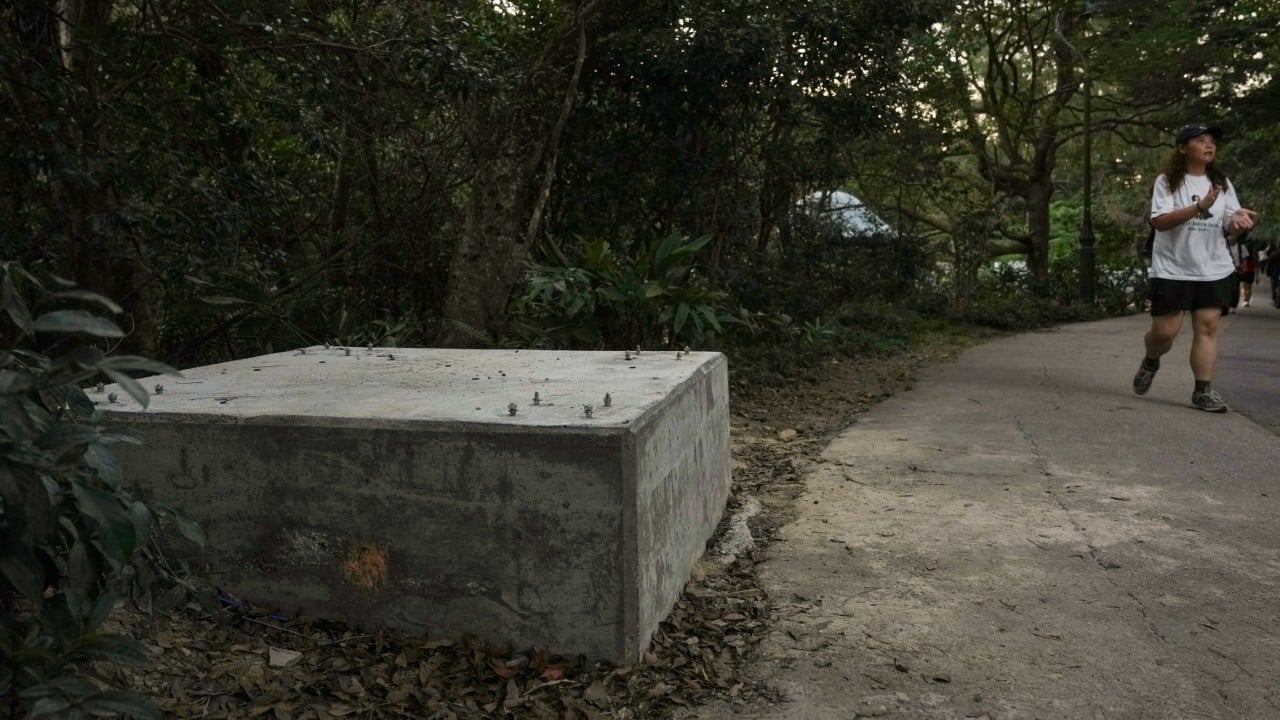
Two projector stands are gone from the Peak lighting installation after sustained public pushback forced project organizers to scale back the visual hardware. On the surface, the removal looks like a routine course correction by municipal planners responding to resident complaints about sightlines, light trespass, and hardware clutter. Look closer, and the retreat exposes a structural flaw in how modern urban spectacle is planned, approved, and dropped into sensitive public environments without adequate accountability.
Public space controversies rarely begin with a sudden outburst of anger. They build slowly, usually starting the moment an ambitious visual concept collides with the everyday reality of the people who actually use the site. When two projector stands become the lightning rod for an entire lighting installation, the issue is never just metal poles and optical housings. It is about who gets to decide what a landmark looks like after dark, how much visual intrusion a community is expected to absorb, and why so many high-profile installations treat public consultation as an afterthought rather than a design constraint.
The Anatomy of a Predictable Backlash
Lighting projects at prominent elevations or heritage viewpoints carry an inherent tension. Planners and tourism bodies want nighttime draw. They want social media visibility, extended foot traffic, and a signature visual experience that justifies capital expenditure. Residents, conservationists, and daily visitors want something very different. They want unobstructed views, dark skies, minimal physical clutter, and a sense that the natural or historic character of the place has not been turned into a temporary outdoor stage.
Projector stands sit right at the intersection of those competing priorities. Unlike recessed architectural fixtures or low-profile path lighting, high-output projection infrastructure requires physical mass, elevation, power routing, and clear throw paths. Even when engineers try to tuck hardware into peripheral zones, a stand positioned to hit a primary visual target almost always intrudes on a pedestrian corridor or a protected view cone.
The removal of two stands indicates that the initial placement underestimated how aggressively physical hardware alters a site during daylight hours. Nighttime lighting renders often look seductive in presentation decks because the software hides the scaffolding, ballast boxes, cable runs, and structural footings required to make the beam appear out of thin air. Once the steel goes into the ground, the illusion evaporates. Visitors walking past at two in the afternoon do not see an atmospheric light show. They see industrial rigging bolted onto a space they thought belonged to the public.
Why Visual Infrastructure Fails the Daylight Test
Anyone who has spent years covering municipal development and public art commissions knows the pattern. A concept is sold on its best-case nighttime rendering. Approval committees review glowing images of synchronized beams, subtle color washes, and dramatic focal points. Almost nobody demands a 1-to-1 physical mockup of the mounting hardware in harsh midday sun.
This blind spot creates three recurring failure points in large-scale exterior lighting.
- Sightline erosion. A stand placed to optimize projection angle frequently blocks a secondary vantage point that locals value more than the show itself.
- Daytime visual pollution. High-output projectors need weatherproof enclosures, ventilation clearances, and tamper-resistant mounts. Those enclosures read as utility infrastructure, not public art.
- Asymmetric benefit. Tourists and event sponsors experience the illuminated payoff for a few hours at night, while regular users absorb the physical footprint around the clock.
When public outcry forces the removal of specific stands, organizers typically frame the move as responsive governance. In reality, it is a quiet admission that the spatial trade-offs were never properly stress-tested before installation. Taking down two stands reduces the immediate friction, yet it leaves the broader question unanswered. If two stands were intrusive enough to warrant removal after public pressure, why did the original permitting process clear them in the first place?
The Economics Behind Overbuilt Spectacle
To understand why projects like the Peak lighting installation keep overreaching, you have to follow the incentives driving modern destination management. Cities and site operators face intense pressure to manufacture reasons for people to stay longer and spend more after sunset. Traditional infrastructure upgrades—better drainage, repaired stonework, accessible pathways—do not generate viral clips or ribbon-cutting headlines. Dramatic lighting does.
That commercial pressure pushes design teams toward maximum visual impact. More brightness. Wider coverage. Multiple projection angles to ensure the installation reads clearly from every commercial vantage point. Each added projection zone requires another mounting point, another power drop, and another structural anchor. By the time the engineering drawings are finalized, a subtle lighting concept has quietly mutated into a heavy technical deployment.
Vendors and production contractors rarely push back against this bloat because larger hardware packages mean higher contract values and more impressive portfolio pieces. Meanwhile, oversight bodies often lack the technical literacy to challenge beam angles, lumen output, or mounting footprints during the review phase. They rely on the vendor's assurances that the hardware will be discreet. Discreet, in industry parlance, usually means painted dark gray and placed slightly off the main path.
Light Trespass and Ecological Friction
Public pushback against prominent lighting installations is no longer limited to aesthetics. Over the past decade, awareness around light pollution, sky glow, and nocturnal disruption has shifted from niche environmental concern to mainstream civic issue. Elevated landmarks are particularly sensitive because light spilled at high altitudes travels farther and disrupts a wider visual basin than street-level fixtures.
Even well-calibrated projectors produce scatter. Atmospheric moisture, dust, and imperfect beam shaping turn high-lumen projections into visible shafts of light that alter the surrounding night environment. For residents living below or adjacent to an elevated site, that spill can mean unwanted glare inside homes and the loss of a familiar dark horizon.
Wildlife faces a steeper cost. Nocturnal insects, migratory birds, and local mammals rely on predictable darkness for navigation and foraging. Introducing concentrated beams and elevated hardware into ridge-line or vegetated zones disrupts those cues immediately. When community groups push back against an installation, they are often voicing a combined frustration over physical clutter, residential glare, and ecological disregard that project teams failed to separate during planning.
What Removing Two Stands Actually Changes
Taking down two projector stands is not a trivial adjustment. In a calibrated lighting system, every mounting position serves a specific geometric purpose. Removing two points forces technicians to either accept dark zones in the original visual design, increase output from remaining fixtures, or reprogram the sequence entirely.
Each of those compromises carries consequences.
If remaining projectors are pushed harder to compensate for lost coverage, glare and spill around the surviving stands can actually worsen. If the design is scaled back to match the reduced hardware, the final experience may fall short of the promotional promises used to justify the budget. Either way, the late-stage removal proves that the original scope was misaligned with the physical and social limits of the site.
It also exposes a troubling governance habit. Rather than building genuine community veto power into the pre-installation phase, many project operators treat public backlash as an informal testing mechanism. They install the full package, gauge the intensity of the complaint cycle, and pull back only the specific elements that trigger organized resistance. It is a costly, adversarial way to calibrate public design.
How Public Lighting Projects Can Avoid the Trap
Fixing this pattern does not require abandoning nighttime programming or architectural illumination. It requires changing the order of operations before a single bolt enters the ground.
Mandate Full-Scale Daylight Mockups
Before permanent or semi-permanent stands are approved, require physical mockups of the exact enclosure dimensions at the proposed locations. Committees and residents should see the silhouette, height, and footprint at noon, not just in a darkened studio simulation. If a mounting structure fails the daylight test, the projection angle needs to be redesigned or dropped.
Separate Technical Need From Commercial Excess
Every projection point should have to justify its existence against a strict spatial budget. If a visual effect requires intrusive hardware in a primary pedestrian zone or a protected sightline, the effect is wrong for the site. Good architectural lighting works with existing structures—building eaves, retaining walls, natural recesses—rather than planting new steel poles in open space.
Publish Objective Light and Glare Limits
Vague promises about low-impact illumination mean nothing without enforceable metrics. Approvals should specify maximum lumen outputs, strict cutoff angles, operating curfews, and verifiable limits on upward light spill. When those numbers are public before installation, communities have a clear standard to hold operators accountable to, rather than relying on subjective arguments after the fixtures are live.
Build Real Revision Gates Into Contracts
Municipal and site management contracts often lock in hardware purchases long before public feedback is gathered, creating massive financial resistance to scaling back bad placements. Procurement agreements should include explicit pre-installation review gates and modular hardware clauses so that reducing or relocating fixtures does not trigger punitive cancellation fees.
The Real Lesson From the Peak
The removal of two projector stands at the Peak is a win for residents and visitors who refused to accept visual clutter as the price of modern tourism. More importantly, it is a warning to planners everywhere who confuse spectacle with stewardship. Public landmarks do not exist as blank screens waiting to be monetized after dark. They carry historical weight, ecological value, and daily civic meaning that cannot be overridden by a lighting vendor's spec sheet.
Until cities start judging nighttime projects by the hardware they leave behind in the morning, communities will keep having to fight the same battle one steel stand at a time.