When the White House released the official text of its high-stakes artificial intelligence agreement, it included a glaring spelling error right beneath the presidential signature, identifying the office as the "President of the Unites States". The missing letter instantly became social media fodder. Critics cackled, late-night hosts found their monologue fodder, and internet commentators spent days dissecting how proofreaders missed a typo on a document meant to anchor national security.
Yet focusing on the dropped 'd' misses the actual institutional rot on display. The real story is not that a bored or rushed staffer failed to run a spell-checker. The real story is that this embarrassing blunder serves as a fitting metaphor for an administration attempting to regulate frontier technology with empty rhetoric and voluntary pledges. Read more on a related topic: this related article.
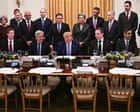
Behind closed doors in Washington, technology executives from Silicon Valley gathered to sign the so-called Accord on Super Intelligence. Alongside this ceremonial signing, an executive order was pushed forward to officially rebrand artificial intelligence as "super intelligence" or "SI," a linguistic pivot pulled straight from social media. Big tech titans stood shoulder-to-shoulder with political leaders, pledging allegiance to self-policing. They promised audit layers, internal controls, and voluntary safety guardrails.
It sounds impressive on a press release. It looks authoritative on glossy letterhead. But strip away the pomp, and the agreement collapses into a collection of unenforceable promises. The signatories carry no legal penalties for non-compliance. There are no independent federal inspectors embedded within the server farms of major tech monopolies to enforce these safety thresholds. The framework relies entirely on the goodwill of corporations whose primary fiduciary duty is quarterly revenue growth, not civic protection. Additional reporting by Ars Technica delves into similar perspectives on the subject.
When an administration pivots to renaming an entire industrial sector on a whim while failing to catch basic clerical errors on its official declarations, it signals a deeper administrative fatigue. Washington is trying to project mastery over a transforming technological era while lacking the fundamental operational rigor required to manage it. The machinery of government is moving too fast for its own operators, churning out superficial agreements that look serious to casual observers but hold zero statutory weight.
The missing letter in a single word on a government document is funny only until you remember that these exact same signatories are building systems capable of reshaping global labor markets, critical infrastructure, and information ecosystems. If the executive branch cannot manage basic typographical quality control on a high-profile public document, asking the public to trust its long-term oversight of autonomous computational intelligence requires a remarkable suspension of disbelief.
The typo was corrected in digital whispers and updated links, but the underlying vulnerability remains unaddressed. A government outsourcing its regulatory philosophy to a handshake deal with corporate oligarchs does not need a better spell-checker. It needs a reality check.