Ukraine's strategy has shifted. It's no longer just about holding the line in the Donbas or trading artillery fire across muddy trenches. Kyiv has realized that the quickest way to end the war is to bankrupt the Kremlin. By launching relentless drone strikes against Russian oil refineries and export terminals in the Baltic and Black Seas, Ukraine is hitting Putin where it actually hurts. This isn't just symbolic. It's a calculated attempt to dismantle the financial engine that funds every tank, missile, and soldier on Ukrainian soil.
For a long time, the West relied on sanctions that Russia learned to bypass using "shadow fleets" and middleman nations. Ukraine isn't waiting for bureaucratic fixes anymore. They're using cheap, long-range drones to take out multi-million dollar distillation towers. When a refinery burns, Russia doesn't just lose the oil. It loses the ability to process that oil into the fuel needed for its own military and the hard currency it gets from exports.
The Strategy of Economic Asymmetry
Russia is a petrostate. Roughly a third of its federal budget comes directly from oil and gas. If you can’t stop the flow of blood, you stop the heart from pumping it. Ukraine’s target list includes massive hubs like Ust-Luga and Novorossiysk. These aren't random choices. These ports are the exit points for millions of barrels of crude every single day.
By hitting these locations, Kyiv creates a massive logistical headache for Moscow. It's much harder to repair a high-tech refinery under sanctions than it is to build a new drone. Russia relies on Western technology for many of its sophisticated refining processes. Parts are scarce. Engineers are stretched thin. Every successful strike creates a ripple effect that slows down the entire Russian economy. It’s a brilliant, brutal use of limited resources.
Why Port Strikes Change the Math
Attacking a port is different from hitting a tank on the front lines. A tank is one piece of equipment. A port is a bottleneck. If the infrastructure at a terminal like Tuapse is damaged, tankers can't load. If tankers can't load, the oil backs up into the pipelines. Eventually, if the oil has nowhere to go, Russia has to start capping wells.
Capping an oil well isn't like turning off a kitchen faucet. In many of Russia’s older Siberian fields, if you stop the flow, the pipes can freeze or the well can be permanently damaged. Ukraine knows this. They’re forcing Putin into a corner where he has to choose between domestic fuel prices and military needs. We're already seeing the results. Russia has had to implement various bans on gasoline exports just to keep prices stable at home. That's a clear sign of stress.
The Problem with the Shadow Fleet
We've heard a lot about the "shadow fleet"—those aging, uninsured tankers Russia uses to dodge the G7 price cap. These ships are often in poor condition. By targeting the ports where these ships dock, Ukraine makes the entire operation riskier and more expensive. Insurance premiums skyrocket. Ship owners get nervous. Even if a strike doesn't sink a ship, the chaos it creates in the shipping lanes is enough to deter some buyers.
Modern Drones vs Soviet Infrastructure
Most of Russia’s oil infrastructure was built during the Soviet era. It’s big, it’s static, and it’s very flammable. Ukraine’s domestic drone industry has exploded in the last two years. They’re now producing "suicide drones" with ranges exceeding 1,000 kilometers. These aren't the small quadcopters you see in hobby shops. They're fixed-wing aircraft packed with explosives, guided by GPS and sometimes even AI for terminal hits.
The cost-to-damage ratio is insane. A drone might cost $50,000 to build. The distillation unit it hits could be worth $500 million. Russia has to deploy expensive S-400 or Pantsir air defense systems to protect these sites, pulling them away from the front lines in Ukraine. It’s a win-win for Kyiv. Either they hit the refinery, or they force Russia to move its best defenses away from the battlefield.
Domestic Pressure in Russia
Putin’s grip on power relies on a sense of normalcy in Moscow and St. Petersburg. As long as the war stayed "over there," the average Russian didn't care much. But when gas stations start running dry or prices jump 20%, that apathy starts to melt. Ukraine’s strikes are bringing the war home to the Russian consumer.
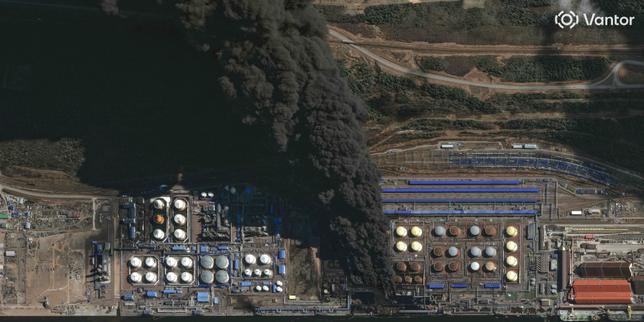
It’s not just about the money. It’s about the optics of vulnerability. If the "mighty" Russian military can’t protect its most valuable assets in its own backyard, people start asking questions. The Kremlin’s propaganda machine can hide casualties, but it can’t hide a massive plume of black smoke rising from a local refinery.
The Role of Intelligence and Precision
Ukraine isn't just firing blindly. They have incredible intelligence, likely aided by satellite imagery and local partisans. They know exactly which parts of a refinery are the hardest to replace. They don't just hit a storage tank—which is easy to fix. They hit the "cracking" units. These are the complex hearts of the plant. Replacing them requires specialized steel and engineering that Russia currently struggles to source because of trade bans.
Global Oil Markets and the Western Dilemma
There’s a lot of talk about how these strikes might affect global oil prices. The U.S. has been quiet, sometimes even reportedly discouraged these attacks, fearing a spike in gas prices during election years. But Ukraine’s perspective is different. They’re fighting for survival. If the choice is between a slight increase in global oil prices and the destruction of the Russian war machine, Kyiv will choose the latter every single time.
Actually, the impact on global crude prices has been somewhat muted because Russia is still trying to export raw crude. The real hit is to their "value-added" products like diesel and gasoline. This creates a weird situation where the world might have enough oil, but Russia has less money to buy shells from North Korea or drones from Iran.
What Happens Next
Expect these strikes to intensify. Ukraine is getting better at bypassing Russian electronic warfare. They’re launching "swarms" to overwhelm local defenses. For Russia, the cost of defending every single piece of energy infrastructure is impossible. They have thousands of miles of pipelines and dozens of massive plants. They can't be everywhere at once.
If you’re watching this conflict, stop looking at the map of the Donbas for a moment. Look at the shipping data in the Baltic Sea. Look at the export volumes from Novorossiysk. That’s where the war is being won or lost right now. Ukraine is successfully turning Russia’s greatest strength—its vast energy reserves—into its greatest logistical and security nightmare.
The next logical step for anyone following this is to monitor the Russian domestic fuel market. Watch for export bans and sudden price hikes in Russian provinces. These are the true indicators of how effective Ukraine’s "oil front" is becoming. Putin needs that oil money to keep the wheels turning. Without it, his "Special Military Operation" becomes an unsustainable drain on a dying economy. Stop thinking about this as a simple border dispute and start seeing it as a high-stakes energy war where the underdog is finally landing some heavy blows.