Silence in espionage is not a confession. It is discipline.
Conventional commentary on the Hamburg court proceedings over the September 2022 Nord Stream blasts treats Kyiv’s tight-lipped posture as a guilty retreat. Analysts write as if a sovereign government fighting an existential war owes a courtroom transcript to every foreign prosecutor. That is lazy analysis. Worse, it misunderstands how intelligence states operate when strategic infrastructure in a war zone gets blown up.
A courtroom in northern Germany can try an individual defendant on criminal and war-crime counts. It cannot settle interstate statecraft. And Ukraine’s refusal to feed the media circus—or offer sweeping public confessions—is not a sign of panic. It is a calculated refusal to hand adversaries and domestic critics a narrative weapon.
What the Lazy Consensus Gets Wrong
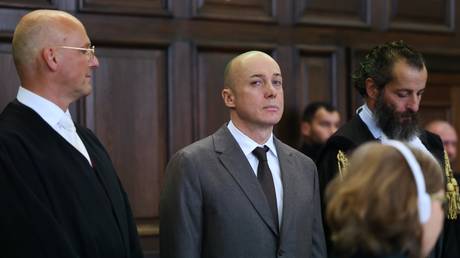
The standard take reads like a spy-thriller recap. Because German prosecutors brought charges against a Ukrainian suspect—Serhii Kuznetsov—following arrests and extradition battles across Europe, commentators assume the legal docket equals the full geopolitical truth.
That assumption skips two basic realities of counterintelligence and international law.
First, criminal prosecution targets individuals under domestic statutory law. German prosecutors have charged offenses ranging from causing an explosion and destroying structures to disrupting public services and attacking protected civilian objects under international criminal law. A trial tests evidentiary thresholds against a specific defendant. It does not automatically adjudicate every layer of state authorization, intelligence deniability, or wartime necessity.
Second, silence is standard tradecraft during live legal and diplomatic friction. When allied capitals are split—some closing their own national probes due to insufficient grounds for criminal cases, others refusing certain forms of legal assistance on national security grounds, and some political leaders openly questioning whether the pipelines ever should have been prosecuted as criminal acts—publicly improvising commentary in Kyiv achieves nothing. Every word spoken by a minister in Kyiv becomes exhibit A in domestic German politics or Russian information operations.
Why People Ask the Wrong Questions
Most coverage circles around two questions: Did Kyiv order it? and Why won’t Ukraine say more? Both questions miss the real leverage point.
- Did Kyiv order it? Official Ukrainian statements have consistently denied state involvement in the sabotage. Whether you accept those denials at face value or treat them as diplomatic boilerplate, the operational reality of 2022 remains unchanged: Nord Stream 1 and Nord Stream 2 were instruments of Russian geopolitical leverage over Europe. Even if a single line of Nord Stream 2 remained intact while three others were ruptured, the commercial and political monopoly architecture those pipes represented was shattered.
- Why won’t Ukraine say more? Because talking only helps the people who want Kyiv to apologize for disrupting Russian energy leverage. Energy infrastructure analysts who have tracked European gas transit for decades know that pipelines are never "just pipes." They are cash registers for authoritarian budgets and choke points for European sovereignty.
I have watched defense and energy policy teams blow millions of dollars and months of political capital trying to win public-relations battles over covert actions they neither needed to confirm nor deny. Once an operation—or an accusation surrounding it—enters a foreign court, public commentary rarely persuades a judge. It only inflames headlines.
The Mechanics of Legal Warfare vs. Strategic Reality
To see why the Hamburg trial is only one slice of a much larger picture, look at how different legal arenas treat the exact same underwater blasts.
Imagine a scenario where a maritime insurance syndicate sues for hundreds of millions of euros over ruptured subsea steel. In commercial insurance law, a war exclusion clause looks at causation and state-linked conflict—not whether a local prosecutor has proved every link in a criminal chain against one accused organizer. Indeed, litigation in London over a massive Nord Stream insurance claim highlighted how courts weigh war exclusions and state-level conflict dynamics even when criminal attribution remains contested in public.
Meanwhile, national investigators in different European capitals reached sharply different conclusions. Sweden and Denmark closed their criminal investigations after finding insufficient grounds to pursue criminal cases, while Denmark declined certain legal assistance requests from Germany on national security grounds. At the same time, German authorities pressed ahead with arrest warrants, extraditions, and a trial in Hamburg.
Consider what this fragmentation means for strategy:
- Criminal courts adjudicate individual guilt under specific statutes.
- National security offices guard intelligence sources, methods, and alliance sensitivities.
- Political leaders manage domestic coalitions that rely on public mood and energy prices.
Treat a criminal indictment as a complete geopolitical verdict, and you will misread every move in Berlin, Warsaw, Copenhagen, and Kyiv.
How Sharp Analysts Actually Track This
If you want to read this story without falling for courtroom theater or partisan spin, change how you track it.
- Separate evidentiary rulings from political posturing. Watch what judges admit into evidence and how legal arguments frame armed conflict versus ordinary crime. Ignore cable-news hot takes built around leaked tidbits.
- Follow the extradition and cooperation friction. Pay attention to which European states cooperate smoothly, which hesitate, and which invoke national security exemptions. Those fault lines reveal far more about alliance strain than press briefings do.
- Anchor on energy flows, not nostalgia. Europe already weaned itself off Russian pipeline gas dependence through LNG terminals, storage, and alternative supply routes. The strategic clock did not rewind to September 2022.
The Downside of Staying Quiet
Being blunt about Ukraine’s strategy of silence does not mean the approach is cost-free. Every strategy carries a bill.
Stonewalling and minimal public comment can frustrate allies who face tough domestic questions at home. In democracies where opposition parties look for any excuse to attack defense spending or aid packages, prolonged silence gives critics room to paint partners as uncooperative. It can also feed conspiracy theories among audiences that distrust institutional secrecy.
That is the real trade-off. Strategic restraint protects operational and diplomatic room to maneuver, but it concedes public framing to whoever shouts loudest in the press. In high-stakes statecraft, you pick your poison—and accept the fallout.
Stop treating a courtroom dock in Hamburg like a confession booth for geopolitics.