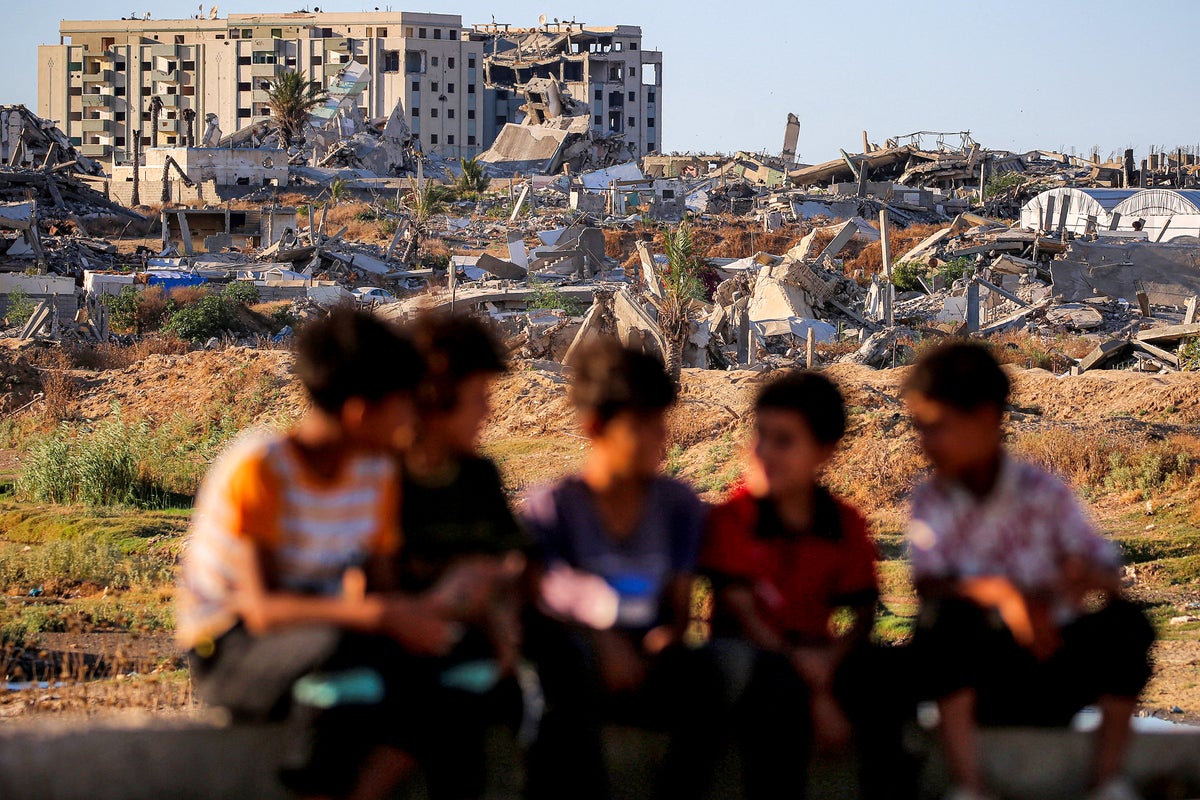
International law usually moves at a snail's pace, but a new independent UN inquiry just shattered what remained of diplomatic decorum. The UN Independent International Commission of Inquiry on the Occupied Palestinian Territory explicitly accused Israeli forces of deliberately targeting Palestinian children. The panel states that these actions are part of an ongoing genocide in Gaza.
This isn't just another generalized report about the horrors of war. It's a highly targeted legal accusation. The investigation zeros in on the youngest victims of the conflict, arguing that the systematic killing and maiming of children serves as primary evidence of genocidal intent.
Israel instantly hit back. The Israeli mission in Geneva rejected the text, calling it a defamatory, libelous sham that completely ignores the actions of Hamas. But the sheer volume of data and the gravity of the accusations mean the international community can't simply sweep this under the rug.
Understanding the Legal Core of Genocidal Intent
Proving genocide in international law is notoriously difficult because you have to prove intent. You must show the explicit desire to destroy a group, in whole or in part. The UN commission, chaired by Indian Judge Srinivasan Muralidhar, argues that the systematic nature of attacks on children provides exactly that missing link.
By targeting children, the inquiry argues, an occupying force systematically undermines the biological continuity and future existence of an entire population. It kills the future.
The numbers backing the report are grim. Between October 7, 2023, and October 7, 2025, at least 20,179 children were killed in Gaza. That makes up roughly 30% of the total death toll. The commission noted this ratio is drastically higher than in previous conflicts. In the 2008–2009 and 2014 hostilities in Gaza, children accounted for about 24% of fatalities. The surge to 30% points to a structural shift in targeting strategy.
The inquiry emphasizes that the continued use of high-payload munitions and wide-area explosive weapons in packed residential neighborhoods proves these deaths weren't accidental side effects. The commission noted that Israeli security forces appeared to view the civilian population collectively, treating everyone as associated with armed groups. Even after the October 2025 ceasefire took effect, UNICEF documented that at least 265 children were killed, proving that the threat didn't vanish when the heavy bombing paused.
How Childhood Was Erased Across Gaza and the West Bank
The report goes far beyond death tolls, detailing what it calls the total erasure of childhood. It maps out an environment where survival is nearly impossible. Mass trauma, systemic starvation caused by the blockade of food and medicine, constant forced displacement, and the total destruction of the healthcare system have left nearly every child in the territory in need of deep psychological support.
The targeting of medical infrastructure has caused a spike in miscarriages and devastated the survival rates of newborn infants. It’s an intentional dismantling of the systems required to sustain human life.
The abuse isn't confined to Gaza. The UN commission tracked a massive surge in settler violence against minors in the occupied West Bank. It documented systematic torture, severe physical beatings, food deprivation, forced stripping, and gender-based violence inside Israeli detention facilities. The panel formally categorized this treatment of detained Palestinian minors as a crime against humanity.
The Global Fallout and Next Legal Steps
This latest report builds directly on the commission's September 2025 finding that Israel was responsible for genocide under the 1948 Genocide Convention. By providing specific, granular evidence of child targeting, the panel is handing international prosecutors a heavily documented roadmap.
The commission noted that Israeli soldiers themselves have posted massive amounts of incriminating visual evidence online, making it increasingly difficult for defense teams to claim ignorance or rogue behavior.
The practical paths forward for international observers, legal professionals, and policy advocates require immediate engagement with these formal findings.
You should read the full 72-page legal analysis from the UN Independent Commission of Inquiry to understand the exact documentation methods used.
Track the upcoming sessions of the UN Human Rights Council and the International Criminal Court to see if these specific child-focused findings are officially integrated into the existing arrest warrant applications for top officials.
Use these verified numbers and legal definitions to counter vague generalizations in public discourse, ensuring that discussions regarding international law focus strictly on documented actions and established statutory definitions.


