Another headline. Another French soldier dead in Southern Lebanon. Another round of "thoughts and prayers" from the Elysee Palace. The media treats these deaths as tragic anomalies of a noble mission. They are wrong. These casualties are the logical, mathematical certainty of a failed doctrine that values optics over operational reality.
The mainstream press wants to talk about the "deterioration of security" or "unfortunate escalations." I have spent years analyzing defense procurement and deployment strategies in high-tension zones, and I can tell you that "security" didn't just deteriorate. It was sold out by a mandate that forces soldiers to stand in the crossfire without the authority to actually stop the fire. If you enjoyed this post, you should look at: this related article.
The UNIFIL Fallacy
The United Nations Interim Force in Lebanon (UNIFIL) is a geopolitical relic. Established in 1978 and beefed up after 2006, its mandate is built on the fantasy that a neutral observer can prevent conflict between a non-state actor like Hezbollah and a conventional military like the IDF.
The competitor reports focus on the "attack" as an isolated incident of violence. This is a shallow take. The real story is the structural paralysis of the mission. When a French soldier dies under a UN flag, they aren't dying for French interests or even for Lebanese sovereignty. They are dying for a bureaucracy that forbids them from proactive engagement. For another angle on this story, refer to the latest update from NPR.
We call this "Presence as Policy." It is the idea that just by being there, Western powers create a "buffer." In reality, they create a target. A soldier who cannot return fire or dismantle the threats they see through their binoculars is not a peacekeeper. They are a human shield with a pension plan.
The Logic of the Meat Grinder
The math of modern proxy wars is brutal. If you occupy the ground between two warring parties and your Rules of Engagement (ROE) are reactive, you have already lost.
- Strategic Blindness: UNIFIL is tasked with ensuring the area is "free of any armed personnel, assets, and weapons" other than those of the Lebanese government. Yet, the entire world knows the south is an arsenal.
- The Credibility Gap: Every time a UN patrol is blocked by "local civilians"—often thinly veiled militia members—and retreats, the deterrent value of the French military drops to zero.
- The Resource Sink: France spends millions of Euros and risks its elite personnel on a mission that has no defined "win" state.
Mainstream journalists ask: "How can we make the mission safer?"
That is the wrong question.
The right question is: "Why are we pretending this mission still exists?"
France’s Identity Crisis in the Levant
France clings to Lebanon because of "La Francophonie" and a historical sense of duty. This isn't strategy; it’s nostalgia. While the French government postures as the mediator of the Middle East, its soldiers pay the price for that vanity.
When an official statement says the soldier was killed "during an attack," they omit the fact that the attack was likely predictable. In high-intensity conflict zones, "peacekeeping" is an oxymoron. You are either an occupier, an ally, or an obstacle. Currently, the French are an obstacle to both sides, which makes them the easiest target for anyone looking to send a message to Paris.
Imagine a scenario where a private corporation sent security contractors into a live fire zone with instructions to watch but not touch, then acted shocked when a truck was hit by an RPG. The CEO would be jailed for gross negligence. In the world of international diplomacy, we call it "honoring our commitments."
The Brutal Reality of Tactical Irrelevance
The standard reporting on this death will emphasize the "bravery" of the fallen. Bravery is not the issue. The French military is one of the most capable on the planet. The issue is utility.
French soldiers in the south are operating under a mandate that is effectively a suicide pact. They are required to coordinate with the Lebanese Armed Forces (LAF), a body that is frequently infiltrated or intimidated by local power structures. This creates a feedback loop of intelligence leaks and tactical vulnerability.
If you are a French taxpayer, you are funding a mission that serves as a literal tripwire for a war France doesn't want to fight, in a country it cannot control, to support a UN mandate that no one on the ground respects.
Dismantling the "Stability" Argument
The "lazy consensus" among diplomats is that if UNIFIL leaves, total war breaks out immediately. This is a fallacy. Total war is prevented by the balance of power and mutual destruction between the primary combatants, not by a few thousand Europeans in blue helmets driving around in white SUVs.
By staying, France actually delays the necessary political reckoning within Lebanon. As long as the international community provides a "buffer," the local actors have no incentive to reach a sustainable internal security agreement. We are subsidizing a stalemate with French lives.
What No One Wants to Admit
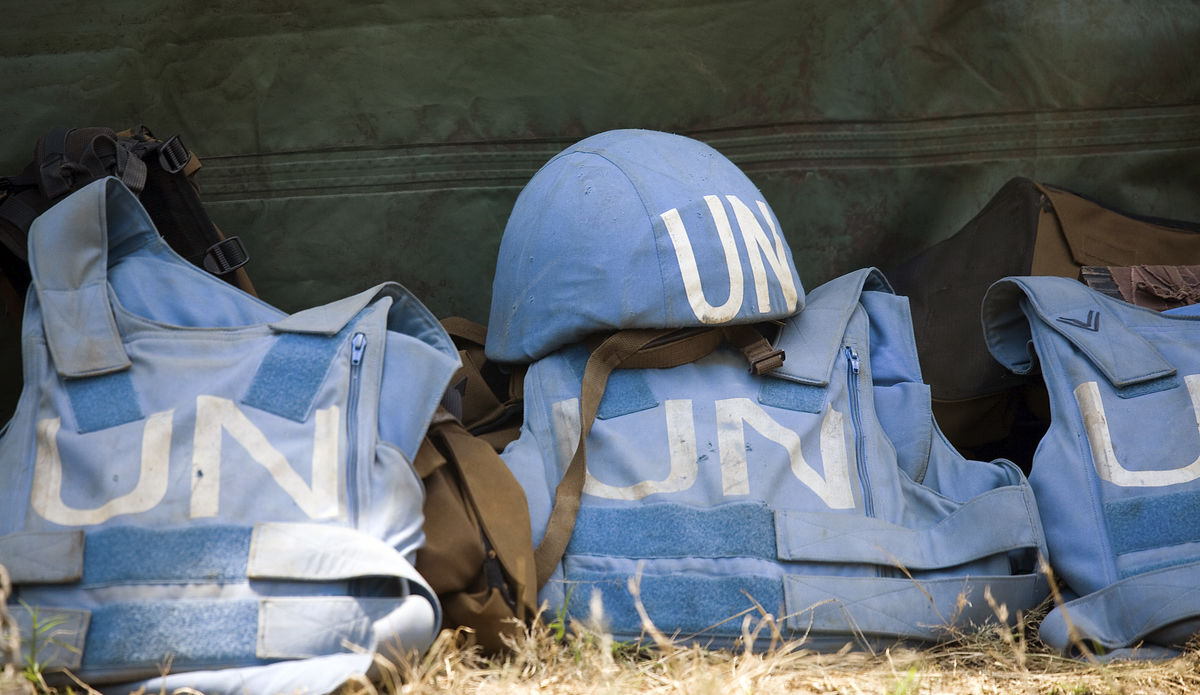
The hard truth is that the UN flag is no longer a shield; it is a bullseye. In the era of hybrid warfare, international organizations are viewed by local militias as extensions of Western hegemony. Killing a French soldier under the UN banner is a low-cost, high-reward way for a group to show it can touch the "untouchable" West without triggering a full-scale invasion.
We need to stop treating these deaths as "accidents of war." They are the direct result of a policy that prioritizes "staying the course" over the safety of the men and women on the ground.
If France wants to influence Lebanon, it should do so through hard-nosed diplomacy and economic leverage, not by parking its soldiers in a valley and hoping no one pulls the trigger.
The current mission is a ghost of 2006. It has no teeth, no clarity, and now, one more body bag.
Pull them out or let them fight. Anything else is state-sanctioned murder disguised as diplomacy.