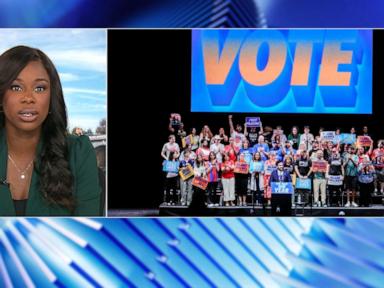
Voters heading to the polls in New York, Maryland, and Utah are deciding more than just the names on a November ballot. Today's primary elections serve as an immediate stress test for state party establishments facing intense friction from internal factions and structural disruptions. In Maryland, Governor Wes Moore works to maintain his statehouse coalition while key local executive seats open up. In New York, the closed-primary system faces pressure from insurgent challengers testing the resilience of party bosses. Meanwhile, Utah is experiencing a major geographical shakeup with a newly drawn congressional seat that gives Democrats their best pickup opportunity in a generation.
These concurrent elections expose a deep, systemic structural friction within both major parties. While superficial news coverage focuses strictly on horse-race polling and standard fundraising tallies, the real battles are being fought over institutional control, redistricting fallout, and signature-gathering rules that dictate who gets to run.
The Succession Vacuum in Maryland
The political landscape in Maryland is experiencing a significant transition driven by term limits and aging leadership. Longtime institutional fixtures are moving aside, leaving a vacuum that local factions are aggressively moving to fill.
In Montgomery County, the race to replace outgoing County Executive Marc Elrich has turned into a high-stakes debate over municipal growth. Democratic Council members Andrew Friedson, Evan Glass, and Will Jawando are offering starkly different paths forward. The debate centers on a tangible crisis: housing density versus suburban preservation. Friedson has advocated for transit-oriented development to spur economic growth, while progressive opponents lean into heavier rent stabilization measures.
This is not a theoretical debate. For decades, Montgomery County operated as a reliable engine of establishment Democratic votes. The intense division among these frontrunners reveals a deeper fracture over how the wealthiest suburb in the state handles economic stagnation and rising living costs.
Further complicating the state's internal alignment is the vacancy left by veteran Congressman Steny Hoyer. For decades, Hoyer anchored the state's institutional power in Washington. The scramble for his open seat has forced Governor Wes Moore to carefully balance his own political standing, managing competing local endorsements without fracturing the coalition that brought him to power.
Redrawn Boundaries and Signature Warfare in Utah
Utah provides a clear look at how raw structural mechanics dictate political outcomes. Following a highly contentious redistricting process, the state's new 1st Congressional District has emerged as a distinct anomaly: a territory drawn in a way that gives Democrats a legitimate competitive edge in a traditionally red state.
Unsurprisingly, this new boundary drew a crowd of contenders. The primary fight highlights an ongoing tactical civil war over how candidates secure a spot on the ballot.
- The Convention Path: Liban Mohamed secured the official party nomination at the state convention in April, leveraging a dedicated base of core party activists.
- The Signature Path: State Senator Nate Blouin and attorney Michael Farrell bypasses the traditional gatekeepers by successfully gathering thousands of physical signatures across the district.
This dual-track system causes intense friction every cycle. Party purists argue that the signature route dilutes the core platform of the organization, allowing candidates to buy their way onto the ballot via paid petition circulators. Reformers counter that the state conventions are dominated by ideological extremes that do not reflect the broader electorate.
The primary winner faces Republican Riley Owen in November, but the immediate story is the return of former Congressman Ben McAdams. Attempting a political comeback after losing his seat in 2020, McAdams represents the ultimate test of whether moderate, establishment figures can still command a newly drawn, highly volatile district.
On the Republican side, the dynamic is reversed. Incumbents are playing strict defense against populist challenges. In the 2nd and 3rd Districts, Representatives Blake Moore and Celeste Maloy are fending off challengers who argue the incumbents have grown too accommodating to Washington's spending habits. State Representative Karianne Lisonbee has weaponized local opposition to Proposition 4 to hammer Blake Moore, while Phil Lyman uses a platform of absolute institutional transparency to challenge Maloy.
Utah Ballot Access Mechanics:
[Party Convention Route] ---> Requires winning delegate votes (Favors insiders)
[Signature Petition Route] --> Requires raw voter collection  (Favors well-funded campaigns)
The Closed Gatekeepers of New York
New York remains one of the most strictly controlled political environments in the country due to its closed-primary rules. Only voters registered with a specific party can participate in that party’s primary. This rule effectively locks independent voters out of the process entirely, concentrating immense power within the traditional party apparatus.
Despite these high barriers to entry, insurgent challengers are forcing competitive races across several congressional districts. In the 12th District, a crowded field featuring Alex Bores, George Conway, and Micah Lasher has turned into a brutal proxy war over the future direction of Manhattan's economic policy.
The institutional defense mechanism in New York relies heavily on challenging the legal validity of an opponent's designating petitions. Weeks before a single vote is cast, party lawyers routinely pack the Board of Elections hearings to invalidate rival signatures on technicalities. This cycle saw dozens of candidates knocked off the ballot well before June, including high-profile challenges in the 1st and 3rd districts.
The primary survivors do not win by merely appealing to ideological purity; they win by masterfully navigating the Byzantine ballot-access laws that the establishment explicitly designed to keep them out.
Structural Realities Over Political Theater
The results of today's primaries will be interpreted by national pundits as a referendum on national figures or abstract cultural debates. That analysis misses the actual mechanism at work.
Elections are won and lost on the structural ground floor. The outcome of these races will depend entirely on which factions successfully mobilized localized networks: Montgomery County's suburban unions, Utah's signature-gathering firms, or the entrenched neighborhood operations of New York's outer boroughs. The politicians who survive tonight are those who recognize that institutional power is not granted by rhetoric, but secured through the grinding mechanics of ballot access and district lines.


