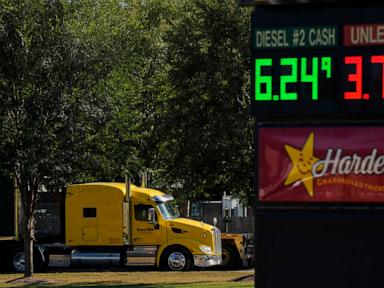
Small United States trucking firms are failing because their operating models treat fuel as a static variable rather than an asymmetric financial risk. When retail diesel prices spike, independent owner-operators and micro-fleets (defined as carriers operating one to ten power units) absorb an immediate compression of operating margins that larger enterprise carriers neutralize through contractual fuel surcharges, bulk purchasing agreements, and freight brokerage scale. Survival in a high-diesel regime requires restructuring a carrier's cost-per-mile architecture, abandoning the spot market's spotty surcharge pass-throughs, and managing working capital velocity against extended broker payment cycles.
The Structural Asymmetry of Freight Pricing
To understand why small carriers collapse during fuel surges while large asset-based carriers remain profitable, one must examine the mechanics of freight pricing across two distinct market tiers: the contract market and the spot market.
Large fleets operate primarily under dedicated, multi-year shipper contracts. These agreements separate the base linehaul rate from the cost of energy using a standardized fuel surcharge (FSC) matrix, typically indexed to the Department of Energy (DOE) weekly national or regional on-highway diesel price. When diesel rises by fifty cents per gallon, the FSC schedule automatically adjusts upward on a predetermined sliding scale—usually based on a baseline fuel efficiency benchmark of six miles per gallon (MPG). While a one-week lag exists between pump price increases and DOE index updates, large fleets possess the balance sheet liquidity to bridge that seven-day gap, and their modern, aerodynamic equipment often achieves seven to eight MPG, turning the FSC mechanism into a slight net profit center during price spikes.
Small trucking firms operate overwhelmingly in the transactional spot market, booking loads through digital load boards and third-party freight brokers. Spot market pricing is governed by immediate supply-and-demand elasticity rather than indexed cost-plus formulas. Brokers quote "all-in" rates that bundle linehaul and fuel into a single lump sum.
During periods of excess truck capacity—a frequent condition following freight booms—shippers and brokers hold pricing power. When diesel prices climb during a soft freight market, spot rates do not automatically rise to compensate. Instead, the fuel cost increase is deducted directly from the carrier's net operating income. Even when a broker explicitly breaks out a fuel surcharge on a spot rate confirmation, the total all-in payout remains capped by what the market will bear. If a lane pays $2,000 all-in and diesel rises by $1.00 per gallon on a 1,000-mile run (consuming roughly 154 gallons at 6.5 MPG), the carrier loses $154 in pure margin overnight, with zero contractual recourse.
Deconstructing the Cost-Per-Mile Function
Most failing micro-fleets calculate profitability using gross revenue per mile against immediate out-of-pocket trip expenses. This accounting error masks insolvency until a major maintenance event or fuel spike exhausts cash reserves. A rigorous analysis requires isolating every expense into fixed and variable buckets on a per-mile basis.
Fixed Overhead (Incurred Regardless of Utilization)
- Equipment Debt Service: Monthly tractor and trailer lease or loan payments. Because small fleets lack the credit ratings of enterprise carriers, they finance used equipment at subprime commercial interest rates, resulting in higher fixed monthly obligations per truck.
- Commercial Insurance: Primary auto liability, cargo, and physical damage premiums. New authorities (firms operating under two years) face punitive underwriting rates, often paying two to three times the per-truck insurance cost of established fleets.
- Permits, Licensing, and Compliance: International Registration Plan (IRP) apportioned plates, International Fuel Tax Agreement (IFTA) filings, Heavy Vehicle Use Tax (HVUT), and Electronic Logging Device (ELD) subscriptions.
- Administrative Overhead: Factoring fees, accounting, dispatch software, and back-office labor.
Variable Operating Costs (Incurred Per Mile Driven)
- Fuel and Diesel Exhaust Fluid (DEF): Historically the second-largest expense behind driver wages, rising diesel prices frequently push fuel into the primary expense slot for small operators.
- Driver Compensation: For an owner-operator, this is the opportunity cost of their labor—the wage required to sustain their household. For a small fleet employing company drivers, this is a rigid per-mile or percentage-of-gross payout.
- Maintenance and Tire Reserves: Preventative maintenance (oil, filters, lubricants) and long-term capital reserves for catastrophic component failure (aftertreatment systems, transmissions, injector replacements) and tire wear.
The fatal trap for small carriers is the Utilization Paradox. When fuel prices rise and spot rates stagnate, a carrier's contribution margin (revenue per mile minus variable cost per mile) shrinks. In response, desperate operators often drive more miles, accepting low-margin "backhaul" freight just to generate gross cash flow to cover fixed equipment notes. If a carrier's variable cost per mile is $1.85 (driven up by $0.90/mile fuel costs) and they accept a load paying $1.75/mile to avoid deadheading empty, every mile driven actively destroys cash reserves rather than contributing to fixed overhead.
The Working Capital and Fuel Card Squeeze
Rising diesel prices do not merely erode profit margins on paper; they create an acute liquidity crisis through working capital mismatch.
A trucking firm incurs fuel expenses in real time at the pump, while revenue collection lags by 30 to 45 days under standard commercial broker payment terms. When diesel prices jump 30% to 40% over a single quarter, the daily cash outflow required to keep a tractor moving increases immediately, outpacing the incoming cash from loads delivered a month prior at lower rate structures.
To bridge this gap, small carriers rely on two financial mechanisms that compound their vulnerability:
- Invoice Factoring: Carriers sell their accounts receivable (bills of lading and rate confirmations) to a factoring company for immediate cash, surrendering 2% to 5% of gross invoice value. When fuel consumes 35% to 45% of gross revenue, a 3% factoring fee on the gross invoice equates to a much larger percentage of the carrier's actual net margin. Furthermore, factoring companies enforce strict credit limits on brokers; if a carrier takes freight from an unapproved broker to chase a higher rate, they must wait 30+ days for payment while still paying for diesel daily.
- Retail Fuel Card Markups and Credit Limits: Major fleets negotiate "cost-plus" fuel pricing at national truck stop chains, paying the wholesale rack price of diesel plus a small margin, state taxes, and distribution fees—often saving $0.40 to $0.80 per gallon off the posted retail pump price. Small fleets rarely qualify for deep cost-plus discounts without high-volume commitments. Worse, small operators often rely on revolving credit lines tied to their fuel cards. When diesel prices spike, weekly fuel spend hits the credit cap mid-week, freezing the card and stranding trucks unless the operator wires immediate cash—cash that is locked up in uncollected freight invoices.
Physics and Aerodynamics as Financial Hedges
When a carrier cannot control the price of diesel or the spot market rate for freight, the only remaining variables within internal control are fuel consumption rate (MPG) and non-revenue miles (deadhead).
Fuel consumption is governed by basic fluid dynamics and mechanical resistance. At highway speeds, aerodynamic drag increases with the square of velocity, while the power required to overcome that drag increases with the cube of velocity. Moving an 80,000-pound Class 8 tractor-trailer at 72 miles per hour instead of 62 miles per hour requires roughly 30% more horsepower to overcome air resistance alone, degrading fuel economy by approximately 0.1 MPG for every 1 MPH increase above 55 MPH.
Small operators frequently resist speed reduction because they conflate speed with productivity, assuming faster driving yields more billable miles per week. Under federal Hours of Service (HOS) regulations—which cap driving time at 11 hours within a 14-hour on-duty window—higher speeds rarely translate into extra paid loads due to shipper loading docks, detention times, and appointment windows. The operator burns significantly more fuel only to arrive early and sit unpaid at a receiver's gate.
Beyond velocity, small fleets suffer from hardware deficits:
- Aging Power Units: Tight capital budgets force micro-fleets into older trucks lacking modern automated manual transmissions (AMTs) with predictive cruise control, downsped drivetrains, and integrated chassis fairings.
- Idling Losses: Without Auxiliary Power Units (APUs) or battery-powered HVAC systems, drivers idle the main diesel engine during mandatory 10-hour rest breaks for climate control, burning roughly 0.8 to 1.0 gallon of fuel per hour. Over a 250-day operating year, idling alone consumes 2,000 to 2,500 gallons per truck—an unrecoverable expense that scales directly with diesel prices.
- Tire Rolling Resistance: Under-inflated tires or aggressive, open-shoulder drive tread patterns create mechanical drag. A 10 PSI drop across all 18 wheel positions reduces fuel efficiency by roughly 1% to 1.5%.
Tactical Restructuring Protocol for Micro-Fleets
Surviving sustained diesel volatility requires shifting from reactive load-chasing to disciplined operational engineering. Fleet owners must execute four structural adjustments immediately.
1. Enforce a Hard Contribution Margin Floor
Calculate the exact break-even variable cost per mile every Monday using current regional diesel prices, not historical averages. Establish a non-negotiable minimum rate-per-mile threshold that covers all variable expenses plus a mandatory contribution toward fixed overhead. If a market area offers only loads below this floor, park the truck. Sitting idle incurs fixed costs, which is painful; running below variable cost incurs fixed costs plus variable losses, which accelerates bankruptcy.
2. Transition from Spot Load Boards to Direct Regional Shippers
Eliminate broker intermediaries on at least 50% of freight volume by targeting small-to-midsize regional manufacturers, distributors, and agricultural processors. These shippers often struggle to attract mega-carriers due to lower freight volumes or irregular shipping schedules. Pitch reliable, dedicated capacity in exchange for direct contracts that include a transparent, DOE-indexed fuel surcharge schedule. Even a simplified surcharge agreement—adjusting the linehaul rate by $0.01 per mile for every $0.06 per gallon movement in the DOE index—insulates the carrier from fuel shocks.
3. Audit and Consolidate Fuel Purchasing Networks
Abandon the habit of fueling at the nearest convenient truck stop based on posted retail prices. Enroll in consortium fuel card programs specifically designed for small fleets (such as NASTC or TCS) that aggregate the purchasing volume of thousands of independent trucks to access wholesale cost-plus pricing at select regional and independent truck stop networks. Use route-optimization fuel software to purchase fuel exclusively in states with lower diesel excise taxes (e.g., fueling in Missouri or Oklahoma rather than Illinois or California), noting that IFTA reconciles fuel tax based on miles driven per state, meaning the true cost of fuel is the base pre-tax price, not the pump price.
4. Mandate Governor Speed Limits and Deadhead Caps
Govern all fleet tractors at 62 to 64 MPH. Communicate the exact financial math to company drivers: a 1.0 MPG improvement across 100,000 annual miles at $4.00/gallon diesel saves roughly $8,800 per truck per year—capital that directly protects their jobs and funds performance bonuses. Simultaneously, cap unpaid deadhead miles at 8% to 10% of total odometer miles. Prioritize shorter, high-density regional loops (250 to 450 miles) over long-haul cross-country runs, as regional lanes offer higher rate-per-mile yields and allow drivers to refuel at vetted, low-cost network stations.
Limitations of Defensive Fleet Management
Operational discipline is not a cure-all. Even a micro-fleet operating at 8.0 MPG with zero deadhead and cost-plus fuel discounts remains exposed to macroeconomic freight cycles. If freight demand collapses simultaneously with a geopolitical oil supply shock—creating a stagflationary freight recession—direct shippers may rebid contracts downward, nullifying fuel surcharge gains by slashing base linehaul rates. Furthermore, retrofitting older trucks with aerodynamic skirts, low-rolling-resistance tires, and APUs requires upfront capital expenditure that distressed carriers simply do not possess, creating a solvency trap where only capitalized fleets can afford the tools needed to lower their operating costs.
The Strategic Play
Small trucking firms must stop acting as generalized, long-haul spot-market capacity providers and consolidate into specialized, regional dedicated networks. Operators should immediately liquidate underperforming or mechanically inefficient tractors to eliminate fixed debt service, cap their remaining fleet size to what they can self-fund without high-interest factoring, and lock in direct, short-haul lanes with mid-market shippers under explicit DOE-indexed fuel surcharge agreements. In an era of structural energy volatility, survival belongs not to the carrier that drives the most miles, but to the carrier that refuses to haul a single mile without contractual protection against fuel price variance.