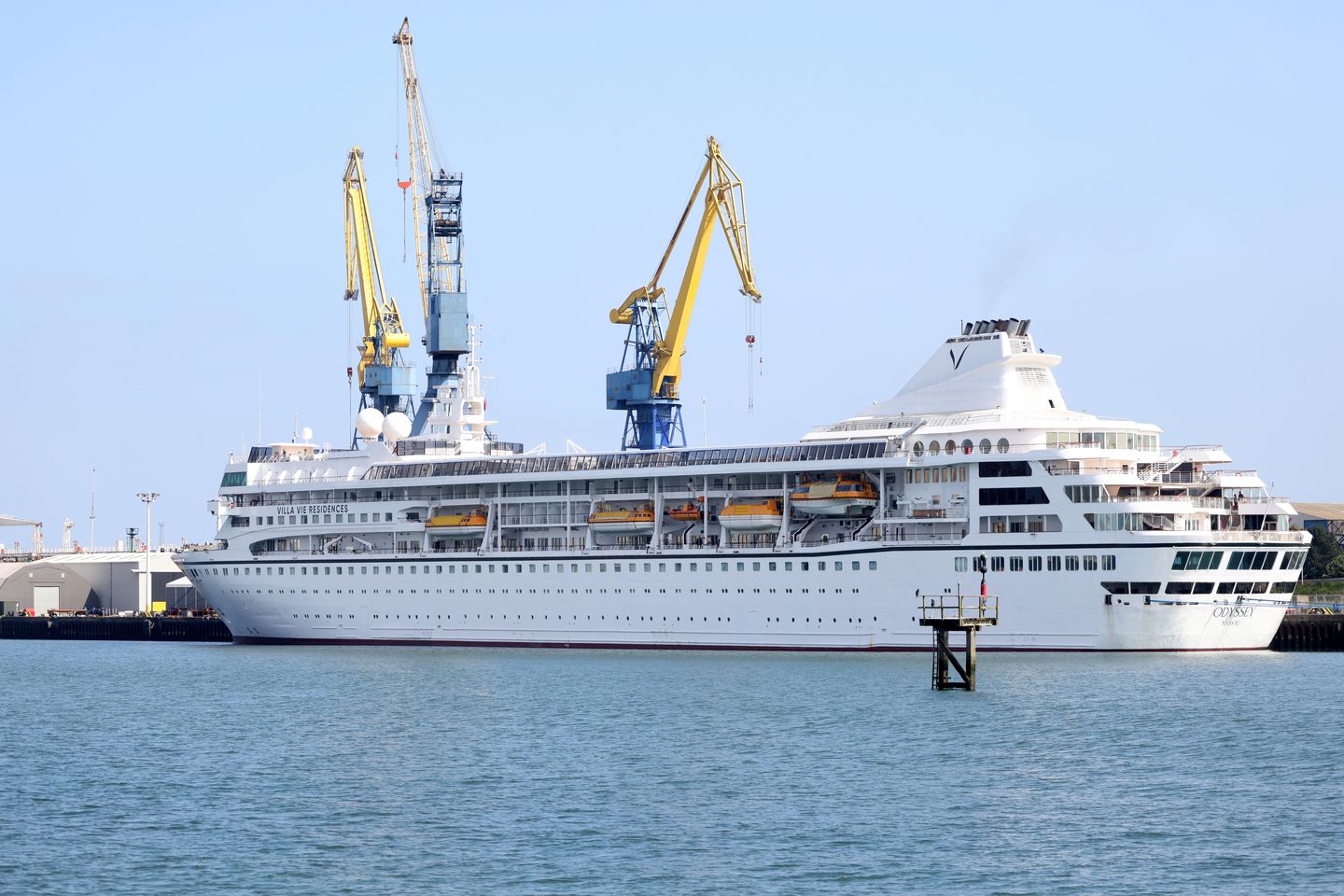
When a U.S.-operated cruise vessel halts a global itinerary in an Asian port and strands 200 passengers due to rising fuel expenses, the surface narrative points to commodity price volatility. That interpretation misses the structural failure. A mid-voyage suspension is never caused by a sudden spike in marine gasoil; it is the terminal symptom of an undercapitalized balance sheet, unhedged working capital, and a flawed revenue-recognition model colliding with the physics of maritime propulsion.
To understand how an ultra-long-haul cruise collapses mid-operation, one must dissect the operational mechanics of the niche expedition and residential cruise sector. Unlike mega-ship conglomerates that operate on economies of scale, floating-city cross-subsidization, and sophisticated derivatives desks, small-vessel operators running 200-passenger global voyages face brutal unit economics. When fuel prices breach their unhedged threshold, the operator does not merely lose margin—they suffer an immediate liquidity freeze that makes reaching the next port legally and financially impossible. Also making news lately: The Unit Economics of Perpetual Maritime Hospitality Why Long-Term Cruise Models Fail.
The Physics and Cost Function of Maritime Propulsion
Marine propulsion is governed by the Admiralty Coefficient and the cubic law of naval architecture. Power required to propel a hull through water scales roughly with the cube of the vessel's speed ($P \propto v^3$). If a captain increases speed by 20 percent to maintain a tight port schedule across the Pacific or Indian Ocean, fuel consumption does not rise by 20 percent; it surges by over 70 percent.
Small-capacity vessels built for global itineraries face three compounding thermodynamic and financial disadvantages: Further details into this topic are detailed by The Economist.
- Disadvantageous Hull-to-Passenger Ratios: A 3,000-passenger vessel spreads the hydrodynamic drag of its hull across thousands of ticket-buying cabins. A 200-passenger vessel carries a vastly higher tonnage-per-passenger ratio. Every nautical mile steamed requires a disproportionate volume of bunker fuel per paying guest.
- Low-Sulfur Fuel Mandates: Under International Maritime Organization (IMO) regulations, vessels operating outside exhaust gas cleaning system (scrubber) exemptions must burn Very Low Sulfur Fuel Oil (VLSFO) or Marine Gasoil (MGO). Small, older, or retrofitted global cruisers frequently lack the capital expenditure history to have installed closed-loop scrubbers, forcing them to buy refined distillates at a steep premium over heavy fuel oil.
- Spot-Market Exposure: Major cruise lines lock in 50 to 70 percent of their fuel consumption 12 to 24 months in advance using fuel swaps, zero-cost collars, and call options. Boutique operators, constrained by weak credit ratings and insufficient cash collateral to post margin with prime brokers, buy bunker fuel on the spot market at each bunkering hub—such as Singapore, Fujairah, or Busan.
When spot prices for MGO surge in Asian bunkering hubs, a boutique operator absorbs 100 percent of the price shock immediately. There is no financial buffer between the refinery gate and the ship's fuel tanks.
Working Capital Asymmetry and the Liquidity Trap
The standard cruise business model relies on negative working capital. Passengers pay deposits and full fares months or years before embarkation. In a healthy enterprise, that cash sits in escrow or low-risk liquid reserves, earning yield until the performance obligation—the voyage—is satisfied.
In undercapitalized operations, customer deposits are cannibalized to fund immediate overhead: vessel acquisition debt, dry-dock retrofits, crew payroll, and marketing for future itineraries. This creates a Ponzi-like working capital cycle that functions only as long as new bookings outpace current operating expenses.
The collapse in Asia follows a predictable sequence of liquidity failure:
- The Margin Compression Phase: Spot bunker prices rise across the Pacific leg. Because tickets were sold 18 months prior at fixed prices, the operator cannot pass the cost to the 200 passengers onboard. Fuel shifts from 15 percent of voyage operating expenses to over 35 percent.
- The Credit Line Contraction: Maritime fuel suppliers (bunker traders) extend short-term trade credit—typically 30 days—based on vessel liens and corporate creditworthiness. Once a boutique operator delays a payment or exhibits signs of distress, bunker suppliers demand cash-in-advance before dropping the fuel hose.
- The Port State and Arrest Risk: Entering a major Asian port requires paying port dues, pilotage fees, tug assistance, and provisioning bills in hard currency. If an operator arrives without the liquid cash to pay for the next leg's bunker fuel, the vessel cannot legally clear port. Worse, unpaid bunker suppliers can exercise a maritime lien, petitioning local admiralty courts to arrest the ship.
- The Stranding Event: Halting the voyage and disembarking 200 passengers in Asia is rarely an executive choice made out of caution; it is the exact moment the corporate treasury hits zero liquid cash required to buy the next 500 metric tons of distillate.
The Structural Vulnerability of the 200-Passenger Global Model
Competitor coverage typically treats a stranded cruise ship as an isolated customer-service failure or a freak macroeconomic casualty. Operational reality proves otherwise. The 200-passenger global circumnavigation model occupies a treacherous strategic middle ground—too small to achieve scale efficiencies, yet too complex to pivot rapidly.
Consider the fixed-cost burden of a multi-month global itinerary. Unlike a seven-day Caribbean loop where a vessel returns to its homeport weekly to restock provisions and rotate crew, a world cruise maintains a massive logistical tail. Spare parts must be air-freighted to remote ports. Crew rotations require international commercial flights. Maritime insurance premiums escalate when transiting high-risk geopolitical corridors in the Red Sea, the Strait of Malacca, or the South China Sea.
When a ship carries only 200 passengers, every non-fuel operational disruption amplifies the financial bleed. If the vessel slows down to conserve fuel—a practice known as slow steaming—the itinerary slips. Missing scheduled ports triggers contractual refund liabilities, shore excursion cancellations, and reputational damage that instantly freezes new bookings for the following season. Cutting new bookings severs the incoming deposit pipeline, sealing the company's insolvency.
Furthermore, regulatory protections for passengers vary sharply by jurisdiction and corporate structure. While U.S.-based operators embarking passengers from U.S. ports must maintain performance bonds under the Federal Maritime Commission (FMC) to cover non-performance of transportation, those bonds are frequently capped and slow to liquidate. When a voyage terminates mid-route in Asia, passengers face immediate out-of-pocket repatriation costs—last-minute intercontinental airfare, emergency accommodation, and lost personal property—while waiting months or years as unsecured creditors in bankruptcy proceedings.
Risk Mitigation and Diagnostic Signals for Maritime Operations
For maritime financiers, travel underwriters, and institutional charterers evaluating niche cruise operators, a mid-voyage fuel suspension is entirely predictable using basic forensic accounting and operational telemetry.
Evaluating Operator Solvency Before Capital Deployment
- Bunker Hedge Ratios vs. Liquidity Reserves: Never accept unhedged spot-market exposure in a fixed-price ticket business. If an operator lacks the credit facility to execute fuel swaps, they must hold restricted cash reserves equal to at least 150 percent of projected fuel costs for the entire published itinerary prior to departure.
- Escrow Segregation Audits: Verify whether customer deposits are legally ring-fenced in third-party escrow accounts until each segment of the voyage is completed. If an operator uses current passenger deposits to fund vessel refits or prior-voyage payables, insolvency is a mathematical certainty during the first commodity or geopolitical shock.
- AIS Telemetry and Speed Anomalies: Automatic Identification System (AIS) tracking reveals operational distress weeks before a press release is issued. A global cruiser suddenly dropping its cruising speed from 16 knots to 11 knots across open ocean legs—without weather justification—is actively rationing bunker fuel to stretch remaining cash reserves to the next port.
- Bunker Supplier Lien Filings: Monitor maritime credit registries and admiralty court dockets in major hubs like Singapore, Rotterdam, and Houston. A single late payment to a physical bunker supplier triggers cross-default clauses across maritime vendors.
Tactical Realities and Limitations
No financial engineering eliminates the inherent fragility of ultra-long-haul boutique cruising. Fuel hedging protects against price spikes, yet it introduces basis risk—the divergence between the financial derivative (typically tied to Brent crude or Singapore 0.5% marine fuel swaps) and the actual physical price paid at remote ports in East Asia or the South Pacific. Furthermore, imposing fuel surcharges on passengers post-booking is legally restricted in many consumer jurisdictions and triggers high cancellation rates, which destroys onboard ancillary revenue from beverages, shore excursions, and spa services.
The strategic imperative for small-vessel cruise operators is structural redesign rather than financial patching. Operators must abandon rigid, fixed-price, multi-month circumnavigations funded by unhedged working capital. Viable small-ship deployment requires modular, regionalized itineraries—such as seasonal loops within the Mediterranean or Southeast Asia—paired with dynamic, index-linked charter pricing and mandatory third-party deposit escrow. Until niche operators align their fuel procurement contracts with their ticket pricing horizons, spot-market volatility will continue to strand vessels and liquidate undercapitalized cruise lines mid-ocean.