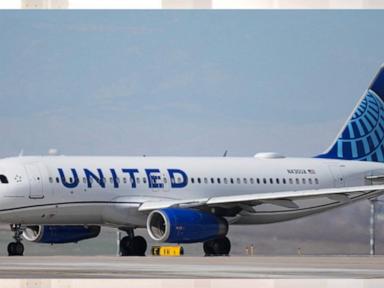
Every travel commentator on the internet is applauding United Airlines for slamming the door on automated AI booking bots. They call it a victory for consumer protection. They call it a brave stand against rogue scrapers.
They are completely missing the point.
United isn't blocking autonomous AI agents out of the goodness of its corporate heart. It is blocking them because an AI agent cannot be emotionally manipulated into paying $45 for an extra three inches of legroom at 11:45 PM after a six-hour flight delay.
The lazy consensus in aviation media right now frames this as a simple cybersecurity and customer service issue. The narrative goes like this: third-party AI bots overwhelm airline servers, hallucinate fares, bypass terms of service, and leave stranded passengers screaming at gate agents when third-party bookings go sideways. That version of events is convenient for airline executives. It paints the carrier as the responsible adult in the room.
It also ignores the multi-billion-dollar economic war happening beneath the surface of your browser window.
The Real Reason Airlines Fear Autonomous Agents
To understand why legacy carriers are suddenly allergic to agentic AI, you have to understand how airlines actually make money. Spoiler: it isn't from flying you from Chicago to Newark.
On a base economy ticket, major carriers operate on razor-thin, often negative margins once fuel, crew, gate fees, and aircraft depreciation are factored in. The actual profit comes from two places: co-branded credit card loyalty ecosystems and ancillary revenue—the labyrinth of seat selection fees, baggage charges, priority boarding, same-day change penalties, and dynamic fare upsells.
Airline websites and mobile apps are not designed to get you the cheapest flight fastest. They are behavioral psychology traps engineered to maximize yield management. Every screen in the checkout funnel is calibrated to induce mild panic. Only 2 seats left at this price! Are you sure you want to risk sitting in a middle seat? Protect your trip for just $38!
An autonomous AI agent feels zero anxiety.
When you deploy an AI agent to book a flight, it does not care about the red warning text telling it that Basic Economy is a miserable experience. It executes a strict Boolean logic tree based on your parameters: non-stop, departing after 4 PM, carry-on included, lowest total landed cost. It bypasses the psychological friction. It strips the airline of its ability to upsell you through interface fatigue.
I’ve spent over a decade consulting on airline distribution architecture and revenue management systems, and I’ve watched carriers spend hundreds of millions of dollars building direct-to-consumer digital moats specifically to prevent this kind of price commoditization. When an AI bot scrapes and books directly on an airline’s front-end web portal, it gets all the benefits of the airline's lowest direct inventory without paying the Global Distribution System (GDS) fees that airlines hate, while simultaneously neutralizing the airline's upsell funnel.
From United's perspective, that is an existential threat. If AI agents become the primary interface for travel booking, airlines instantly revert to being dumb utility pipes—interchangeable commodity carriers competing solely on price and schedule. That is the exact nightmare scenario legacy airlines spent the last twenty years escaping.
The "Hallucination and Server Load" Excuse
Let’s dismantle the technical excuses airlines give when they block automated booking tools.
First, they claim AI bots crush their infrastructure with excessive search queries. That is partially true, but wildly misleading. Travel search volume has been exploding for fifteen years due to metasearch engines like Google Flights, Kayak, and Skyscanner. Airlines already deal with massive look-to-book ratios—often thousands of automated fare queries for every single ticket actually sold. Legacy carrier mainframe systems, many still running on ancient transaction processing code like z/TPF, have always struggled with modern web traffic. That is why airlines already use aggressive caching and rate-limiting from vendors like Akamai and Cloudflare.
Second, they argue that AI bots make mistakes, violate fare rules, or book non-existent itineraries, creating customer service disasters.
Here is the uncomfortable truth: third-party Online Travel Agencies (OTAs) like Expedia, Booking.com, and Kiwi have been creating customer service nightmares for decades, yet airlines still partner with them. Why? Because traditional OTAs pay for access, adhere to strict commercial distribution agreements, and operate within the established New Distribution Capability (NDC) pipelines controlled by the airlines.
The difference with this new wave of consumer-facing AI agents—tools built on browser-use frameworks that literally simulate human mouse clicks and keystrokes on united.com—is that they don't ask for permission and they don't pay a toll. They act like a digital proxy for the human passenger, operating outside the contractual walled gardens airlines have spent years constructing.
Imagine a scenario where ten million travelers tell their personal AI assistant to monitor flight prices to Tokyo and automatically purchase a ticket the second a specific fare bucket drops below $850. The AI doesn't browse. It doesn't click ads. It doesn't sign up for a MileagePlus credit card at checkout. It executes a surgical strike on the airline's lowest-margin inventory and vanishes.
No airline CFO on earth will voluntarily allow that to happen.
What Everyone Gets Wrong About Travel Distribution
If you read mainstream tech coverage, you’d think airlines hate AI. They don’t. Airlines love AI when it points in the other direction.
While United blocks your AI bot from finding a cheap seat, its own revenue management algorithms are using machine learning to analyze your browsing history, device type, booking window, and historical willingness to pay to dynamically adjust the exact price you see. Airlines use AI to optimize dynamic pricing, predict no-shows so they can safely overbook flights, and automate customer service chatbots designed to deflect refund requests.
The fight isn't humans versus machines. It’s their algorithms versus your algorithms.
| Dimension | Airline AI (Dynamic Pricing) | Consumer AI (Booking Agents) |
|---|---|---|
| Primary Goal | Maximize revenue per available seat mile (RASM) | Minimize total out-of-pocket cost for user |
| Tactic | Artificial scarcity, drip pricing, behavioral nudges | Instant comparison, rule-based filtering, zero emotion |
| Data Access | Full visibility into inventory and user cookies | Restricted to public-facing UI or throttled APIs |
| Distribution Cost | Zero marginal acquisition cost on direct web | Bypasses commercial GDS/NDC tollbooths |
Look at that asymmetry. When an airline uses automated software to extract maximum surplus value from a traveler, it is called "sophisticated yield optimization." When a traveler uses automated software to capture the lowest available fare without getting tricked into buying seat insurance, it is called "unauthorized scraping" and banned under the Contract of Carriage.
Answering the Questions Travelers Are Actually Asking
When news breaks that a major carrier is cracking down on AI booking tools, travelers immediately flood search engines with the wrong questions. Let's fix the premises.
Will banning AI bots make flights cheaper for regular people?
No. Anyone claiming that blocking bots lowers ticket prices doesn't understand how airline inventory is priced. Airline fares are filed through ATPCO (Airline Tariff Publishing Company) in rigid fare classes (Y, B, M, H, Q, etc.). Prices don't rise because an AI bot searched for a flight; prices rise because seats in a lower fare bucket sell out, or because the airline's own pricing algorithm detects high demand on a specific route. Blocking your AI assistant doesn't lower fares—it just ensures you have to manually wade through seven screens of upsells to buy them.
Is it actually illegal to use an AI bot to book a flight?
It is not a criminal offense, nor is it a violation of statutory law in the US or Europe. However, it is almost universally a violation of an airline's Terms of Use and Contract of Carriage. Because an airline is a private business, it can legally revoke your access to its website, cancel tickets booked through unauthorized automated means, or freeze your frequent flyer account if it detects automated scraping tied to your loyalty number. You won't go to jail, but you might show up at the airport to find your reservation voided.
Can't AI companies just pay airlines for API access?
They can, and the smart ones eventually will, but there is a massive catch. When an airline grants official API access via NDC or a commercial partnership, the airline dictates the terms. They control which fares are visible, they mandate that ancillary upsells be displayed in the checkout flow, and they prohibit the AI from combining tickets in ways that violate fare rules (like hidden-city ticketing or skiplagging). The moment an AI agent signs an official commercial deal with an airline, it stops working purely for you and starts working as a commissioned sales channel for the airline.
The Downside of the AI Booking Wild West
I am fiercely critical of airline rent-seeking, so let me be equally honest about the flaws in the current generation of AI booking agents. Blindly trusting an autonomous agent with your credit card and passport details right now is a terrible idea.
First, liability is a black hole. When you book directly on United.com and a snowstorm hits Denver, United owns the reservation. They have a legal and operational obligation to rebook you. When an experimental AI agent books your flight using a virtual credit card and a masked email address—a common tactic used by bot startups to evade airline detection—you are effectively invisible to the airline. If your flight is canceled, you won't get the automated rebooking SMS. If a refund is issued, it goes back to the startup's virtual card, and good luck chasing it down if that startup folds six months later.
Second, browser-use agents are brittle. Modern AI agents that navigate websites by taking screenshots and clicking buttons fail constantly when an airline subtly changes its front-end CSS or deploys an interactive CAPTCHA. I’ve watched automated booking scripts misread fare rules, accidentally book non-refundable Basic Economy tickets without carry-on allowances for two-week international trips, and completely botch passenger middle-name formatting—an error that can get you denied boarding at international immigration checkpoints.
Third, privacy exposure is severe. To book a flight, an AI agent needs your full legal name, date of birth, gender, Known Traveler Number, passport number, and payment credentials. Handing that level of PII (Personally Identifiable Information) to a third-party AI wrapper with minimal security auditing is begging for identity theft.
How to Beat the Airline Pricing Machine Without Getting Banned
You do not need a rogue AI agent violating United's Terms of Service to outsmart airline pricing. You just need to separate discovery from execution.
- Use AI for intelligence, never for checkout. Use large language models and specialized flight-search tools to analyze historical pricing windows, identify positioning flights (flying out of a nearby major hub on a separate ticket), and spot fare anomalies. Let the AI do the heavy cognitive lifting of routing optimization.
- Execute the purchase manually on the airline's direct channel. Once your tools identify the exact flight numbers and fare class, open a clean browser session, go directly to the airline's website, log into your loyalty account, and buy the ticket yourself. You get the exact price you found, zero third-party markup, full protection during irregular operations, and direct credit card travel insurance coverage.
- Strip out the tracking noise. Airlines track session behavior. If you search the same route four times in two hours while logged into your account, you are signaling high purchase intent. Do your research in an unauthenticated session, and only log in at the final payment screen.
- Master the 24-hour rule. In the United States, Department of Transportation regulations require airlines to allow you to cancel any flight booked at least seven days before departure within 24 hours of purchase for a full refund (provided you book directly with the airline). Use this as your own automated price-protection bot. Book the fare, set a calendar alert for 23 hours later, and check if the price dropped before the window closes.
Stop Rooted-in-Fantasy Tech Evangelism
The tech press wants you to believe that AI agents are about to dismantle every legacy industry overnight. They won't—not when the incumbents own the physical infrastructure and control the legal gates to inventory.
United Airlines has physical airplanes, exclusive airport gate leases, and regulatory protection. An AI startup has a Python script and a venture capital pitch deck. In a head-to-head fight over who controls the checkout button, the company that owns the airplane wins every single time.
The airlines will eventually integrate AI booking, but it won't be your loyal digital advocate. It will be an airline-approved, airline-monetized chatbot that politely smiles while charging you $60 to pick a window seat. If you want to keep your money, stop waiting for a bot to save you and learn how the pricing game is actually played.