On a humid Tuesday afternoon in Virginia, a woman named Maria sat at a Formica table in a small municipal building, waiting for her naturalization interview. She had memorized the amendments. She knew the three branches of government. She had spent a decade paying taxes, filling out forms, and learning the precise cadence of a country she desperately wanted to call her own. To Maria, being American was a tangible prize, a legal status hard-won through adherence to a strict set of rules.
A thousand miles away, in a wood-paneled courtroom, a completely different debate was unfolding—one that threatened to fundamentally alter the very ground Maria was trying to stand on.
When we talk about legal battles in the highest court of the land, we often treat them like high-stakes chess matches played by elites in robes. We track the briefs, analyze the oral arguments, and focus heavily on the political theater of it all. But constitutional crises are never actually about the people in the robes. They are about the people on the ground. The recent, unprecedented legal battles surrounding executive immunity and the limits of presidential power have forced a question that goes far deeper than party lines: If the rules can be rewritten from the top down, what happens to the silent contract that holds the rest of us together?
We have arrived at a moment where the definition of citizenship itself is being stress-tested. It is a quiet, creeping shift, but its weight is felt everywhere from the immigration office to the kitchen table.
The Invisible Document We All Sign
Every society functions on a myth. Not a lie, but a shared story so powerful that we agree to act as if it is absolute truth. For Americans, that story is etched into the cultural consciousness: no one is above the law. It is the foundational promise that levels the playing field between a billionaire, a president, and a line cook.
When that promise is brought into a courtroom and questioned, the friction creates a strange kind of societal vertigo.
Consider a hypothetical scenario. Imagine a local mayor who decides to block off a public highway to host a private party for their donors, paralyzing the town’s commerce for a day. Under normal circumstances, the legal system provides a clear remedy. There are codes, violations, and consequences. But if that mayor suddenly possesses a shield that renders their official actions untouchable, the entire mechanism breaks. The citizens are left watching traffic pile up, realizing the rules they follow every day simply do not apply to the person in the town hall.
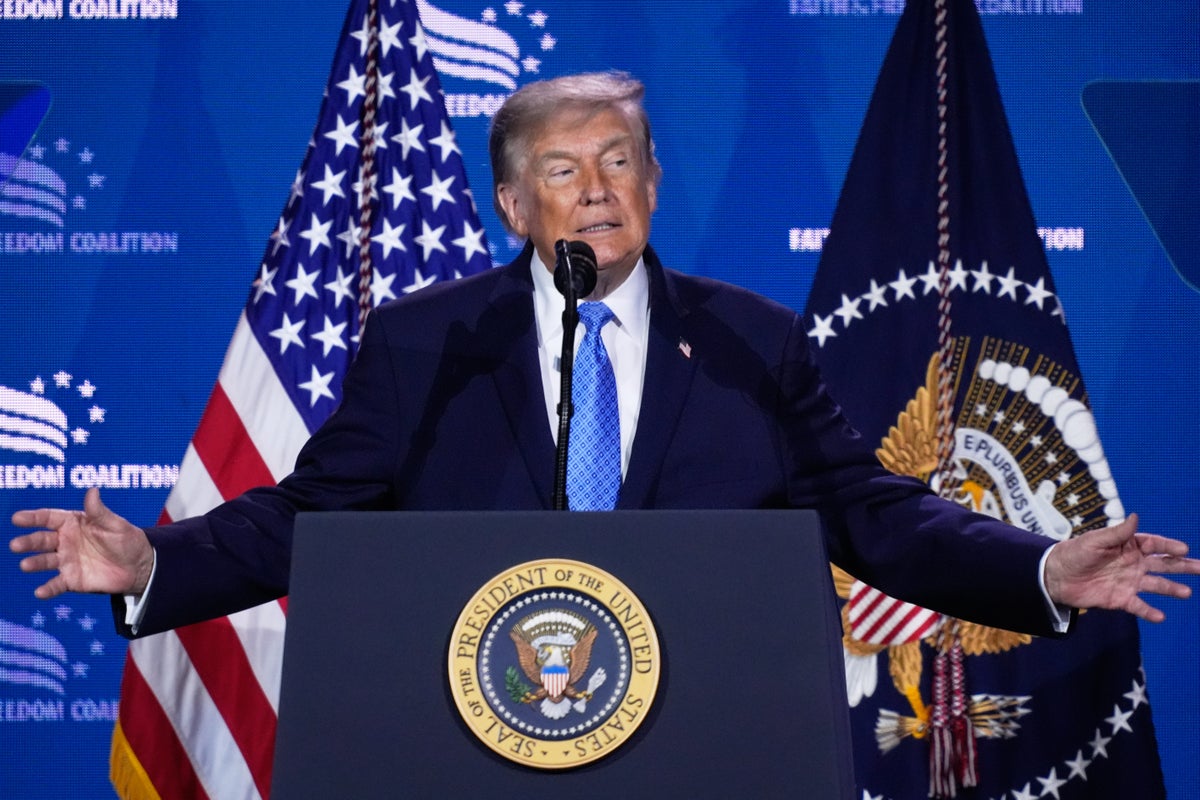
This is the core of the friction currently rippling through the American psyche. It isn’t just about Donald Trump, nor is it strictly about the specific legal maneuvers used by his defense team. It is about the precedent of the shield.
When the Supreme Court ruled on the scope of presidential immunity, it didn't just resolve a specific criminal case; it altered the geometry of American power. By dividing presidential actions into official and unofficial categories—and granting absolute immunity to the former—the court created a gray zone.
Gray zones are dangerous places for democracies. They are where accountability goes to vanish.
The Architecture of Trust
To understand how we got here, we have to look at the sheer fragility of public trust. Trust takes generations to build and mere seconds to shatter.
For decades, the American system relied heavily on unwritten norms. There was no explicit law saying a president couldn't weaponize the Department of Justice against a political rival, because for generations, the sheer weight of historical precedent and public backlash kept that door closed. Norms were the guardrails.
But norms are not laws. They are gentle agreements, and they only work if everyone involved cares about the opinion of history.
+-------------------------------------------------------+
|                 THE AMERICAN SOCIAL CONTRACT           |
+-------------------------------------------------------+
|  The Governed:                                        |
|  - Follow laws, pay taxes, uphold community norms.    |
|  - Expectation: Fair treatment and equal justice.     |
+---------------------------+---------------------------+
                            |
                            v (Bound by the Constitution)
+---------------------------+---------------------------+
|  The Executive:                                       |
|  - Executes laws, commands military, leads state.     |
|  - Traditional Check: Bound by criminal code post-term|
|  - New Reality: Broad immunity for "official acts."    |
+-------------------------------------------------------+
When those guardrails are removed, the architecture changes. The average person begins to look at the institutions around them with a newfound skepticism. If the highest office in the country operates under a different set of physics, why should the average citizen believe the local traffic court is fair? Why should they trust the tax auditor, or the voting booth?
This skepticism is corrosive. It eats away at the civic fabric until people stop seeing themselves as part of a collective experiment and start seeing themselves as isolated actors trying to survive a rigged system.
The real danger of this legal evolution isn't a sudden, dramatic collapse of the government. It is the slow, steady evaporation of the belief that we are all playing the same game.
The Cost of the Gray Zone
Let us look closely at how this plays out in the real world, far away from the microphones of Washington.
Imagine a small business owner named David. He runs a logistics company in Ohio. For David, the law is a tool of predictability. He signs contracts because he knows that if the other party defaults, a court will enforce the agreement. He pays his licensing fees because he expects his competitors to do the same. His entire livelihood depends on a predictable, stable legal landscape.
Now, introduce the gray zone. If the executive branch can intervene in regulatory agencies, alter enforcement priorities, or shield its allies from scrutiny under the banner of "official acts," predictability dies. David can no longer plan for the next five years because the rules of commerce have become fluid, subject to the whims of whoever holds the pen in the Oval Office.
This is the hidden cost of the immunity debate. It introduces a systemic volatility that trickles down into every aspect of American life. It alters how businesses invest, how local police forces view federal authority, and how teachers explain the concept of justice to a room full of middle schoolers.
It makes the ground feel soft.
The legal arguments presented to the Supreme Court were dense, filled with references to Alexander Hamilton’s essays and obscure 19th-century court cases. But the output of those arguments is incredibly simple. It is a message sent to every kitchen table in America: the definition of accountability has changed.
Rewriting the Contract
We are left grappling with a profound sense of uncertainty. The legal battle has concluded in the halls of the judiciary, but its cultural aftermath is just beginning to take shape.
For a long time, being American meant subscribing to the idea of progress—the belief that while the country was flawed, its legal and moral trajectory bent toward a more perfect, more equal union. It was a narrative of inclusion and tightening standards of accountability.
Today, that trajectory feels contested. The legal framework has shifted from protecting the citizen from the overreach of the state to protecting the head of state from the scrutiny of the law.
Maria eventually passed her test. She swore her oath, her voice catching slightly on the words "will support and defend the Constitution." She received her small paper flag and her certificate of citizenship. She walked out into the afternoon sun feeling a profound sense of achievement.
She holds a piece of paper that says she is equal to every other American. We can only hope that the system she just joined still believes the same thing.
The true test of a nation does not occur when its laws are easy to uphold. It occurs when the temptation to bypass them is at its peak, and the country must decide whether to cling to its foundational myth or let it drift away into the pages of history. The boundary line has been moved. What remains to be seen is who will be left standing on the outside looking in.