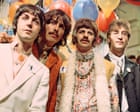
The media is currently experiencing a collective delusion. Pundits are looking at director Sam Mendes and Sony Pictures’ plan to drop four separate Beatles biopics simultaneously on April 7, 2028, and calling it the next Barbenheimer. They claim the UK is gripped by a new wave of Beatlemania. They point to the star-studded cast—Paul Mescal, Barry Keoghan, Harris Dickinson, and Joseph Quinn—and promise a historic box office bonanza.
They are fundamentally wrong. Recently making news in related news: Why I Want Your Sex Celebrates the Fine Art of Sloppy Mistakes.
What the industry is actually staring at is not a cultural celebration. It is an unprecedented logistical trainwreck. By attempting to market four distinct theatrical features about the exact same band at the exact same time, Sony is ignoring basic economic principles, consumer psychology, and the harsh realities of modern cinema exhibition. The "lazy consensus" says that because the Beatles are the greatest band in history, audiences will happily spend eighty dollars on tickets and commit eight hours of their lives to sit through four overlapping versions of the same story.
I have watched major studios blow tens of millions of dollars on arrogant, high-concept release strategies that assume the public has infinite time and disposable income. This experiment will not turn the hype up to 11. It will turn theatre lobbies into confusing dead zones, alienate casual filmgoers, and cannibalize its own revenue. Further details regarding the matter are covered by Vanity Fair.
The Barbenheimer Illusion
The comparison to the summer of 2023 is flawed from the start. Barbenheimer worked because of structural asymmetry and stark counter-programming. You had a neon-pink, existential toy comedy competing directly against a three-hour, bleak biographical epic about the atomic bomb. They shared zero narrative DNA. The internet turned it into a meme precisely because the two films had absolutely nothing to do with one another.
Mendes’ project is the exact opposite. It is symmetrical homogeneity.
Imagine a scenario where a studio releases four separate films about the 1969 moon landing on the exact same Friday: one from the perspective of Neil Armstrong, one for Buzz Aldrin, one for Michael Collins, and one focusing entirely on the team at Mission Control. The average consumer is not going to buy four tickets. They are going to ask their friends which one is the best, watch that single version, and ignore the other three.
Sony film boss Tom Rothman proudly dubbed this strategy "the first bingeable theatrical experience." This completely misinterprets why people binge content. Audiences binge television from the comfort of their couches because it is included in a flat-rate monthly subscription and requires zero physical effort. Forcing a consumer to leave their house four times—or sit in an auditorium for eight hours straight while paying for individual tickets each time—is not binging. It is an endurance test.
The Hard Math of Ticket Pricing and Cannibalization
Let us look at the raw mechanics of consumer spending. The average cost of a cinema ticket in major metropolitan areas is no longer a casual expense. When you add premium large formats like IMAX or Dolby, plus concessions, a single trip to the movies for a couple easily clears fifty dollars.
By demanding that fans show up for four separate features to get the complete narrative, Sony is asking for an economic commitment that defies historical data.
- The Die-Hard Fallacy: Media executives assume the core fanbase will buy all four options instantly. While the top 5% of Beatlemaniacs will comply, a theatrical release cannot achieve profitability on superfans alone. It requires the casual middle-tier audience.
- The "Which One Matters?" Problem: The moment the reviews drop, critics will inevitably rank the films. If Harris Dickinson’s John Lennon chapter gets a 90% on Rotten Tomatoes while Barry Keoghan’s Ringo Starr chapter gets a 60%, the Ringo film dies an immediate death.
- Narrative Fatigue: Because these four films cover the exact same timeline, audiences will see the same historical milestones—the Ed Sullivan performance, the Shea Stadium concert, the Apple Corps rooftop gig—repeated from slightly different angles. By the third time a viewer sees the band break up, the emotional weight will be completely erased by pure repetition.
I admit the creative intent here is fascinating. Having Jez Butterworth, Peter Straughan, and Jack Thorne pen overlapping perspectives is a brilliant narrative exercise for a streaming miniseries. But the theatrical model is built on scarcity and distinct choices, not flood-the-zone saturation.
The Exhibition Nightmare
The people who will suffer the most from this stunt are the independent theatre owners already struggling to survive on thin margins.
To properly exhibit "The Beatles: A Four-Film Cinematic Event," a multiplex will have to dedicate at least four entire screens exclusively to this project. For smaller, independent two-screen or three-screen venues, playing the complete project is physically impossible without completely shutting out every other movie in the market.
[Screen 1: Lennon] ----> Decreasing Attendance Week 2
[Screen 2: McCartney] -> Stable Attendance Week 2
[Screen 3: Harrison] ---> Rapid Drop-off Week 2
[Screen 4: Ringo] ------> Ghost Town Week 2
If a theater owner allocates four screens to Mendes, and the casual public decides they only care about the McCartney and Lennon perspectives, screens three and four will sit completely empty. Due to rigid studio distribution contracts, exhibitors cannot easily swap out underperforming films during the opening weeks. This strategy will actively choke out independent films and mid-budget counter-programming that desperately need screen space to breathe.
Dismantling the Myth of the Perpetual Beatles Revival
Cultural critics love to argue that the Beatles exist outside the normal laws of aging media. They point to Peter Jackson’s eight-hour Get Back documentary as proof of an insatiable public appetite.
This ignores the fundamental difference in medium and accessibility. Get Back was a streaming event delivered directly to Disney+ subscribers during a period when home viewing was at an all-time high. It allowed viewers to pause, digest, and ambiently consume the footage over days or weeks.
The idea that this translates into a multi-billion-dollar theatrical demand for four separate scripted biopics is a massive leap in logic. The Beatles are a historic monument, but monuments do not automatically generate ticket sales. The public's relationship with the band is largely archival and nostalgic. Transforming that respect into active, repetitive box office spending is an entirely different challenge—one that Hollywood has failed to solve with almost every other musical act attempted at this scale.
Stop treating this four-part release plan like an innovative victory lap for cinema. It is a bloated, high-risk gamble driven by studio hubris. When April 2028 arrives, the industry will quickly realize that splitting a single story into four separate admissions prices does not quadruple your audience. It just quarters your chances of success.