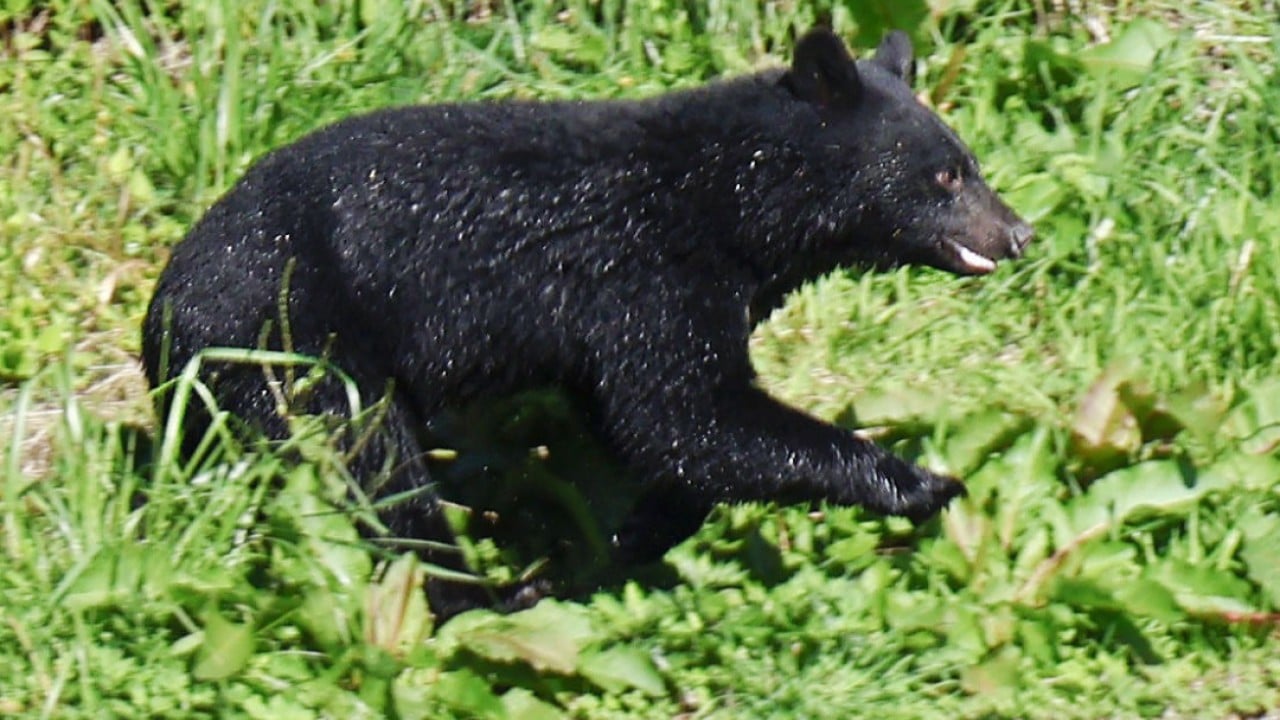
Municipal school closures in northern Japan during acute bear sightings are not isolated panic responses; they represent a calculated risk-transfer mechanism driven by demographic collapse, ecological mast failures, and statutory liability constraints. When a Japanese municipality suspends public education to hunt a mother bear, local administrators are executing a zero-tolerance safety protocol designed to offset a structural deficit in rural wildlife management.
Standard news coverage treats human-bear conflict in Japan as a seasonal anomaly—a sudden clash between nature and suburban life. That framing misses the underlying operational reality. An incursion by a female bear (Ursus thibethanus on Honshu or Ursus arctos in Hokkaido) into an urban perimeter triggers a multi-agency crisis protocol governed by strict legal boundaries, aging hunter demographics, and biological imperatives that make maternal bears uniquely hazardous.
The Biological Risk Multiplier of Maternal Bears
To understand why a single sighting forces a municipal lockdown, one must separate general wildlife encounters from maternal defense behavior. Wildlife management frameworks categorize bear threats by behavioral state rather than mere proximity. A solitary male foraging for calories exhibits predictable avoidance patterns when confronted with human noise or physical barriers. A sow with cubs operates under an entirely different behavioral calculus.
Maternal aggression in ursids is a preemptive defense mechanism. Unlike predatory attacks, which are rare and driven by severe caloric deficit, defensive maternal strikes occur when a human inadvertently breaches a dynamic spatial threshold—often between 50 and 100 meters—separating the mother from her offspring. In dense Japanese residential zones, where narrow streets, concrete retaining walls, and manicured hedges eliminate sightlines, a pedestrian or commuting student can breach that perimeter in seconds without visual warning.
This spatial compression turns routine school commutes into high-probability encounter vectors. Japanese elementary and junior high school students typically walk to school along designated, unescorted neighborhood routes (tsugakuro) during dawn and early morning hours. Those exact hours coincide with peak crepuscular foraging activity for bears entering urban fringes. Closing schools eliminates thousands of unpredictable, low-profile targets from the street grid simultaneously, buying local authorities an operational window to locate and neutralize the threat.
The Structural Drivers of Urban Encroachment
Urban bear sightings in prefectures such as Akita, Iwate, Niigata, and Hokkaido are the downstream consequence of three converging systemic failures. Treating the closures as mere weather-like disruptions ignores the permanent shifts altering Japan's rural-urban boundary.
1. The Mast Cycle Deficit
Asian black bears and Ussuri brown bears rely heavily on hard mast—specifically beech nuts (buna) and acorns (konara and mizunara)—to accumulate the fat reserves required for winter torpor. Mast production operates on a boom-and-bust cycle. During severe mast failure years, hyperphagia drives bears out of mountain forests into lowland agricultural zones and suburban centers. Abandoned persimmon and chestnut trees inside depopulated residential lots act as high-calorie attractants, effectively pulling bears across the wildland-urban interface.
2. Collapse of the Satoyama Buffer Zone
Historically, Japan maintained a managed ecological buffer zone known as satoyama—a mosaic of secondary forests, paddy fields, and coppiced woodlands separating deep mountain habitats from human settlements. Farmers and forestry workers continuously cleared undergrowth, harvested timber, and maintained active human presence in these zones, signaling clear territorial boundaries to wildlife.
Rural depopulation and an aging agricultural workforce have dismantled this buffer. Untended cedar plantations and overgrown brush now extend directly to the backyards of suburban homes and schoolyards. Without a cleared visual buffer, bears move from mountain ridges into residential neighborhoods under continuous cover.
3. The Ryoyukai Demographic Bottleneck
Japan delegates frontline wildlife capture and culling to local hunting associations (ryoyukai), civilian organizations composed largely of retired part-time hunters. Over the past four decades, the total number of licensed hunters in Japan has dropped by more than half, with the vast majority now over the age of 60.
This demographic contraction creates an operational bottleneck during acute urban incursions:
- Response Latency: Municipal governments lack standing, full-time wildlife tactical units. Mobilizing civilian ryoyukai members requires coordinating volunteers who hold other jobs or face physical limitations.
- Legal Firearms Restrictions: Under Japan's strict Firearm and Sword Possession Control Law, discharging a hunting rifle inside a densely populated residential area is heavily restricted and requires explicit authorization from public safety commissions and on-scene police commanders.
- Equipment Mismatch: Standard hunting setups are optimized for mountain tracking, not close-quarters urban containment where ricochet risks and bystander density prohibit high-velocity rounds.
The Municipal Liability and Asymmetric Risk Calculus
When a bear is spotted near a residential zone, mayors and municipal boards of education face a severe asymmetric payoff matrix. The decision to shut down schools, suspend public transit routes, and deploy municipal loudspeaker alerts is governed by institutional liability and political survival.
Consider the two failure modes available to a municipal administrator:
- Type I Error (False Positive Lockdown): The city closes schools, disrupts local commerce, and deploys police and hunters, only for the bear to retreat into the mountains unseen. The cost is absorbed privately by working parents who must arrange emergency childcare and by students who lose instructional hours. The municipality incurs zero direct financial liability and faces minimal political backlash, as officials are credited with prioritizing child safety.
- Type II Error (False Negative Inaction): The city keeps schools open under heightened vigilance, and a student is mauled or killed on a tsugakuro route. The resulting administrative inquiry, national media scrutiny, and civil litigation are catastrophic for local leadership.
Because Japanese public administration operates on consensus-based risk aversion, officials inevitably choose Type I over Type II. Closing schools is the fastest, legally cleanest lever a mayor can pull to remove vulnerable populations from the risk zone while shifting the burden of response onto prefectural police and local hunting associations.
Operational Friction in Urban Bear Containment
Once schools are closed and the perimeter is established, containment teams encounter severe tactical constraints. Unlike North American wildlife agencies that routinely utilize tranquilizer darts, rubber bullets, and aversive conditioning teams to relocate nuisance bears, Japanese municipal responses lean heavily toward lethal removal once a bear enters an urban core—yet executing that removal is operationally complex.
Tranquilization is rarely viable in dense urban emergencies. Chemical immobilization agents take between 10 and 20 minutes to induce sedation. A darted mother bear experiencing an adrenaline surge can easily cover several kilometers through residential streets before losing motor control, creating an acute secondary hazard for police and residents.
Box traps (hako-wana) baited with honey or fruit offer a safer capture mechanism, but they require time to deploy and rely on the bear returning to a specific feeding site. When a mother bear is actively moving through a school district with cubs, trapping is too slow to restore normal municipal operations within a 24-to-48-hour window.
At the same time, deploying firearms in a residential neighborhood triggers a rigid command-and-control protocol. Local police must establish a hard exclusion zone, evacuate adjacent homes, verify backstops to prevent stray bullets from penetrating wooden residential structures, and formally authorize a ryoyukai marksman to fire. Every hour this process drags on extends the school closure and compounds the economic friction on local households.
Strategic Restructuring for High-Risk Municipalities
Relying on reactive school closures and an aging volunteer hunter corps is an unsustainable operating model. As satoyama buffers continue to degrade and climate variability destabilizes mast cycles, urban bear incursions will shift from sporadic emergencies to chronic operational disruptions. Municipalities on the wildland-urban interface must transition from reactive lockdowns to structural perimeter defense.
The first step requires re-engineering the physical boundary around school zones and residential fringes. Local governments must allocate public works budgets to clear a mandatory 50-to-100-meter vegetation buffer along mountain-facing municipal borders, eliminating the brush cover bears use to approach streets undetected. Simultaneously, municipalities need to enforce ordinances requiring the removal or harvesting of unmaintained fruit trees on abandoned properties, stripping away the primary caloric incentive drawing bears out of the forest.
Second, prefectural governments must replace the volunteer ryoyukai emergency model with salaried, full-time municipal wildlife response units. Integrating trained wildlife officers directly into prefectural police or fire department command structures eliminates mobilization latency and resolves the legal friction surrounding urban firearm authorization.
Third, boards of education should replace blanket, district-wide school closures with tiered, zone-specific transit protocols. Instead of shutting down entire school systems for days, municipalities can deploy rapid-response shuttle buses to transport students along high-risk tsugakuro corridors while maintaining normal instructional schedules. Shifting from passive lockdowns to active transit shielding and professionalized perimeter management is the only viable path to keeping Japanese cities functional as wildlife boundaries collapse.