The intersection of marine megafauna life cycles with municipal infrastructure presents a highly volatile risk vector for coastal urban centers. This phenomenon is driven by site fidelity—the biological compulsion of an organism to return to its geographic point of origin. When an animal possessing extreme sexual dimorphism and a projected adult mass of 4,000 kilograms exhibits high site fidelity within a high-density human habitat, municipal infrastructure fails.
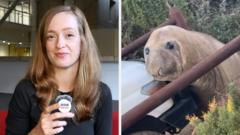
The case of Neil, a five-year-old male southern elephant seal (Mirounga leonina) currently localized in southeastern Tasmania, illustrates the systemic mismatch between urban design tolerances and the physical force of wild biomass. Born in 2020 in Salem Bay—an anomalous mainland birth for a species that typically colonizes subantarctic environments like Macquarie or Heard Island—this individual has scaled from a 40-kilogram pup to a 1,000-kilogram sub-adult. This mass acceleration converts benign biological behaviors into acute economic and logistical liabilities. Expanding on this idea, you can find more in: Why Overreliance on Iron Domes and Patriot Missiles Is Making the Gulf Less Secure.
The Kinematic Impact Matrix of Sub-Adult Pinnipeds
Urban civil engineering relies on predictable load tolerances. Street furniture, residential fencing, and consumer vehicles are engineered to withstand standard anthropogenic and meteorological forces, not the kinetic energy of a one-tonne marine predator.
[Mating/Shedding Urge] ──> [Inland Haul-Out] ──> [Infrastructure Sparring] ──> [Structural Failure]
                                                       │
                                                       └──> [Anthropogenic Habituation] ──> [Lethal Risk Vector]
The disruption observed in Tasmanian municipalities is governed by two core behavioral mechanisms: Observers at NBC News have shared their thoughts on this situation.
Catastrophic Moult Requirements
Unlike terrestrial mammals that shed fur continuously, southern elephant seals undergo an annual catastrophic moult. This physiological process requires the animal to abandon the marine environment for approximately four to six weeks to shed its entire pelage and outer epidermal layer simultaneously. To regulate body temperature and minimize metabolic energy expenditure, the organism seeks stable, flat substrates. Urban asphalt, concrete driveways, and manicured lawns function as highly efficient thermal sinks, drawing the animal away from the shoreline and into the built environment.
Ersatz Conspecific Sparring
In a native subantarctic colony, sub-adult males engage in continuous physical sparring to establish dominance hierarchies and develop the thoracic musculature required for adult mating competition. Because this individual is geographically isolated from conspecifics, his instinctual drive to spar is redirected toward rigid anthropogenic objects. The choice of targets follows a predictable mechanical logic:
- Bollards and Utility Boxes: These structures mimic the rigid counter-resistance of a rival male's chest shield. The animal applies deadweight and lateral thrust, exceeding the shear strength of standard municipal anchoring bolts.
- Civil Infrastructure (Cones and Barricades): Lightweight plastic components are treated as environmental enrichment or displacement play targets. They provide zero containment utility.
- Consumer Vehicles: High-mass sedans and utility vehicles represent large, solid obstacles within the animal's path of travel. When a 1,000-kilogram organism utilizes a vehicle's quarter panels or hood as a leverage point or scratching surface, the localized force routinely exceeds the yield strength of automotive sheet metal and suspension components.
The Public Safety Cascade and Algorithm-Driven Disturbance
The economic risk is not limited to property damage; it is heavily compounded by human behavioral feedback loops amplified by digital platforms. The transition of a wild apex predator into an internet phenomenon alters public risk perception, creating a direct threat to the animal's survival.
The Audience-Driven Proximity Loop
Algorithmic distribution networks incentivize high-proximity digital media capture. This creates an economic and social incentive for untrained civilians to violate established wildlife exclusion zones.
Standard safety protocols mandate a minimum buffer of 20 meters for uncontained humans and 50 meters for domestic canines. However, the documentation of unusual animal behaviors yields high digital engagement, which causes individuals to minimize their perception of physical risk. This dynamic leads to severe behavioral errors:
[Viral Media Distribution] ──> [Incentivized Human Proximity] ──> [Diminished Risk Perception] ──> [Defensive Attack Risk]
The Mechanism of Defensive Agility
While elephant seals appear torpid on land due to their lack of specialized terrestrial appendages, their physiological architecture allows for rapid, short-burst directional lunges. The lumbar spine and core musculature can generate explosive forward propulsion over short distances.
As the animal trends toward sexual maturity at age 12, its baseline testosterone levels will elevate, shifting its behavioral profile from curiosity to territorial defense. A defensive strike from a 1,000-kilogram organism possesses sufficient kinetic energy to cause lethal blunt-force trauma or severe crush injuries to human targets.
The Mitigation Bottleneck: Policy Limitations and Ecological Precedents
Wildlife management authorities face a complex optimization problem balanced between public safety, legislative limits, and animal welfare. The current management strategy exposes three distinct structural vulnerabilities.
Regulatory Enforcement Deficits
Current Tasmanian conservation frameworks lack agile, enforceable financial penalties for civilian proximity violations. Without immediate, on-the-spot punitive disincentives, compliance with exclusion zones remains purely voluntary, rendering public safety announcements mathematically ineffective at scale.
The Relocation Failure Rate
Physical translocation is often proposed as a definitive solution. However, wildlife biology demonstrates that the efficacy of translocation decreases when applied to species with high site fidelity.
In April 2023, wildlife officials relocated the animal 112 kilometers away to Kingston Beach. Because the animal's internal navigation system is calibrated to the southeastern Tasmanian coastline, it successfully navigated back to its preferred urban environments within months. Frequent long-distance translocations also introduce severe capture-induced stress and metabolic disruption, which can compromise the animal's health during critical moulting periods.
The Euthanasia Trajectory
The long-term risk profile of this human-wildlife interface follows a well-documented ecological precedent. When marine mammals become highly habituated to urban centers, public non-compliance with safety zones invariably triggers a critical incident.
A clear historical parallel occurred in 2022 with Freya, a 600-kilogram walrus in Norway. Despite repeated warnings, the public continued to crowd the animal for media capture, leading management authorities to determine that the public safety risk was unmanageable. This resulted in the pre-emptive euthanasia of the animal.
As the Tasmanian elephant seal gains an additional 2,000 to 3,000 kilograms over the next seven years, the probability of a structural or physical interaction that triggers a lethal policy response increases linearly.
Strategic Recommendations for Urban Wildlife Management
Managing synanthropic megafauna requires moving away from reactive, ad-hoc containment measures and adopting an engineered, risk-mitigation framework. Municipalities facing site-faithful marine mammals must implement a three-tiered operational strategy.
- Deploy Static Non-Line-of-Sight Deterrents: Traditional plastic water barriers and traffic cones must be replaced with heavy, interlocking concrete blocks during known haul-out windows. These assets prevent access to high-risk zones, such as public boat ramps and primary thoroughfares, without providing the structural counter-resistance that invites sparring behavior.
- Establish Geofenced Exclusion Zones: Real-time satellite telemetry tags should be used to feed tracking data directly into municipal transit and emergency networks. When the animal breaches predefined urban perimeters, automated alerts can instantly adjust traffic routing and dispatch specialized wildlife rangers to implement acoustic or visual deterrence before the animal establishes a stationary position on public roads.
- Formalize Strict Liability Ordinances: Local governments must establish strict liability zones around the animal’s real-time coordinates. Anyone violating the 20-meter perimeter should face immediate, mandatory financial penalties enforced via existing municipal code frameworks. This shifts the cost of crowd control from public conservation budgets directly onto non-compliant individuals.