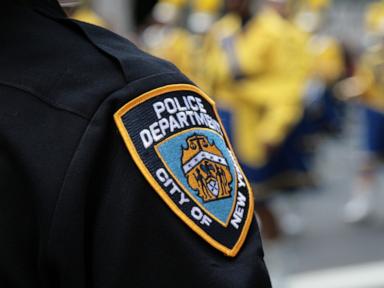
Public safety incidents involving unprovoked violence in high-density urban corridors expose the friction between preventative deterrence and reactive criminal investigation. When a pedestrian or jogger sustains critical injuries from a stabbing in a borough like Brooklyn, the operational response shifts immediately from street-level patrol to forensic reconstruction and community intelligence gathering. Standard local reporting typically reduces these events to isolated blotter entries, obscuring the systemic mechanisms law enforcement relies upon to close violent felony cases when initial suspect identification is absent.
The Architecture of Reactive Felony Investigations
In the immediate aftermath of a critical-injury assault where the perpetrator flees, municipal police departments operate under a compressed timeline known in criminology as the Golden Hour of investigation. The probability of apprehension decays exponentially as time elapses without a visual lock or physical evidence trail. Because the competitor reference indicates the New York City Police Department (NYPD) is actively seeking public information while the victim remains in critical condition, two operational realities are established: the victim is currently unable to provide a comprehensive testimonial statement, and closed-circuit television (CCTV) or automated license plate reader (ALPR) networks alone have not yielded an actionable arrest warrant.
To bridge this intelligence gap, detectives deploy a three-tiered investigative framework:
- Spatial-Temporal Video Canvassing: Detectives map a concentric perimeter radiating outward from the attack coordinates. Because municipal cameras do not cover every residential block or park pathway in Brooklyn, investigators rely on private security infrastructure—doorbell cameras, commercial storefronts, and transit hubs—to establish the suspect's vector of approach and egress.
- Forensic Trace Analysis: Edge-weapon assaults differ mechanically from firearm incidents. While firearms leave ballistic signatures and shell casings, stabbings necessitate close physical proximity, dramatically increasing the likelihood of Locard’s Exchange Principle—the transfer of biological material, fibers, or latent prints between perpetrator and victim. However, DNA processing introduces a temporal bottleneck that cannot match the speed of human intelligence.
- Crowdsourced Intelligence Solicitations: Public appeals via Crime Stoppers and precinct media releases function as force multipliers. By releasing still frames or behavioral descriptors, law enforcement attempts to convert passive civilian observers into active data nodes, relying on pattern recognition from residents familiar with neighborhood regulars.
Environmental Criminology and Vulnerability Vectors
Analyzing a daylight or evening assault on a jogger requires applying Routine Activity Theory, formulated by Marcus Felson and Lawrence Cohen. The theory posits that a predatory crime occurs only when three specific elements converge in time and space: a motivated offender, a suitable target, and the absence of a capable guardian.
Joggers represent a distinct risk profile within urban environments due to predictable behavioral variables:
- Sensory Occlusion: The widespread use of noise-canceling headphones degrades situational awareness, reducing the target's ability to detect auditory cues of an approaching threat.
- Route Predictability: Runners frequently utilize established greenways, waterfront paths, or perimeter sidewalks at consistent intervals, creating repeatable patterns for opportunistic offenders.
- Asset Minimalism: While joggers rarely carry substantial cash, modern smartphones and wearable biometric devices retain high secondary-market value, though unprovoked edge-weapon attacks frequently correlate with acute behavioral crises rather than calculated property theft.
The third variable—the absence of a capable guardian—highlights the structural limitations of urban policing. Brooklyn spans roughly 70 square miles with a population exceeding 2.5 million residents. Even with data-driven deployment models like CompStat, patrol resources cannot maintain continuous visual coverage across all recreational corridors. Guardianship in these zones is primarily informal, relying on pedestrian density. When foot traffic drops due to weather, time of day, or neighborhood zoning transitions (such as moving from a commercial avenue to an industrial or park boundary), informal guardianship collapses.
The Medical-Legal Feedback Loop
The victim's status—listed in critical condition—directly governs both the legal classification of the offense and the investigative trajectory. Under New York Penal Law, a stabbing resulting in life-threatening trauma is classified initially as Assault in the First Degree, a Class B violent felony. Should the victim succumb to their injuries, the charge escalates to Murder in the Second Degree or Manslaughter, altering resource allocation within the Detective Bureau and the District Attorney's office.
Clinically, penetrating torso or neck trauma from a blade creates immediate hemodynamic instability. Trauma centers prioritize hemorrhage control and surgical stabilization over forensic preservation, though emergency physicians coordinate with law enforcement to secure clothing and trace evidence without compromising patient survival. From an operational standpoint, a sedated or intubated victim removes the primary witness from the investigative equation. Detectives must construct a circumstantial case entirely from external telemetry, witness accounts, and physical evidence until medical clearance allows for a cognitive interview.
Systemic Limitations of Public Tip Lines
Relying on public assistance to identify a suspect introduces specific operational friction points that investigators must filter:
- Eyewitness Fallibility: High-stress violent encounters induce tunnel vision and acute sympathetic nervous system arousal, impairing a bystander's ability to encode accurate facial features, height, or clothing details.
- Confirmation Bias in Public Submissions: Once a generic suspect description circulates on social media, tip lines experience a surge in false positives driven by confirmation bias, forcing detectives to expend man-hours clearing uninvolved individuals.
- Data Fragmentation: Private residential camera systems operate on proprietary cloud loops with varying retention policies—some overwriting footage within 24 to 72 hours. Delays in public reporting or initial canvas execution result in permanent data loss.
Tactical Risk Mitigation and Institutional Adjustments
Addressing unprovoked street violence requires parallel adjustments at both the municipal and individual levels. For municipal transit and police authorities, closing the surveillance gap along recreational corridors demands incentivizing private camera registration programs—allowing detectives to map active nodes instantly without manual door-to-door canvassing—and deploying mobile solar-powered camera towers at known transit-to-park bottlenecks.
For individuals navigating high-density urban routes, mitigating the vulnerability vectors defined by Routine Activity Theory requires breaking behavioral predictability. Eliminating auditory occlusion through bone-conduction audio or single-ear listening restores environmental monitoring. Varying running schedules and avoiding isolated transitional zones during low-foot-traffic windows reintroduces informal guardianship, forcing motivated offenders to abandon target selection due to elevated detection risk.