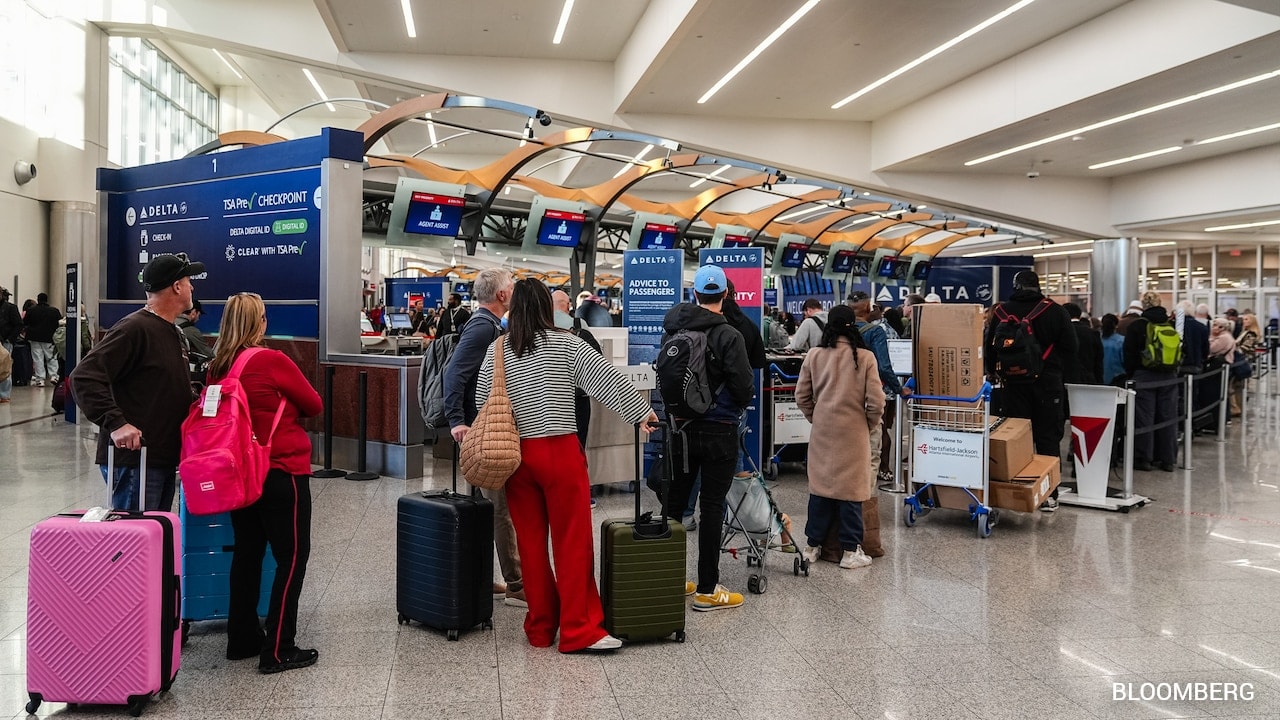
Your Sunday evening flight is already at risk before you even pack your bags. When the head of the Federal Aviation Administration warns that US air travel disruptions will persist until late on Sunday, travelers usually assume a single thunderstorm or an isolated computer glitch is to blame. They're wrong.
The reality inside America's airspace is much messier. A warning from the FAA Administrator isn't just a weather forecast—it's an admission that the national aviation system has hit a structural bottleneck where recovery takes days, not hours. If you're flying this weekend, or any peak travel weekend, understanding why these meltdowns bleed all the way into Sunday night is the only way to avoid sleeping on a terminal floor in Chicago or Newark.
The Domino Effect Inside the National Airspace System
Most passengers view a flight delay as a local problem. You look out the terminal window in Atlanta, see blue skies, and wonder why your gate agent just pushed your departure back by three hours.
Airlines don't operate point-to-point shuttles anymore. They run tightly wound, hyper-optimized hub-and-spoke networks where a single aircraft might fly five or six legs in a single day. When the FAA issues a ground delay program or a ground stop at a major chokepoint like New York, Dallas, or Denver, the ripple hits every corner of the country within ninety minutes.
Here is how a Friday afternoon hiccup turns into a Sunday night disaster:
- Crew timeouts are rigid. Federal aviation regulations mandate strict rest periods for pilots and flight attendants. Once a crew sits on a taxiway for three hours waiting for clearance, their legal clock runs out. Even if the skies clear at 6:00 PM, that plane isn't going anywhere until a fresh reserve crew arrives.
- Aircraft end up in the wrong cities. If an Airbus A321 supposed to overnight in Boston gets diverted to Pittsburgh, tomorrow morning's Boston-to-Miami flight vanishes before sunrise.
- Sunday is already operating at maximum capacity. Airlines schedule their heaviest banks of flights on Sunday afternoons and evenings to accommodate returning business travelers and weekend vacationers. There is zero slack in the schedule to absorb leftover passengers from Friday and Saturday.
When the FAA head tells the public that disruptions will last until late Sunday, it's because the agency's Air Traffic Control System Command Center in Warrenton, Virginia, can literally see the backlog in their traffic flow models. You can't clear 4,000 displaced passengers and 150 out-of-position jets overnight. It takes the natural lull of late Sunday night and early Monday morning just to hit the reset button.
Air Traffic Control Staffing and Equipment Reality
We need to talk about the elephant in the control tower. Weather gets the headlines, and airlines love blaming Mother Nature because it exempts them from paying for your hotel room. Yet the underlying fragility of the US airspace comes down to chronic air traffic controller shortages and aging infrastructure.
For years, the Department of Transportation's Office of Inspector General has flagged critical staffing deficits at key facilities, particularly the New York Terminal Radar Approach Control (TRACON) and major en-route centers. When a facility is short-staffed, controllers can't safely handle the sheer volume of aircraft trying to squeeze into congested airspace during peak weekend hours.
To keep planes safely separated, the FAA does the only thing it can do. It slows everything down.
They implement Miles-in-Trail restrictions, forcing planes to stay further apart in the sky, which reduces the number of landings per hour at major hubs. A runway that normally handles 60 arrivals an hour might drop to 36. Do the math on what happens when you cut capacity by 40 percent across the busiest corridor in the world during a peak travel day. Delays stack up exponentially. And because controllers are already working mandatory six-day weeks and heavy overtime, there is no reserve bench to call in when things go sideways.
What the FAA Actually Controls vs. What Airlines Control
Passengers routinely confuse the roles of the FAA and the commercial carriers, which leads to terrible rebooking decisions at the airport. Knowing who controls what gives you a massive advantage when the departure board turns red.
The FAA manages the sky, the runways, and the traffic flow. When the FAA Administrator says disruptions will persist until Sunday night, the agency is looking at airspace congestion, severe convective weather fronts, rocket launch closures along the Florida coast, or telecommunications outages affecting radar feeds. The FAA does not cancel your individual flight.
Airlines cancel flights. Carriers make tactical decisions to proactively thin their schedules when the FAA tells them arrival rates are dropping. Frankly, proactive cancellations are often better than rolling delays. If United or Delta cancels 15 percent of their afternoon bank at Newark early in the morning, they keep the remaining 85 percent moving and preserve crew legality. If they try to fly everything, the whole hub locks up, and nobody leaves until Monday.
Why You Shouldn't Trust the Departure Board
Never rely solely on the airline's app or the terminal screens when an FAA-wide advisory is active. Airlines frequently post "rolling delays"—pushing a flight back 30 minutes at a time—while they wait to see if the FAA lifts a ground stop.
During these rolling delays, the gate agents often have no more information than you do. Meanwhile, the remaining seats on later flights or alternate routes are being snapped up by travelers who saw the writing on the wall early.
How to Outsmart a Multi-Day FAA Disruption
If you're staring down a weekend forecast with active FAA advisories, waiting until you reach the airport is a losing strategy. You have to play defense before the system locks up.
1. Book the First Flight Out
This isn't a cliché; it's operational physics. At 6:00 AM, your plane is almost certainly already parked at the gate from the night before. Your crew is fresh out of their hotel. The airspace is empty, and the cascading delays of the day haven't started yet. Once you get past noon on a disrupted weekend, your odds of an on-time departure plummet.
2. Use the FAA's Own Public Data
Skip the news anchors and check the FAA National Airspace System Status page directly. It's a bare-bones, real-time dashboard straight from air traffic control. It tells you immediately which airports are under a Ground Stop (nobody takes off for that destination), which ones have Ground Delay Programs (average delay times in minutes), and where airspace flow programs are throttling traffic. If your connecting hub shows a 140-minute average arrival delay at 10:00 AM, you know your afternoon connection is doomed.
3. Watch Your Inbound Aircraft
Every major airline app now has a "Where is my plane coming from?" feature. Use it religiously. If your 4:00 PM flight from Charlotte to Chicago is waiting on an inbound jet currently sitting on a ramp in LaGuardia during a thunderstorm, your 4:00 PM flight isn't leaving at 4:00 PM—even if the airline app still claims it's "On Time."
4. Know Your Refund Rights Under DOT Rules
Department of Transportation rules are crystal clear, though airlines don't always advertise them loudly at the rebooking desk. If your flight is canceled or significantly delayed—and you choose not to travel—the airline is legally required to give you a full cash refund to your original form of payment, regardless of the reason for the disruption. Don't let an agent pressure you into accepting a travel voucher with an expiration date if you've decided to cancel your trip altogether.
5. Rebook While Standing in Line
When a hub melts down, the physical customer service line at the airport can stretch for hundreds of yards. Get in that line, yes, but immediately open the airline's mobile app, call their reservations line, and message them on X or through their in-app chat simultaneously. Often, the app's automated rebooking tool will let you switch to a different routing—say, connecting through Minneapolis instead of Chicago—for free the second a travel waiver is issued.
Why Sunday Night Is Always the Breaking Point
Travelers often ask why airlines don't just add extra flights on Monday morning to clear out the stranded weekend crowds. The answer is simple: there are no spare airplanes sitting around in hangars anymore.
Modern airline economics rely on high asset utilization. A commercial airliner only makes money when its doors are closed and its wheels are in the air. Carriers run their fleets at nearly 100 percent utilization every single day of the week. There is no fleet of extra 737s waiting in the desert to rescue stranded Sunday passengers.
When the FAA warns that disruptions will drag into late Sunday night, take the agency at its word. Check your airline's website immediately for a free travel waiver, shift your itinerary to an early morning departure or an uncongested connecting hub, and lock in your seat before the rest of the terminal realizes what's happening.