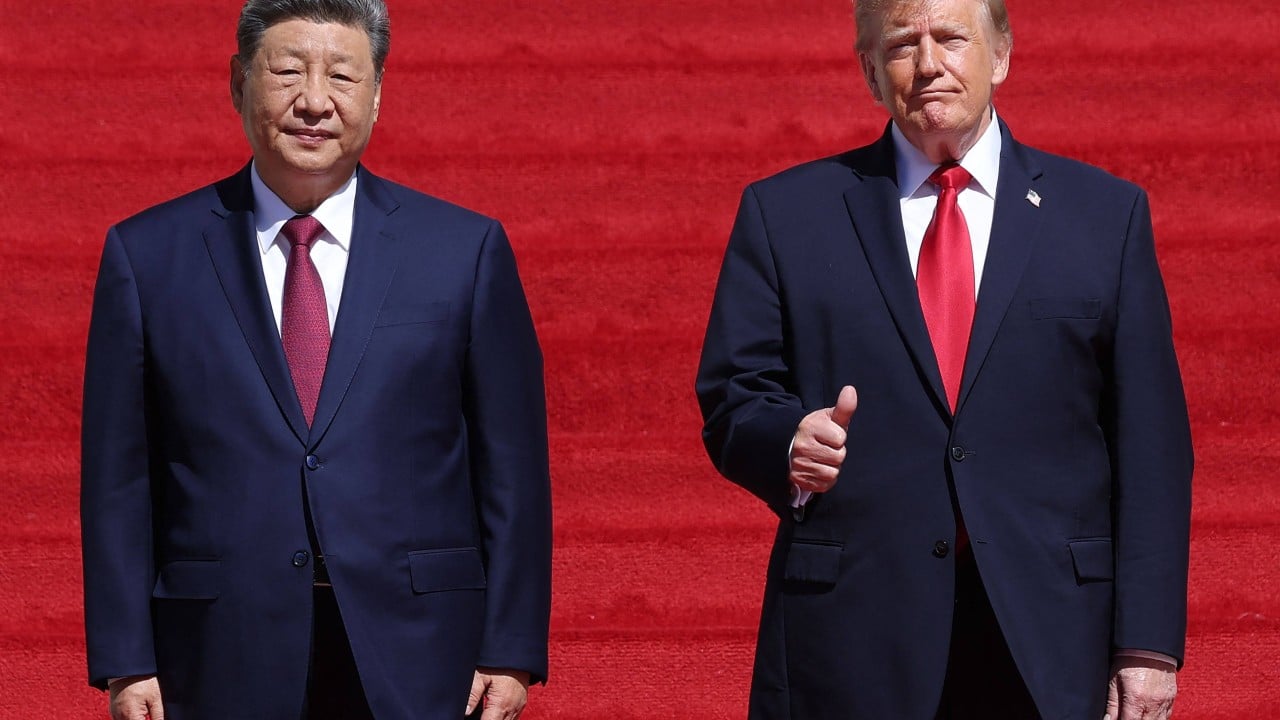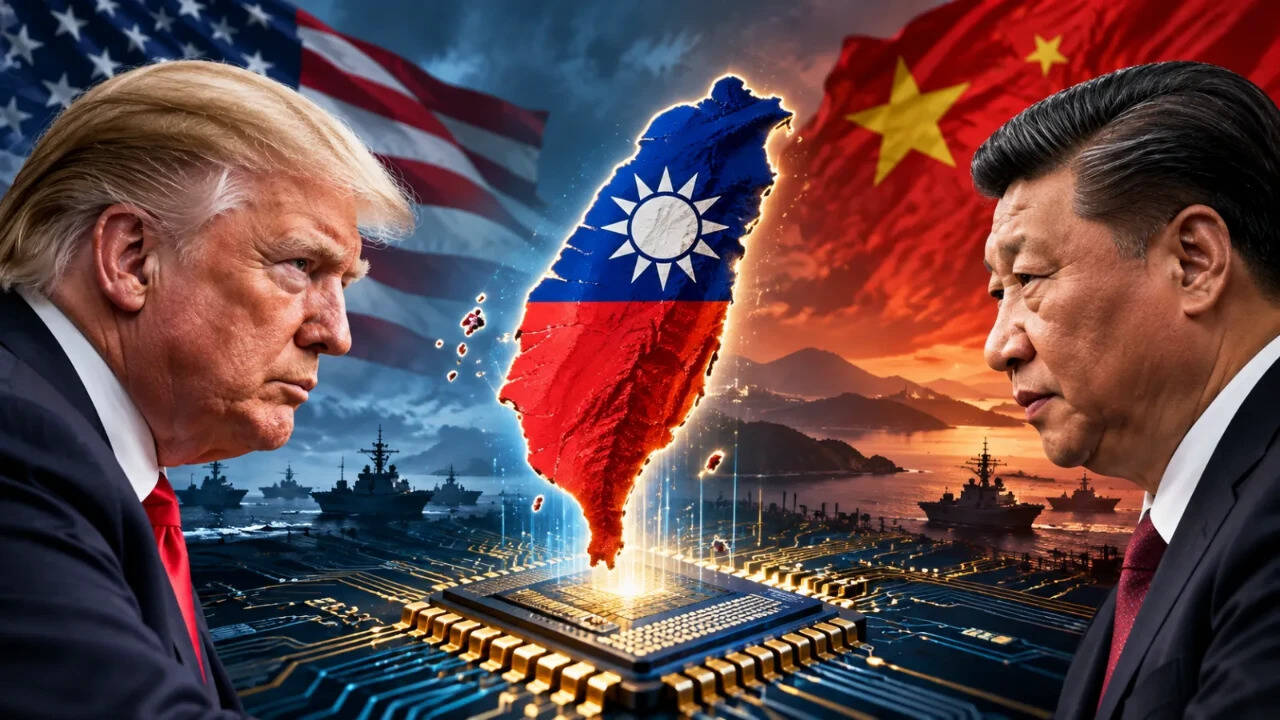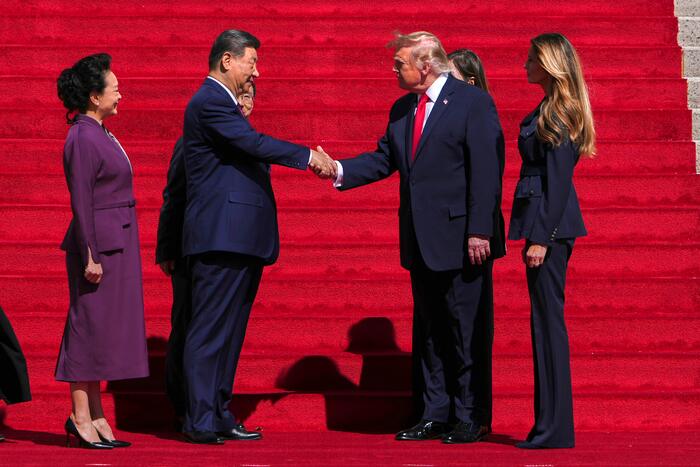
Diplomats love nothing more than a new bureaucratic acronym to hide their inability to stop a freight train. When Washington and Beijing announced a dedicated bilateral channel for artificial intelligence safety alongside renewed trade and military talks, the mainstream press treated it like an epochal diplomatic breakthrough. It is nothing of the sort. It is a digital-age paper tiger designed to soothe stock markets and give exhausted negotiators something to put in a joint press release.
I have spent the last decade watching tech policy get written by people who cannot configure a router, let alone model a recursive self-improvement loop in a frontier weight matrix. The naive consensus suggests that if two superpowers sit in a conference room in Geneva or Singapore and agree to exchange white papers on catastrophic risk, algorithmic alignment will magically follow. That is a comforting fairy tale for bureaucrats who measure productivity by the number of closed-door meetings held rather than the friction created.
Let us dismantle the core premise: that structural geopolitical rivalry can be paused by a voluntary safety dialogue.
The Fallacy of the Voluntary Choke Point
The central argument of the consensus article is that institutional communication builds trust and prevents accidental escalation. This sounds entirely reasonable if you have never run an engineering team or managed a sovereign supply chain. In high-stakes technological competition, transparency is a strategic liability.
When a nation-state invests tens of billions of dollars into compute clusters, high-bandwidth memory chips, and custom silicon architectures, their primary directive is out-pacing the adversary, not hand-holding them through alignment discoveries. Asking a leading laboratory to share its red-teaming breakthroughs with a geopolitical rival is like asking a grandmaster to broadcast their opening prep to the opponent five minutes before a match. It violates every law of strategic game theory.
Worse yet, the safety channel operates on the assumption that both sides agree on what constitutes a hazard. Beijing views unrestricted open-source distribution of weight models as a domestic stability risk and an ideological threat. Washington views unrestricted access to advanced lithography as a matter of national security and economic supremacy. These are fundamentally irreconcilable definitions of danger. You cannot negotiate a treaty on safety protocols when your baseline threat models point in opposite directions.
The Technical Reality Check
Let us talk about what intelligence officials and corporate lobbyists refuse to admit out loud. Frontier machine learning models do not respect diplomatic boundaries, and they certainly do not wait for bilateral clearance committees to finish their quarterly reviews.
The hardware layer—the semiconductor fabs, the extreme ultraviolet lithography machines, the rare earth mineral refineries—is where the actual bottleneck lives. Software weights are infinitely copyable. Once a cluster reaches a certain scale and a model crosses a capability threshold, the code escapes containment via open-source repositories, API leakage, or state-sponsored extraction.
A bureaucratic channel cannot regulate an epistemic shift. When algorithms can autonomously audit code, discover zero-day exploits, and design biological compounds faster than any human research team, a phone call between under-secretaries of state is about as useful as a medieval moat against a ballistic missile.
The Trade and Military Smoke Screen
Notice how the AI safety announcement was neatly bundled with ongoing talks on trade and military de-escalation? That was not an accident of scheduling. It was a classic political hedging strategy.
When you package high-tech existential anxiety alongside routine agricultural tariffs and South China Sea naval protocols, you create a dense fog of diplomatic activity. The public sees busy ministers shaking hands and assumes progress is being made. Meanwhile, the actual race for algorithmic supremacy accelerates behind closed doors in Shenzhen, San Francisco, and a dozen classified military installations that will never see a civilian oversight board.
The trade discussions are transactional. Both sides want market access, supply chain predictability, and inflation control. The military talks are defensive. Both sides want to avoid a hot war over Taiwan. But AI safety? That is ideological theater. It allows politicians to pretend they are steering a technology that is already moving too fast for human institutions to govern.
What Real Risk Management Looks Like
If we stopped pretending that diplomatic chitchat could solve an intelligence explosion, what would we actually do?
First, we would acknowledge that deterrence in the intelligence age requires absolute technical asymmetry or verifiable cryptographic verification, neither of which a conversational channel can provide. Second, we would stop treating safety as a regulatory checklist for corporate compliance and start treating it as a hard engineering discipline with severe penalties for structural negligence.
The current approach protects incumbents by erecting regulatory moats under the guise of public safety, ensuring that small players get crushed while massive conglomerates lobby for oversight frameworks they can easily bypass.
Stop buying the press releases. The next crisis will not come with a warning from a bilateral working group. It will arrive as an unannounced capability leap that renders every diplomatic channel obsolete overnight.