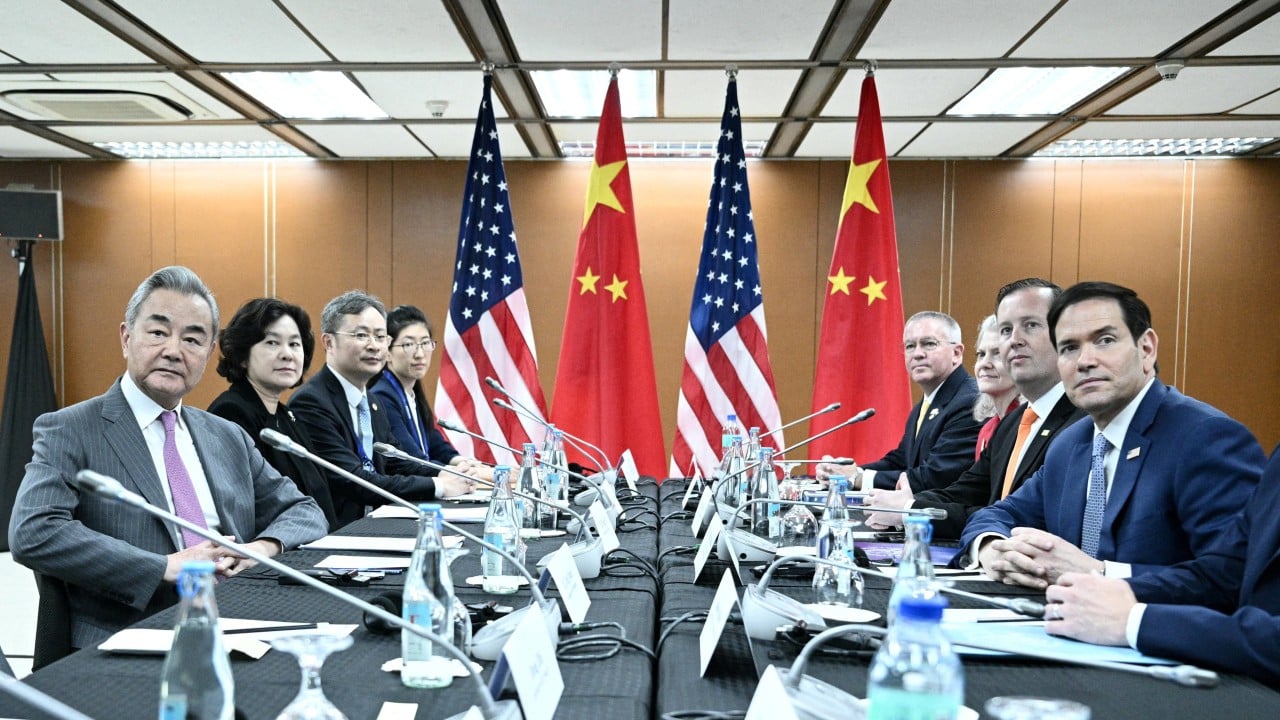
When Foreign Minister Wang Yi met US Secretary of State Marco Rubio in Manila, the headlines practically wrote themselves. "Pragmatic." "Constructive." "Strategic stability." We’ve heard this script plenty of times before.
Both sides are talking about managing differences, preparing for high-level summits, and keeping the peace. But let’s be honest. Nobody in Washington or Beijing is throwing a parade. Also making news lately: The Brutal Truth Behind the Record Pentagon Spending Bill.
What we're looking at isn't a thaw. It's a pragmatic truce born out of sheer exhaustion and tactical calculus. Neither power can afford a blowup right now, so they're slapping diplomatic patch-kits onto deeply cracked foundation stones.
The Myth of Strategic Harmony
Call it "constructive strategic stability" or "managed competition"—the core conflict hasn't moved an inch. Further insights on this are detailed by Associated Press.
The US continues to push hard on critical sectors, pouring billions into onshore manufacturing while weighing new tariffs and tech restrictions. Meanwhile, Beijing is doubling down on artificial intelligence governance and maintaining its grip on critical global supply chains, including rare earth elements.
Both capitals want you to believe they're steering the ship into calm waters. In reality, they're just trying to avoid hitting the iceberg right in front of them.
I've watched this cycle repeat for years. A burst of hawkish policy gets met with retaliatory measures. Markets freak out. Diplomatic backchannels open up. Top officials meet on the sidelines of an ASEAN summit to lower the temperature. Then everyone declares victory because nobody launched a missile.
That isn't progress. It's risk management.
Where the Floor Begins to Crack
If you want to know where this managed stability breaks down, don't look at the joint press releases. Look at the flashpoints where neither side can yield.
Maritime Collisions and Regional Pacts
While diplomatic statements emphasize "eliminating disturbances," military realities on the water tell a very different story. Tensions in the South China Sea and around Taiwan remain red-hot. The US is actively reinforcing alliances across the Asia-Pacific, leaving Beijing complaining about encirclement. When Washington calls for open communication to avoid accidental clashes, Beijing often views those very guardrails as a green light for American forces to patrol close to its shores.
The Tech and AI Divide
Washington isn't backing down on restricting high-end semiconductor hardware and export controls. Beijing isn't slowing down its push to lead in open-source AI models and global tech infrastructure. The rivalry has shifted from raw trade volume to who dictates the technological standards of the next two decades. You can't bridge a gap that wide with a polite bilateral meeting.
Trade Deals Built on Sand
Sure, economic agreements and temporary truces pop up to give global supply chains room to breathe. But underneath, both nations are actively de-risking. The US wants to pull vital manufacturing out of Asia, while China is insulating its domestic market against Western sanctions. They're trading out of necessity today, not mutual trust for tomorrow.
The Real Agenda Behind the Rhetoric
Why bother with all these high-profile meetings if neither side plans to change course?
For Washington, maintaining high-level dialogue keeps regional allies reassured that the situation won't spiral into an unmanageable crisis. It gives American businesses a predictable window to navigate supply chain pivots without facing abrupt embargoes.
For Beijing, framing the relationship around stability buys valuable time. It projects strength domestically while signaling to global markets that China remains an indispensable economic partner.
It’s a transactional dance. They aren't trying to become friends; they're trying to set ground rules for an extended geopolitical marathon.
Navigating the New Normal
If you run an international business, manage a global supply chain, or invest in emerging markets, don't let diplomatic handshakes fool you. The current stability is a tactic, not a structural shift.
- Stress-test your supply chains against sudden policy shifts. Expect targeted export controls and regulatory tweaks to continue regardless of diplomatic rhetoric.
- Separate political noise from regulatory realities. Direct sanctions and trade investigations move independently of high-level diplomatic photo-ops.
- Diversify regional dependencies. Relying entirely on a single manufacturing hub leaves you exposed every time bilateral friction heats up.
Plan for persistent competition masked by periodic diplomatic reset buttons. That is the reality of US-China relations today.

/https://i.s3.glbimg.com/v1/AUTH_e84042ef78cb4708aeebdf1c68c6cbd6/internal_photos/bs/2026/g/B/3vpkvHQKizRKAfzDxjXA/vini-jr-antes-e-depois.jpg)