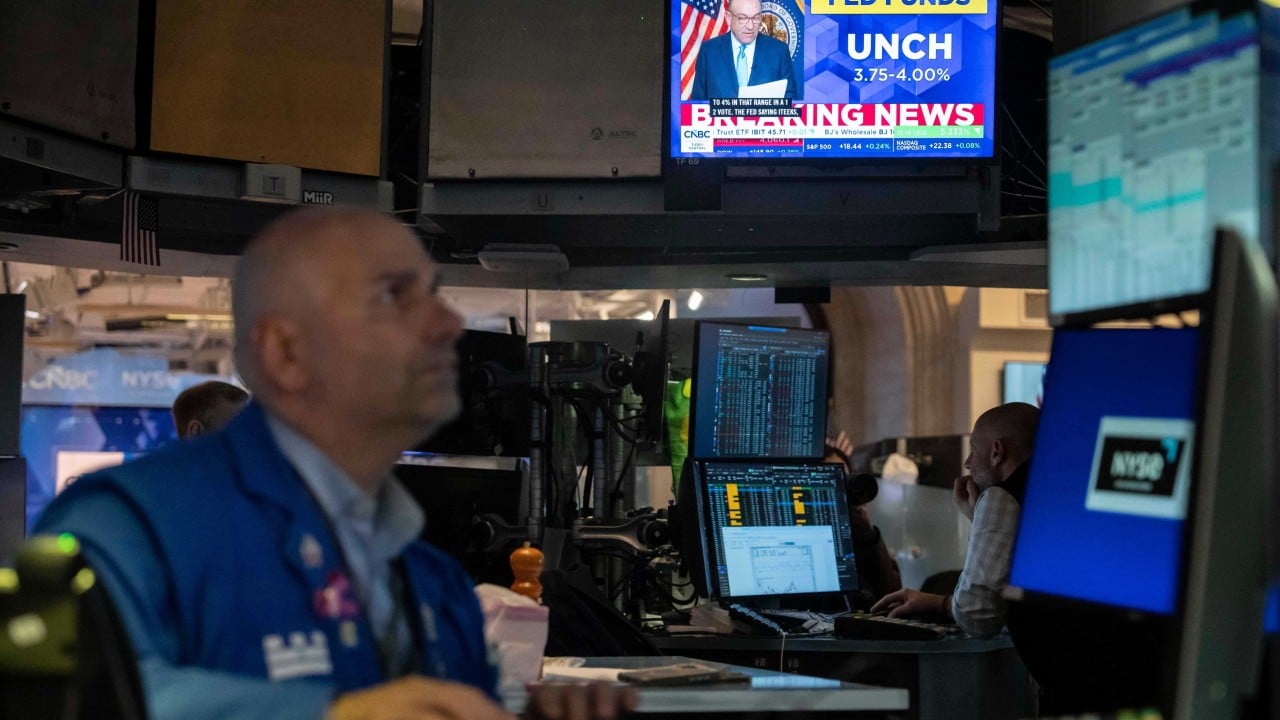
Most people assume central banking follows a simple rulebook. Prices go up, so the Federal Reserve hikes borrowing costs until the economy cools off. When the US Fed holds interest rates steady despite surging inflation, the financial press usually screams that policymakers have lost their nerve.
They haven't. In fact, standing still during a price spike is often the smartest, albeit most nerve-wracking, move the Federal Open Market Committee (FOMC) can make. For a deeper dive into this area, we recommend: this related article.
I've watched market cycles for years, and the biggest mistake retail investors make is treating every inflation bump like a five-alarm fire. Wall Street algorithms react in milliseconds to a hot Consumer Price Index (CPI) print, dumping bonds and tech stocks before humans even finish reading the headline. Meanwhile, the actual economists sitting in the Eccles Building are looking at an entirely different set of clocks.
The Lag Effect Nobody Wants to Wait For
Monetary policy doesn't work like a light switch. It works like a heavy freight train trying to slow down on a wet track. For broader details on the matter, in-depth reporting can also be found on MarketWatch.
Milton Friedman famously noted that interest rate changes operate with "long and variable lags." In practice, when the Fed raises the federal funds rate, it takes anywhere from 12 to 18 months for that tightening to fully bleed into corporate hiring, consumer credit card balances, and commercial real estate refinancing.
If inflation surges today, hiking rates immediately won't lower the price of eggs next Tuesday. It will crush manufacturing orders and small business loans eighteen months from now, long after the current price spike might have burned itself out.
When the Fed pauses, they're essentially waiting to see how much braking power is already in the system. Hiking blindly into every hot inflation report is how you accidentally trigger a deep recession. You don't keep slamming the brakes just because the car hasn't stopped on a dime.
Supply Shocks Break the Standard Playbook
Here's the uncomfortable truth about interest rates. They're a blunt instrument designed to crush demand, not fix broken supply chains.
Think about what happens when inflation surges because of an energy crisis, shipping bottlenecks, or sudden tariff changes. Higher interest rates don't drill more oil. They don't build cargo ships, and they certainly don't grow more wheat.
If the Fed aggressively raises rates during a supply-driven inflation spike, they can't fix the root cause of the high prices. All they can do is make everyone poorer so people stop buying things altogether. Economists call this "demand destruction," and it's ugly.
During the inflationary waves of the 1970s, and again during the post-pandemic supply crunches of the 2020s, central bankers learned the hard way that fighting supply shocks with pure monetary tightening creates stagflation—the worst of both worlds, where prices stay high while unemployment climbs. Holding rates steady is an admission that some price surges have to clear on their own without burning down the labor market in the process.
The Dual Mandate Tightrope
Unlike the European Central Bank, which historically focused almost exclusively on price stability, the US Federal Reserve operates under a dual mandate passed by Congress. They have to balance two competing goals: maximum employment and stable prices.
When inflation ticks back up, headlines focus entirely on the price side of that equation. Behind closed doors, Fed officials are staring at underlying labor metrics that tell a much more fragile story.
Headline unemployment numbers look great until you dig into the revisions, temporary help services, and the number of full-time jobs being replaced by part-time gigs. If wage growth is cooling and job openings are shrinking, the labor market is already losing steam.
Raising rates into a softening job market is a massive gamble. Once unemployment starts rising past a certain tipping point—a phenomenon captured by the Sahm Rule—it tends to snowball rapidly. Policymakers know that rescuing an economy from a deflationary spiral or a deep job recession is vastly harder than talking tough on inflation for a few extra quarters.
Why Headline Inflation Lies to You
If you only read the top-line number on a news alert, you're getting a distorted picture.
The Fed prefers the Personal Consumption Expenditures (PCE) price index over the more famous Consumer Price Index (CPI), and they pay even closer attention to "core" metrics that strip out volatile food and energy costs. Even within core inflation, quirks in the math can make things look worse than they are.
Take shelter costs. Because of how government statisticians calculate Owners' Equivalent Rent, housing inflation shows up in official reports long after actual market rents have flattened or fallen. You might see a surging inflation print driven almost entirely by lagging housing data and a temporary spike in auto insurance premiums.
Hiking interest rates to fight lagging housing math makes zero sense. In fact, higher mortgage rates actually reduce housing supply because homeowners with cheap legacy mortgages refuse to sell, locking up inventory and keeping prices artificially elevated. Holding rates steady avoids making the housing bottleneck even worse.
The Bond Market Does the Heavy Lifting Anyway
Something else happens when inflation surges and the Fed simply refuses to cut rates. The market tightens financial conditions on its own.
When traders see sticky inflation, they immediately push up yields on 10-year and 30-year US Treasury bonds. Because mortgage rates, corporate bonds, and auto loans are priced off those longer-term Treasury yields, borrowing gets more expensive across the entire economy without the Fed lifting a finger.
By holding the overnight rate steady and signaling "higher for longer," the Fed lets Wall Street do the dirty work. They get the economic cooling effect of tighter credit conditions while keeping their own policy powder dry.
What Holding Steady Actually Means for Your Money
Watching the Fed sit on its hands while your grocery bill climbs feels frustrating, especially if you're waiting for borrowing costs to drop. You can't control FOMC policy, so you have to adjust your own financial posture to match a "higher for longer" reality.
First, stop waiting around for 3% mortgage rates or ultra-cheap car loans to magically reappear. A steady Fed during hot inflation means borrowing costs are going to stay elevated for the foreseeable future. If you're carrying variable-rate debt—like credit card balances or a home equity line of credit—paying that down aggressively is a guaranteed, risk-free return that beats almost anything in the stock market right now.
Second, take advantage of the yield environment while it lasts. When the Fed holds rates high, money market funds, high-yield savings accounts, and short-term Treasury bills pay real, meaningful interest. Leaving cash sitting in a traditional brick-and-mortar bank account earning 0.01% during an inflationary period is voluntarily lighting your purchasing power on fire.
Third, rethink your equity exposure. Companies drowning in debt that need to refinance soon are in serious trouble when rates stay stuck at restrictive levels. Cash-rich businesses with strong pricing power—companies that can pass higher costs onto customers without losing sales—survive and thrive in this exact environment.
Check your portfolio for overexposure to speculative, unprofitable tech or heavily leveraged real estate trusts. Shift toward quality balance sheets, lock in short-term Treasury yields for your emergency fund, and build your personal budget around the assumption that today's interest rates are the new normal.