The mainstream press loves a clean villain. They want a spy thriller with a neat courtroom ending.
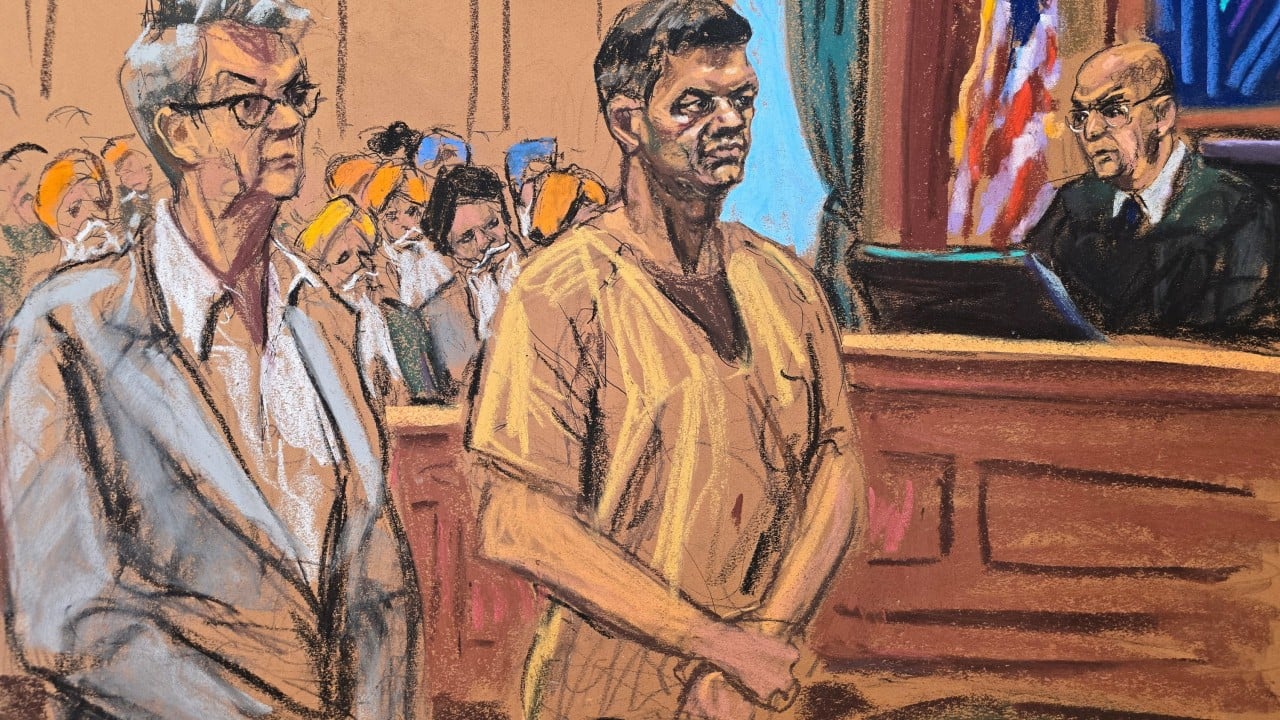
Look at the coverage surrounding the sentencing of an Indian national over the foiled US murder plot against Sikh separatist Gurpatwant Singh Pannun. According to the Department of Justice and widely reported across major outlets, Nikhil Gupta pleaded guilty and received a prison sentence for his role in a murder-for-hire scheme targeting Pannun in New York City. The lazy consensus across legacy media frames this as an isolated rogue operation or a simple diplomatic embarrassment for New Delhi.
That framing is dangerously naive.
If you view this case merely as a criminal justice victory or a bilateral hiccup between Washington and New Delhi, you are looking at the chessboard through a keyhole. The arrest, extradition, and sentencing of one operative is not the end of a story. It is the surface tremor of a profound collision between Western civil liberties, Indian national security doctrine, and the brutal reality of modern intelligence tradecraft.
The Amateur Tradecraft Illusion
Most commentators fixate on the operational sloppiness of the plot. According to federal indictments unsealed by the US Department of Justice, the conspirators inadvertently hired an undercover Drug Enforcement Administration (DEA) agent posing as a hitman. Pundits point to this blunder as proof of incompetence, arguing that the threat was easily contained by superior American counterintelligence.
This misses how modern subcontracted espionage actually works.
State-backed intelligence agencies rarely use their own salaried officers to pull triggers on foreign soil anymore. Instead, they rely on layers of cutouts, transnational criminal networks, and freelance fixers. The goal is plausible deniability. When a cutout like Gupta—who operated in the murky intersection of international narcotics and weapons trafficking—gets burned, the state apparatus steps back and disavows the entire chain.
I have spent years analyzing cross-border intelligence failures and transnational repression cases, and the pattern is always identical. When an operation relies on criminal intermediaries, operational security degrades rapidly. Criminals talk. They cut corners. They walk into DEA stings. Focusing on the amateurish execution of the middleman distracts from the far more sobering reality: an allied nation felt emboldened enough to greenlight an extraterritorial assassination on American soil just months after the killing of Hardeep Singh Nijjar in Canada.
The Sovereign Blind Spot Between Washington and New Delhi
To understand why this happened, you have to strip away diplomatic pleasantries and examine the fundamental clash of definitions between the United States and India.
In Washington, Gurpatwant Singh Pannun—general counsel for the US-based group Sikhs for Justice (SFJ)—is a dual US-Canadian citizen protected by the First Amendment. Even when he issues provocative rhetoric, such as warning passengers against flying on Air India, American legal doctrine classifies his speech as protected political expression unless it meets the strict legal threshold of imminent incitement to lawless action under Brandenburg v. Ohio.
In New Delhi, the view is diametrically opposed. India designated Pannun as an individual terrorist under its Unlawful Activities (Prevention) Act (UAPA) in 2020 and banned Sikhs for Justice in 2019. For Indian security planners, the Khalistan separatist movement is not an academic debate about free speech; it is an existential threat tied to the bloody insurgency of the 1980s and 1990s that claimed tens of thousands of lives, including Prime Minister Indira Gandhi and the 1985 bombing of Air India Flight 182.
Neither side is acting irrationally within its own legal and historical framework. That is precisely why the friction is so volatile.
- The American Legal Reality: The US government cannot simply arrest or silence citizens for advocating secession in a foreign country. Doing so violates foundational constitutional law.
- The Indian Security Reality: New Delhi watches diaspora activists raise funds, organize non-binding referendums, and issue threats against Indian diplomats from the safety of Western jurisdictions, viewing Western inaction as tacit complicity.
- The Resulting Vacuum: When diplomatic extradition requests stall over evidentiary standards and free speech protections, hardliners inside intelligence services look for extrajudicial shortcuts.
Why the "Rogue Official" Narrative Fails the Smell Test
Following the DOJ indictment and the Canadian allegations regarding the killing of Hardeep Singh Nijjar, New Delhi established a high-level inquiry committee to investigate the US allegations. While India pushed back forcefully against Ottawa's public accusations, it took a noticeably more measured, cooperative tone with Washington, eventually acknowledging that "rogue elements" may have acted outside official government policy.
Media analysts largely accepted this pivot as a sign that diplomatic pressure worked and that India was cleaning house.
That interpretation requires suspending basic common sense about how bureaucratic hierarchies operate. A mid-level intelligence officer—referred to in US court filings as "CC-1"—does not independently source international hitmen, coordinate surveillance in New York City, and arrange six-figure wire transfers across continents without institutional backing or at least tacit top-down authorization. In rigidly centralized security bureaucracies, unauthorized foreign assassinations against high-profile targets do not happen on a whim.
Admitting the downsides of this contrarian skepticism is necessary here: proving direct command responsibility from political leadership to a field handler in court is nearly impossible without intercepted communications from the highest offices. The "rogue operative" narrative serves a vital diplomatic function for both capitals. It gives New Delhi an off-ramp to purge or reassign specific officials, and it gives Washington a way to preserve its broader strategic alignment with India without tearing up defense agreements.
What Everyone Gets Wrong About the US-India Alliance
When the indictment first broke, foreign policy pundits predicted a deep freeze in US-India relations. They argued that Washington could not overlook a direct violation of its sovereignty while lecturing adversaries like Russia and Iran about transnational repression.
They misread the geopolitical math entirely.
Washington needs India far too much to let a foiled plot derail its Indo-Pacific strategy. According to analysts at institutions like the Council on Foreign Relations and the Carnegie Endowment for International Peace, the United States views India as an indispensable counterweight to Chinese expansionism in Asia. From semiconductor supply chains to joint naval exercises in the Indian Ocean, the structural incentives binding Washington and New Delhi outweigh almost any bilateral scandal.
Look at what actually happened after the charges were announced:
- High-level defense dialogues continued. Technology transfer agreements, including deals for jet engine manufacturing and armed drones, moved forward without permanent cancellation.
- Intelligence sharing persisted. Counterterrorism and maritime surveillance cooperation in the Indo-Pacific remained intact.
- The punishment remained compartmentalized. Washington insisted on legal accountability for the specific individuals named in the indictment while shielding the broader diplomatic architecture from collapse.
If you expected the US government to impose sweeping sanctions on an Indian intelligence agency or downgrade bilateral ties, you misunderstood how realpolitik operates. Great powers punish the individual operatives to deter future violations on their soil, extract quiet behavioral guarantees behind closed doors, and keep the strategic partnership moving.
Dismantling the Common Misconceptions
Public discussion around this case is clouded by simplistic assumptions. Stripping them away reveals how transnational security actually functions.
Does this mean transnational repression is over in North America?
No. Jailing one middleman raises the operational cost of running covert plots in the United States, but it does not eliminate the underlying drivers. As long as diaspora movements use Western democracies as platforms to agitate against foreign governments, targeted states will continue monitoring, infiltrating, and attempting to neutralize those networks. The tactics simply shift from kinetic operations to cyber surveillance, visa denials, asset freezes in the home country, and legal warfare.
Did US law enforcement only catch the plot by sheer luck?
Calling it luck ignores how modern counterintelligence works. The DEA and FBI maintain deep penetration inside global narcotics and arms trafficking syndicates precisely because those networks double as logistics hubs for state-sponsored covert action. When an intelligence handler reaches into the criminal underworld to hire muscle, they are stepping directly into an ecosystem heavily wired with federal informants.
Is the Khalistan movement actually gaining ground inside India?
Despite loud demonstrations outside embassies in London, Toronto, and San Francisco, the separatist movement enjoys minimal electoral or grassroots support inside Punjab today. Political analysts and journalists covering northern India consistently note that voters in Punjab are far more focused on agrarian distress, unemployment, and local governance than on carving out an independent state. Paradoxically, aggressive covert operations abroad do more to revitalize and legitimize fringe separatist groups than any referendum ever could.
The Real Lesson Behind the Sentencing
The conviction and sentencing of Nikhil Gupta closes a specific legal chapter in the Southern District of New York, yet it leaves the core geopolitical tension unresolved.
India learned a harsh operational lesson about the reach of American law enforcement and the limits of Washington's tolerance when domestic sovereignty is breached. At the same time, the United States demonstrated that while its legal system will aggressively prosecute foreign plots on its soil, its foreign policy establishment will compartmentalize the fallout to protect vital strategic alliances.
Stop reading this story as a simple crime blotter item about a hired killer who got caught in a sting. Read it as a case study in modern statecraft: where allies spy on each other, criminal networks serve as deniable state contractors, and strategic necessity always overrides moral outrage.