Two decades ago, Washington bet that open trade would nudge Beijing toward political reform. That gamble failed. Now, a coalition of Uyghur advocacy organizations is demanding that the U.S. government revoke China’s Permanent Normal Trade Relations status, a move that would fundamentally redraw the map of global commerce.
It sounds like a niche policy debate. It isn't.
If Congress pulls the trigger on revoking Permanent Normal Trade Relations (PNTR)—formerly known as Most Favored Nation status—tariffs on Chinese imports wouldn't just tick upward. They would skyrocket overnight. For human rights advocates, this isn't merely an economic lever; it's an overdue moral reckoning for mass detention, surveillance, and forced labor in the Xinjiang Uyghur Autonomous Region.
What Permanent Normal Trade Relations Actually Means
Most people hear "Most Favored Nation" or "Permanent Normal Trade Relations" and assume China gets special VIP treatment at U.S. ports. That’s a common misconception. In World Trade Organization parlance, normal trade relations simply mean a country receives the same baseline tariff rates offered to every other WTO member in good standing.
Before 2000, China didn't have this stability. Every single year, the U.S. president had to renew China's trade status, and Congress had the power to block it under the Jackson-Vanik amendment of the Trade Act of 1974. That law originally targeted non-market economies that restricted emigration, tying trade privileges directly to human rights benchmarks.
In October 2000, President Bill Clinton signed legislation granting China permanent status, paving the way for Beijing to join the WTO in 2001. The logic at the time seemed airtight to Wall Street and Washington insiders. Integrate China into the global economy, grow its middle class, and democratic values would naturally follow.
Instead, the U.S. lost millions of manufacturing jobs while Beijing tightened domestic control. When reports emerged of over a million Uyghurs and other Turkic Muslims held in internment camps across Xinjiang, the foundational premise of the 2000 trade deal collapsed completely.
Why Uyghur NGOs Are Demanding Action Now
Groups like the World Uyghur Congress, the Uyghur Human Rights Project, and the Campaign for Uyghurs have spent years lobbying for targeted sanctions. They helped push through the Uyghur Forced Labor Prevention Act (UFLPA), which took effect in June 2022 and bans goods made wholly or in part in Xinjiang unless importers prove no forced labor was involved.
Targeted laws have limits, though. Supply chains are slippery.
Companies routinely reroute raw materials like polysilicon, cotton, and tomatoes through third-party countries to obscure their origins before shipping finished goods to American shelves. Customs and Border Protection agents play an endless game of whack-a-mole at the border. Uyghur advocates argue that piecemeal enforcement can't stop state-sponsored forced labor when the broader trade architecture still rewards Beijing with low baseline tariffs.
By calling for the revocation of China’s permanent normal trade relations status, these NGOs want to flip the default setting. Instead of assuming Chinese goods are legitimate until proven tainted, stripping PNTR treats China as a non-market economy outside standard WTO tariff protections. It forces an annual review—or imposes steep statutory tariffs across the board—making it financially ruinous for Western brands to keep manufacturing hubs tied to forced labor networks.
The Economic Fallout of Revoking China's Trade Status
Let's look at the numbers, because they are staggering. Under normal trade relations, the average U.S. tariff on Chinese imports hovered around low single digits before the Section 301 tariffs introduced during the Trump administration. Even with Section 301 duties layered on top, many consumer electronics, toys, and household goods still enter the U.S. at relatively modest rates.
Revoking PNTR moves China to "Column 2" of the U.S. Harmonized Tariff Schedule.
Column 2 rates date back to the Smoot-Hawley Tariff Act of 1930. Currently, only a handful of nations—including Russia, Belarus, Cuba, and North Korea—sit in that bracket. If China joins them, baseline tariffs on Chinese goods would jump from an average of roughly 3% (pre-2018 baseline) to an average of over 40%, with some categories facing duties exceeding 60% or 70%.
Winners and Losers in a Tariff Shock
- American Retailers and Consumers: Big-box stores relying on cheap Chinese imports would face immediate margin compression. Those costs inevitably trickle down to shoppers buying everything from footwear to smartphones.
- Domestic Manufacturers: U.S. textile mills, steelmakers, and component manufacturers have supported revoking PNTR for years, arguing they can't compete against state-subsidized Chinese factories.
- Southeast Asian and Latin American Economies: Countries like Vietnam, India, and Mexico would likely absorb a massive wave of relocated factory orders as multinational corporations scramble to diversify supply chains.
Where Congress Stands on the Push
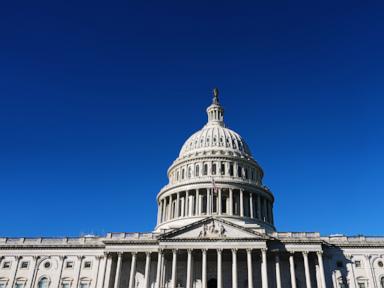
Not long ago, revoking China's trade status was a fringe idea championed by a handful of hawks. Today, it has serious bipartisan traction on Capitol Hill, though lawmakers disagree on how fast to pull the plug.
In late 2023, the House Select Committee on the Chinese Communist Party issued a landmark bipartisan report recommending that Congress reset economic relations with Beijing and move away from permanent normal trade relations. Several bills have since been introduced in both the House and Senate to strip the status immediately or phase in higher tariffs over a five-year window.
Honestly, the hesitation in Washington isn't about defending Beijing's human rights record. Nobody in Congress wants to look soft on the Chinese Communist Party. The hesitation comes down to inflation fears and corporate lobbying.
Multinational corporations, agricultural groups, and major tech firms warn that an abrupt shift to Column 2 tariffs would trigger retaliatory tariffs from Beijing. American soybean farmers and aerospace exporters still remember the pain of previous trade disputes. They are quietly urging lawmakers to stick with targeted tools like the UFLPA rather than detonating the entire trade relationship.
What Critics Get Wrong About Human Rights and Trade
Opponents of revoking PNTR often claim that economic decoupling hurts ordinary Chinese citizens—including Uyghurs—more than it hurts government officials. That argument misses how state-run labor transfers actually operate in Xinjiang.
Researchers like Dr. Adrian Zenz and investigations by the Sheffield Hallam University Helena Kennedy Centre have documented how Beijing uses coercive labor programs as a tool of assimilation and demographic control. When global brands buy cheap cotton or solar panels linked to these programs, they aren't lifting Uyghur families out of poverty. They are subsidizing the very surveillance and detention apparatus oppressing them.
Another common myth is that the U.S. cannot legally revoke PNTR without violating World Trade Organization rules. While Beijing would certainly file a complaint at the WTO, the organization's appellate body has been largely paralyzed for years, and national security exceptions under Article XXI of the General Agreement on Tariffs and Trade give nations broad latitude when fundamental security and human rights interests are at stake. Washington already revoked Russia's permanent normal trade relations status in April 2022 following the invasion of Ukraine, proving the mechanism works when political will exists.
How Businesses and Policymakers Should Respond
Waiting for Congress to pass sweeping legislation is a terrible strategy if you manage a supply chain or run a business importing components from Asia. Legislative battles over China trade policy will drag on, creating severe regulatory uncertainty regardless of who holds the White House.
If you source products or raw materials internationally, start auditing your Tier 2 and Tier 3 suppliers right now. Customs enforcement under the Uyghur Forced Labor Prevention Act already demands full supply chain traceability down to the raw material level. Companies that map their sub-suppliers today won't just avoid border seizures; they will be positioned to pivot quickly if Column 2 tariffs become law.
For voters and advocates watching this unfold, the issue boils down to a simple question of consistency. You can't declare Beijing's actions in Xinjiang a genocide—as both the Trump and Biden administrations officially did—while maintaining a trade agreement built on the assumption of mutual trust and reform. Track how your representatives vote on upcoming trade authorization bills, support independent supply chain transparency initiatives, and refuse to treat human rights abuses as an acceptable cost of cheap consumer goods.