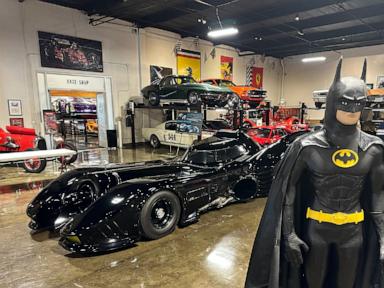
Screen-used cinema vehicles operate outside traditional automotive depreciation curves, functioning instead as illiquid alternative assets governed by cultural provenance, mechanical obsolescence, and scarcity economics. When a high-profile prop like the 1992 Batman Returns Batmobile enters the auction block, standard collector car metrics fail entirely. Evaluating such an asset requires deconstructing its total cost of ownership, verifying chain-of-custody documentation, and isolating the specific intellectual property variables that dictate hammer prices.
The Structural Valuation Model of Hero Props
In standard collector car markets, value correlates directly with production numbers, matching-numbers drivetrains, and concours-level restoration. Cinema vehicles invert this logic. A prop car’s market worth derives almost entirely from its screen time, cultural penetration, and verifiable provenance.
To quantify the valuation of a primary cinema vehicle—commonly referred to in production logistics as a "hero" car—analysts must separate the asset into three distinct value drivers:
- Cultural Monopoly: The degree to which the vehicle defines its franchise. The Tim Burton-era Batmobile, designed by Anton Furst and built on a stretched Chevrolet Impala chassis for Batman (1989) and Batman Returns (1992), possesses near-total visual recognition. Unlike generic luxury vehicles driven by action protagonists, this asset is an autonomous character.
- Production Hierarchy: Studios rarely build a single vehicle. Production teams manufacture a tiered fleet consisting of Hero cars (built for close-up photography with finished interiors), Stunt cars (reinforced chassis with stripped interiors and modified suspension for jumps), and Buck or Shell cars (non-functional fiberglass bodies mounted on rolling frames for static or explosive shots). Only Hero cars command tier-one institutional pricing.
- Chain of Custody: Without unbroken documentation linking the chassis to the studio production logs, a screen-used prop collapses in value to that of a high-end replica. Verification requires studio bills of sale, production call sheets matching specific visual anomalies (such as unique weld marks or fiberglass layup patterns) to on-screen frames, and tax-exemption certificates from filming locations.
Because the URL for the competitor's reference is unavailable and exact contemporary auction estimates fluctuate until final catalog publication, the pricing mechanism must be understood through historical comparables rather than speculative figures. Historically, primary Batmobiles—such as the 1966 George Barris-built Lincoln Futura concept sold at Barrett-Jackson in 2013—have cleared multi-million-dollar thresholds. The 1992 variant sits within this same upper echelon of Hollywood memorabilia, where bidding is driven by ultra-high-net-worth individuals and private museums rather than traditional automotive collectors.
Mechanical Realities Behind the Fiberglass
A fundamental disconnect exists between the on-screen capability of a cinema vehicle and its physical engineering. Audiences perceive an armored, jet-powered tactical machine; mechanics observe a bespoke fiberglass shell bolted onto a modified domestic production frame.
The 1992 Batman Returns vehicle exemplifies the engineering trade-offs required for film production. Built around a lengthened Chevrolet chassis and powered by a standard V8 engine (often a Chevrolet 350 or similar reliable crate motor chosen for easy parts replacement on set), the vehicle was engineered for camera angles rather than sustained highway speeds.
- Thermal Management Failures: Custom fiberglass bodies restrict airflow to the radiator and exhaust manifolds. Driving these vehicles in ambient temperatures above 75 degrees Fahrenheit frequently induces rapid overheating.
- Visibility and Ergonomics: The iconic long hood and narrow cockpit geometry create severe blind spots. Drivers operate the vehicle through periscope-like windshields with minimal peripheral vision, making standard road operation hazardous without spotters.
- Suspension Geometry: Extending a wheelbase to achieve dramatic cinematic proportions alters the scrub radius and turning circle, often requiring multi-point maneuvers to navigate standard urban intersections.
- Special Effects Integration: Film props house non-automotive systems, including propane tanks for flame-thrower exhaust effects, hydraulic actuators for canopy operation, and custom wiring harnesses for dashboard illumination. Over decades, rubber seals degrade and custom relays fail, creating maintenance bottlenecks that standard automotive technicians cannot diagnose without custom schematics.
The Hidden Cost Function of Prop Ownership
Acquiring the asset at auction represents only the initial capital expenditure. Operating, insuring, and storing a major studio prop introduces a steep, recurring cost function that parallels exotic aircraft ownership more closely than vintage automobile collecting.
Specialized Storage and Environmental Control
Fiberglass bodies mated to steel frames expand and contract at different rates under thermal stress. Storing a 1992 prop vehicle in an unconditioned garage leads to stress fractures in the gelcoat, delamination of custom paint finishes, and galvanic corrosion where dissimilar metals meet. Owners must maintain climate-controlled facilities held at constant humidity and temperature levels, adding significant annual overhead.
Bespoke Fabrication and Maintenance
Off-the-shelf replacement parts do not exist for custom bodywork, canopies, or interior switchgear. If a hydraulic canopy actuator fails or a custom-molded wheel cover sustains damage, the owner cannot order replacements from an original equipment manufacturer. Repairs require hiring aerospace or film-industry fabricators to reverse-engineer components using 3D scanning and CNC machining. A minor fender repair can easily escalate into a five-figure fabrication project.
Insurance and Liability Constraints
Standard collector car policies, such as those underwritten by Hagerty or Grundy, rely on established market values and predictable repair costs. Insuring a one-of-one cinema artifact requires specialized fine-art or entertainment-memorabilia underwriters. Furthermore, because these vehicles frequently lack modern safety equipment—such as airbags, crumple zones, or Department of Transportation-approved lighting—most jurisdictions restrict them to show-and-display exemptions. Driving the vehicle on public roads often voids the insurance policy entirely, forcing owners to budget for enclosed, air-ride transport trucks whenever the vehicle leaves its facility.
Intellectual Property Restrictions
Buying the physical steel and fiberglass does not transfer the underlying intellectual property. Warner Bros. and DC Comics retain absolute copyright and trademark control over the Batmobile design. A private buyer acquires the right to possess and display the physical object, not the right to monetize its likeness. The owner cannot legally manufacture merchandise featuring the car, license its image for commercial advertising, or rent it out for commercial productions without explicit studio clearance. This restriction caps the asset's ability to generate offsetting cash flow, cementing its status as a pure cost center.
Liquidity Dynamics in the Memorabilia Market
To understand why buyers still deploy millions of dollars into non-street-legal, high-maintenance props, one must examine the broader economics of trophy assets.
In traditional financial markets, assets are valued based on discounted future cash flows. Trophy assets—fine art, rare watches, and tier-one cinema props—operate under Veblen good dynamics, where demand increases alongside price because scarcity confers social capital. The supply of screen-used 1992 Batmobiles is permanently fixed. No matter how much capital enters the market, Warner Bros. cannot retroactively manufacture another screen-used hero car from the 1992 production run.
This absolute supply inelasticity creates a floor under the asset's long-term value, provided cultural relevance endures. The Batman franchise functions as a multi-generational intellectual property engine; each new theatrical release refreshes consumer awareness of prior iterations, inadvertently subsidizing the cultural equity of vintage props.
However, liquidity remains low. Unlike blue-chip equities or standard collector Ferraris, which can be liquidated within days through established dealer networks, a multi-million-dollar cinema prop requires a specialized auction house—such as Heritage Auctions, Propstore, or Sotheby’s—to assemble a global pool of qualified bidders. Exiting the position requires a six-to-twelve-month lead time for cataloging, marketing, and provenance verification, alongside buyer and seller premiums that routinely consume 20 to 25 percent of the gross transaction value.
Acquisition Strategy for Alternative Asset Buyers
For institutional collectors or private buyers evaluating a bid on a primary cinema vehicle, emotion must be subordinated to rigorous due diligence. Overpaying for a stunt-grade shell or underestimating post-auction stabilization costs can turn a prestige acquisition into a severe financial liability.
Execute the following verification sequence before placing an opening bid:
- Audit the Studio Paperwork: Demand physical inspection of the original studio bill of sale and any custom-house carnets used to transport the vehicle between filming locations (such as Pinewood Studios in the UK and back to the United States). Reject any asset relying solely on third-party letters of authenticity without primary production documentation.
- Conduct a Non-Invasive Structural Scan: Hire a forensic automotive specialist to inspect the chassis welds and fiberglass thickness. Distinguish between original studio repairs—which add historical character—and post-production amateur modifications, which degrade value.
- Isolate the Drivetrain Specifications: Verify whether the current engine and transmission match the production build sheets. While cinema vehicles do not follow strict matching-numbers rules, retaining the original studio-installed crate motor preserves historical integrity.
- Model a Five-Year Holding Budget: Calculate the total cost of ownership by adding the hammer price, the buyer’s premium (typically 10 to 25 percent), enclosed transport logistics, climate-controlled storage, fine-art insurance premiums, and an immediate mechanical recommissioning reserve of at least $25,000 to $50,000 to replace aged fluids, hoses, and wiring.
Capital deployed into tier-one Hollywood vehicles should be treated strictly as long-term wealth preservation within a diversified portfolio, never as a short-term speculative flip. Focus acquisition efforts exclusively on documented Hero cars with uninterrupted studio provenance, cap maximum bids to account for high transaction friction, and secure enclosed transport and specialized fine-art coverage prior to the auction gavel falling.