The rain in Ohio does not care about political capital. It slicked the asphalt outside a high school gymnasium where, just two years ago, a single line of text on a smartphone screen could reshape reality.
Back then, the ritual was predictable. A candidate would stand at a podium, their campaign accounts bleeding cash, their polling numbers flatlining in the single digits. Then came the digital lightning bolt. A Truth Social post, draped in superlatives, declaring absolute and total endorsement. Almost overnight, volunteers materialized. Checkbooks opened. The political gravity shifted because one man in Mar-a-Lago willed it so.
Walk into that same gymnasium today, and the air feels different. The folding chairs are just as cold, but the magic has evaporated.
We are witnessing the quiet, grinding friction of an empire meeting its baseline. For nearly a decade, Donald Trump’s endorsement was the most potent currency in American politics. It was an golden ticket that defied traditional gravity, elevating political novices, television personalities, and firebrands over seasoned party regulars. But currency only holds value if it buys something. Right now, in statehouses, primary battles, and special elections across the country, that currency is experiencing a brutal, undeniable inflation.
The streak has broken. The golden ticket is starting to look like ordinary paper.
The Whisper in the High School Gym
To understand how a political superpower dies, you have to look away from the cable news studios and focus on people like Sarah. She is a hypothetical composite of the county committee chairs, precinct captains, and hyper-involved voters who form the actual bedrock of local politics. Sarah voted for Trump twice. She wears the red hat on weekends. She still believes the mainstream media is fundamentally broken.
But three months ago, when her local congressional primary rolled around, Sarah did something she had never done before. She looked at the candidate Trump endorsed—a loud, wealthy outsider with a thin resume and a penchant for internet trolling—and she looked at the local county commissioner who had helped fix the township’s drainage system.
Sarah chose the commissioner.
"It wasn't a rejection of the man at the top," she might tell you over a lukewarm coffee. "It was just that the guy he picked didn't know our roads. He didn't know our schools. He thought yelling on television was the same thing as doing the work."
Multiply Sarah by tens of thousands across critical swing states, and the math becomes devastating. In a series of recent high-profile races, Trump-backed candidates have stumbled, faltered, and outright lost. These weren't just narrow defeats in hostile territory; they were definitive rejections in places where his word used to be law.
The data behind this shift is stark, though the numbers themselves don't fully capture the psychological shockwave rippling through the Republican party. When a dominant political figure endorses a candidate, they don't just give a nod of approval; they stake their own reputation on the line. Every loss is a chip flaking off the statue of invincibility. When those losses happen in a row, the statue starts to look fragile.
The Mechanics of the Fade
Political influence is a strange, intangible thing. It operates on perception. If everyone believes you have the power to destroy a career with a single tweet, then you possess that power. The moment people stop believing it, the power vanishes like smoke.
Consider how the endorsement mechanism used to work. It was an ecosystem of fear and opportunism. Traditional donors were terrified of backing a candidate who might incur the wrath of the Mar-a-Lago ecosystem. Incumbents retired rather than face a primary challenger blessed by the kingmaker. The system self-corrected to ensure the endorsement won because the opposition usually fled the field before the first vote was cast.
But a strange thing happened on the way to the midterms and the subsequent special elections. The opposition stopped running away.
Candidates who were explicitly targeted for political elimination decided to stand their ground. They realized something crucial about the modern political electorate: voters are tired. They are exhausted by the constant high-octane theater. When a surrogate candidate's entire platform consists of repeating slogans from a Florida ballroom, it starts to feel less like a movement and more like a bad cover band.
The local issues began to bleed back into the conversation. Property taxes. Inflation. Fentanyl in the suburbs. While the endorsed candidates were busy litigating the grievances of the past, their opponents were talking about the anxieties of the immediate future.
The results followed a grim, predictable pattern. The MAGA-blessed candidates won their low-turnout primaries because the most passionate base elements still showed up. But when the general election arrived—when the independent voters, the quiet moderates, and the exhausted suburban parents actually had to make a choice—the floor fell out from under them.
The Mirror in Mar-a-Lago
There is an inherent tragedy in the position of the kingmaker. You cannot delegate charisma.
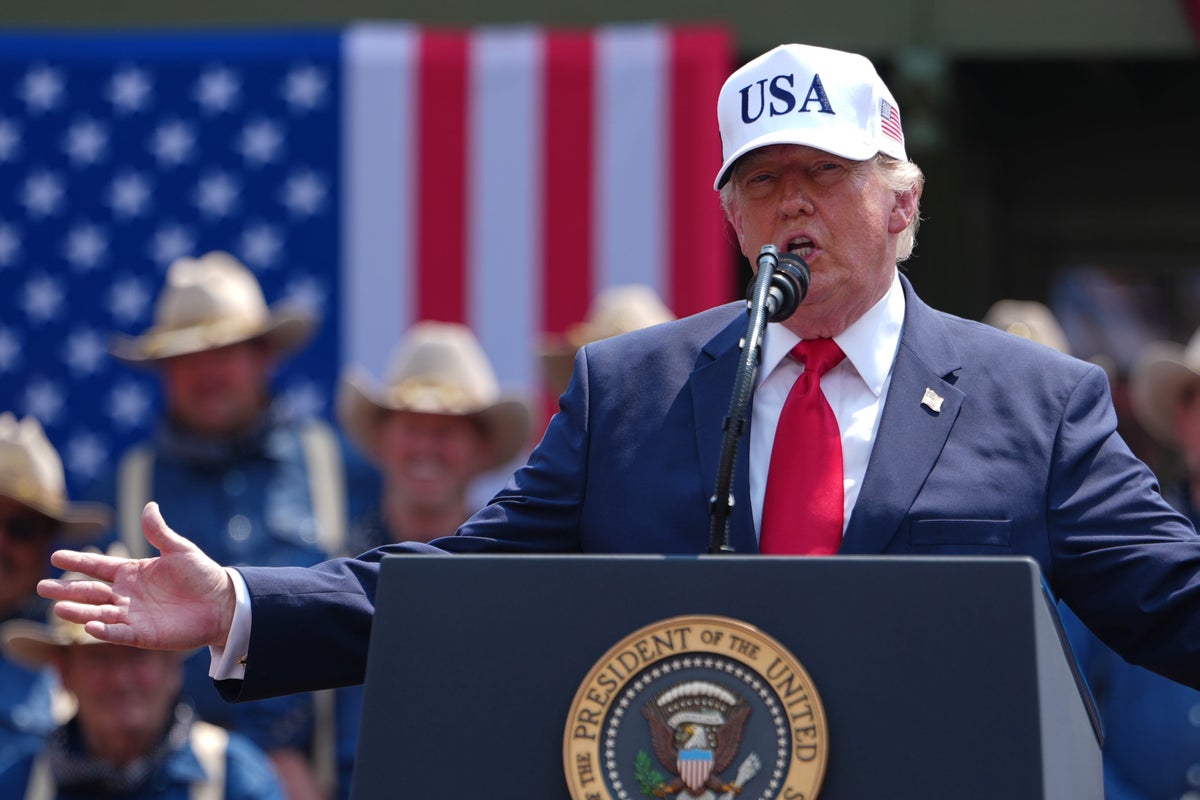
The voters who will crawl through broken glass to cast a ballot for Donald Trump do not automatically extend that devotion to his hand-picked disciples. You can copy the hand gestures. You can adopt the cadence of speech. You can wear the navy suit and the red tie. But to the voter, it feels like an imitation. It lacks the raw, authentic anger that made the original movement so potent in 2016.
This creates a bizarre paradox inside the campaign headquarters. The staff knows that an endorsement is no longer a guarantee of victory; in fact, in swing districts, it can be a heavy anchor. Yet, candidates still beg for it. They still fly to Palm Beach, pay thousands of dollars to host fundraisers at the resort, and wait for the benediction.
They are chasing a ghost. They are relying on a playbook written a half-decade ago, ignoring the reality that the electorate has shifted under their feet.
The real crisis isn't just that these candidates are losing. It is that their losses are rewriting the rules of political defiance. Every time a non-endorsed Republican wins a race, it gives permission to the next candidate to ignore the pressure. It breaks the spell of fear.
The Silent Realignment
Walk through the halls of Capitol Hill right now and you can hear the change in the tone of voice. Senators and representatives who used to sweat through their shirts at the mere hint of a primary challenge are speaking with a new, quiet confidence. They watch the election returns on their office televisions, leaning back in their leather chairs, calculating the shifting percentages.
They see that the hot streak is over. They know that a leader who cannot deliver victories is eventually viewed not as a savior, but as a liability.
The human element of politics always comes down to self-preservation. Loyalty is a beautiful concept in literature, but in the corridors of power, it is entirely transactional. When the transactions stop yielding a profit, the contracts are quietly torn up.
We are not watching a sudden, dramatic collapse. The MAGA movement is not going to vanish tomorrow morning. Millions of people still look to one man as their political North Star. But the orbit is widening. The gravitational pull is weakening at the edges, where elections are actually won and lost.
Outside the Ohio gymnasium, the rain finally stops, leaving the parking lot reflecting the neon sign of a nearby diner. A volunteer carries a box of unused campaign flyers to a dumpster behind the building. The glossy paper features a photo of a smiling candidate shaking hands with the former president, the words "100% Approved" printed in bold red ink.
The lid of the dumpster slams shut with a heavy, metallic thud, echoing through the empty night.