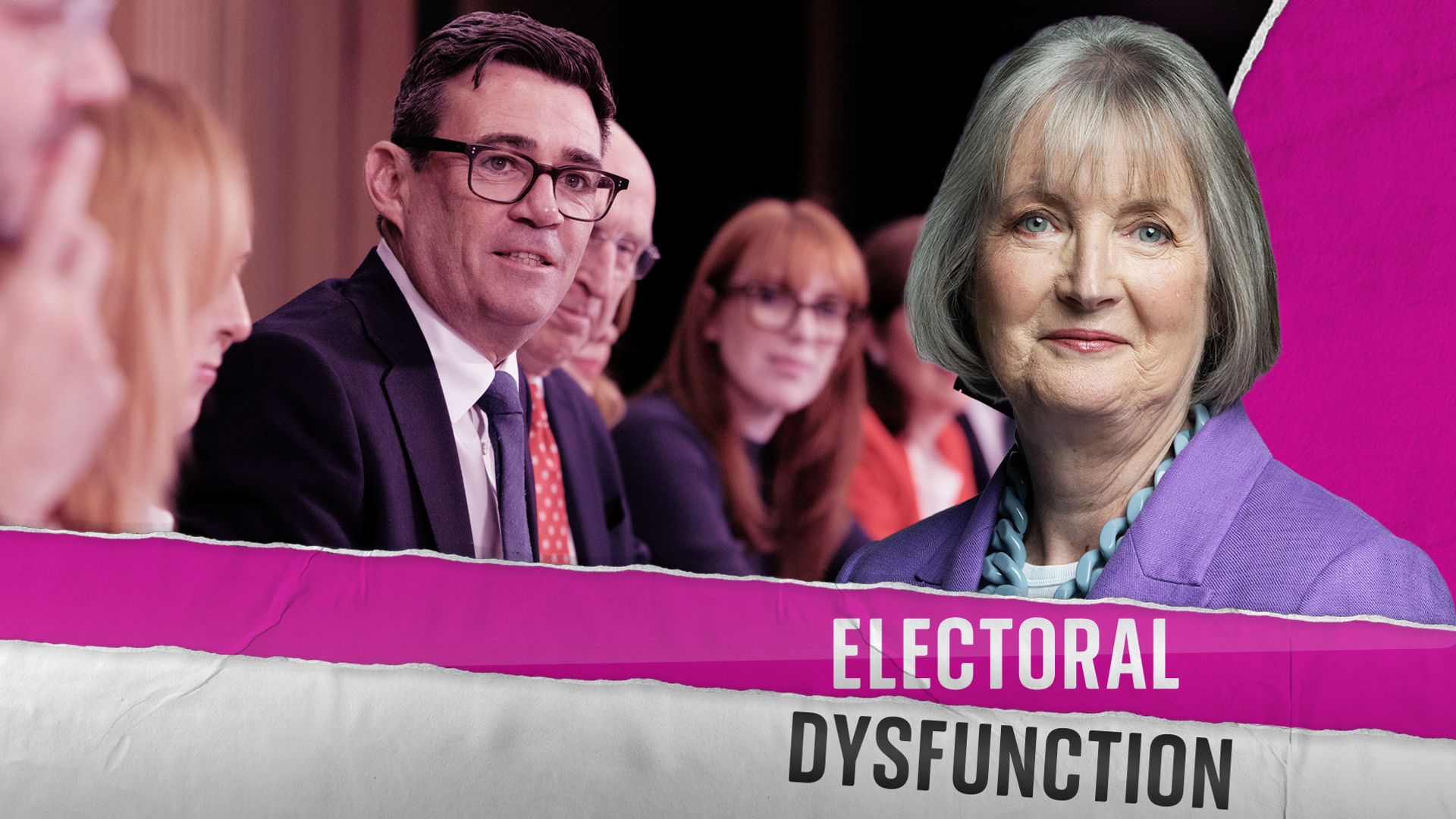
The leather seats in Westminster committee rooms absorb sound the way old libraries do, soaking up decades of ambition, whispered concessions, and the steady, rhythmic ticking of clocks that seem to move slower than the rest of the world.
For decades, Harriet Harman has sat inside those rooms. She knows the texture of political gravity. She knows how a room shifts when a man stands up to speak, how the air clears a path for him, how the architecture of power assumes his silhouette by default.
Then she dropped a sentence that sent a shiver through the wood-paneled corridors of the British left.
Baroness Harman suggested that the Labour Party should take an unprecedented step for its upcoming leadership cycle. Not an adjustment. Not a gentle nudge toward better representation. A rule that would effectively ask male contenders to step back, clearing the stage entirely so that the party could finally, irrevocably, elect a woman to the top job.
The reaction was instantaneous. Shock. Laughter from ambitious backbenchers who assumed it was a provocative thought experiment. Discomfort from strategists who treat tradition like sacred geometry.
But Harman wasn't smiling.
Consider what happens inside a typical political party when a vacancy opens. The machinery whirls into motion with the mechanical predictability of an assembly line. Men who have spent years measuring their worth in column inches and subcommittee chairmanships step forward. They adjust their ties. They clear their throats. They talk about unity, renewal, and experience. Behind them, capable women watch from the second row, urged to wait their turn, to serve as deputies, to act as the stabilizing anchor while a male leader steers the vessel.
Harman’s argument cuts straight through the polite fictions of meritocracy. For over a century, the Labour Party has positioned itself as the champion of equality. Yet, through every decade of its existence, through landslides and defeats, through sweeping social reforms and radical manifestos, the ultimate office has remained an exclusively male domain.
That is not an accident of history. It is a design.
When power is distributed through an unexamined default, neutral processes yield biased outcomes. If the starting line requires every candidate to run an exhausting gauntlet where structural advantages favor those unencumbered by domestic care or historical exclusion, the race is won before the starting gun fires.
Critics call the proposal undemocratic. They argue that members should choose freely from any candidate who steps forward. But this objection relies on a comforting illusion. It assumes the playing field is flat, that ambition is distributed evenly across demographics without social friction, and that the history of exclusion leaves no lingering shadow.
History leaves a very long shadow.
Picture a hypothetical constituency office in the industrial north. Rain streaks the windowpane. Inside, a seasoned local councillor—let us call her Sarah—reviews a stack of casework. She has balanced budgets, negotiated local labor disputes, and held her community together through economic bruising. When she thinks about running for higher office, a voice tells her she needs ten more years of seasoning. Across town, a younger male colleague with half her administrative experience is already handing out business cards, backed by an invisible network of patrons who see leadership written naturally into his posture.
Ambition is socialized. Confidence is reinforced by reflection. When you look up at every portrait on the wall and see only men who look like you, your stride changes.
Harman’s intervention forces a confrontation with male allyship. For generations, progress for women in politics has depended on men granting permission or stepping aside out of individual benevolence. Harman flips the script. She suggests that true allyship is not passive cheering from the sidelines. It requires sacrifice. It asks men with legitimate claims to leadership to recognize that the system itself is exhausted, and that sometimes the most radical act of solidarity is silence.
The political ecosystem thrives on noise. Every leadership election is an arena of competing egos, public posturing, and strategic leaks. To ask a generation of prospective leaders to voluntarily bench themselves feels counterintuitive to the survival instincts of modern politicians.
Yet, the cost of inaction is invisible until it accumulates into a quiet crisis of legitimacy.
When an institution fails to reflect the society it governs, the bond of trust frays. Voters notice who stands at the podium. They notice the unbroken line of succession. When rival parties manage to shatter stained-glass ceilings while your own organization hesitates, the embarrassment shifts from a private party grievance to a public indictment.
Harman knows her proposal will face fierce resistance. Institutional inertia is a formidable opponent. Systems protect themselves. The men who eye the leadership aren't malicious; they are simply responding to the incentives carved into the stone of Westminster.
The air in those committee rooms is heavy with the weight of how things have always been done.
The clock keeps ticking.
The question is no longer whether capable women exist within the ranks. Everyone knows they do in abundance. The real question is whether the party has the courage to break its own mold, or if it will choose the comfort of the familiar, letting another cycle pass under the heavy, unbroken shadow of the past.

/GettyImages-157526585-93425538070d4422ad42d22af28c0758.jpg)