The international community loves a sudden, visible tragedy. When twin earthquakes measuring 7.2 and 7.5 flattened chunks of Caracas and La Guaira, the global humanitarian machine sprang into its default mode: panic, press conferences, and a sudden deluge of cargo flights. The World Health Organization is already sounding the alarm on a ticking time bomb of measles, malaria, and cholera. Activists are calling the aftermath a war zone.
They are looking at the wrong disaster.
The lazy consensus dominating the news cycle is that a natural disaster just broke Venezuela’s healthcare system, and that emergency international aid will fix it. That narrative is fundamentally flawed. The earthquakes did not break the medical infrastructure of Venezuela. They merely exposed a corpse that has been rotting for over a decade. Treating this acute shock with temporary field hospitals and emergency shipments of water purification tablets is like applying a designer adhesive bandage to an amputated limb. It makes the donors feel heroic, but it does absolutely nothing to alter the survival rate on the ground.
The Acute Illusion of a Chronic Crisis
Every major aid agency is currently hyper-focusing on the immediate fallout. They cite the 38 compromised hospitals, the missing maternity doctors in La Guaira, and the threat of waterborne pathogens flaring up in crowded shelters.
This is standard disaster optics. It operates on the assumption that there was a functional baseline before the ground shook.
I have spent years watching international agencies pour millions into emergency responses across failed and semi-failed states, and the script never changes. They arrive with a template designed for stable countries hit by sudden misfortune. But Venezuela has been operating under an permanent state of medical triage since long before 2026. Prior to the quakes, inflation, structural neglect, and an exodus of over eight million citizens—including a massive percentage of the country's specialized physicians—had already reduced top-tier hospitals to concrete shells without running water or reliable electricity.
When the WHO warns that facilities are operating beyond capacity, they ignore the reality that these facilities have been operating at a deficit for years. The influx of trauma cases did not cause the breakdown in biosafety measures or the chaotic patient flows. It simply amplified the baseline reality.
By treating this as an exceptional post-disaster crisis, the humanitarian complex creates a dangerous illusion. They imply that once the rubble is cleared and the temporary shelters are dismantled, the system can return to normal. But "normal" in Venezuela was already a lethal environment for the average citizen.
The Perverse Incentives of Cargo-Cult Aid
Right now, planes are landing with tons of emergency supplies. UNICEF boasted about a 47-ton shipment of medicines, water systems, and tents. While this looks excellent in a press release, it ignores the brutal logistics of distribution in a militarized, bureaucratic chokehold.
The Venezuelan government immediately militarized the disaster zones, particularly La Guaira, imposing strict permit requirements for anyone attempting to enter. In a country where state management has historically been defined by inefficiency and systemic diversion, dumping millions of dollars of highly fungible medical supplies into a sudden vacuum is a recipe for corruption.
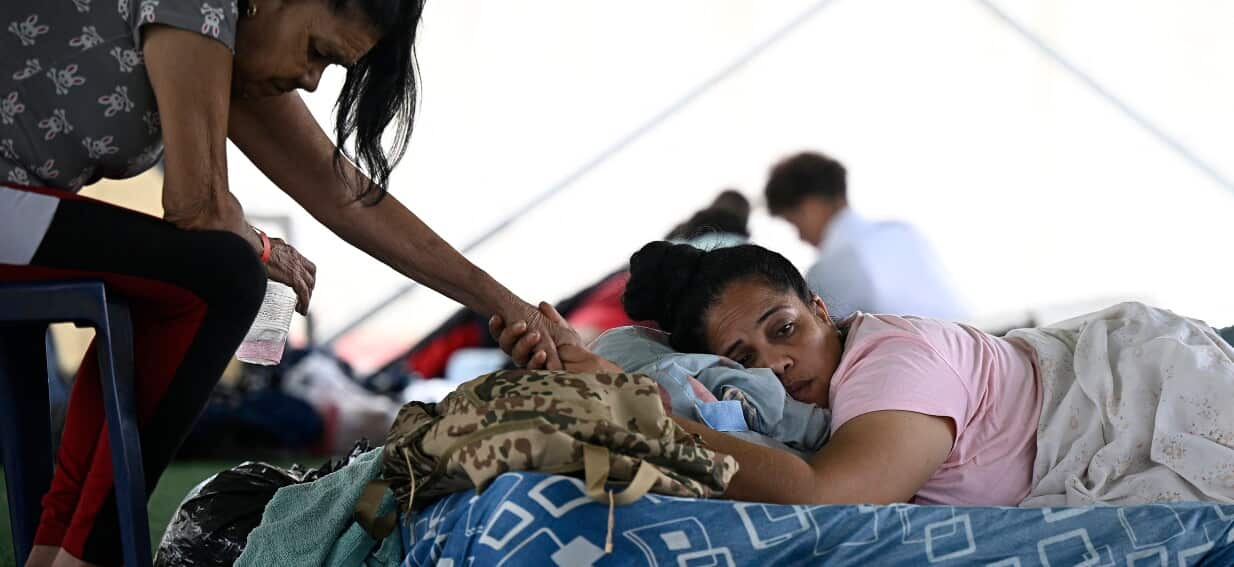
Consider what happens to high-value pharmaceuticals when they enter an economy with an active black market. They do not magically find their way to the poorest victims sleeping in cars or public parks. They get diverted, hoarded, and sold to the highest bidder. Meanwhile, the local medical staff who have stayed in the country throughout its prolonged economic collapse are bypassed entirely.
[International Donors] ──> [Militarized Ports] ──> [Black Market / Diversion]
                                    │
                                    └──> [Vanishingly Small Percentage to Victims]
This influx of temporary aid creates a parallel infrastructure. Foreign search-and-rescue teams and international doctors set up bright, clean tents, provide immediate care for three to six months, and then pack up when the funding cycle concludes.
What happens next? The local clinics, which were already starved of resources, are left even more depleted. The temporary intervention artificially suppresses the local medical economy, creates a culture of dependency, and allows the state to completely abdicate its responsibility to rebuild permanent facilities.
The Myth of the Impending Epidemic
The press is obsessed with the specter of massive infectious outbreaks: measles, diphtheria, yellow fever, and malaria. The narrative claims that crowded, unsanitary shelters are about to trigger a medieval-style plague.
Let's look at the data calmly. Post-disaster epidemics are remarkably rare, even in severe conditions. Epidemics require an active, widespread vector and a highly concentrated, completely non-immune population. While Venezuela's vaccination rates are undeniably low due to years of economic decay, the primary threat to displaced populations isn't a exotic outbreak of yellow fever. It is the boring, unsexy reality of unmanaged chronic conditions and basic infections.
People do not die in mass numbers from measles in the weeks following an earthquake. They die because their insulin ran out, because their kidney dialysis machine lost power, or because a simple bacterial infection from a minor laceration turned septic because there are no basic antibiotics left in the local clinic.
By prioritizing high-profile epidemiological surveillance and specialized vaccine drives for rare diseases, aid groups redirect scarce logistical resources away from the fundamental issue: stabilizing primary care.
Dismantling the Victim Narrative
The common media framing presents the Venezuelan population as entirely helpless victims waiting for international salvation. This is not just patronizing; it is factually incorrect.
The most effective rescue and immediate medical interventions following the June 24 quakes were not executed by the UN or foreign teams. They were carried out by informal local volunteer networks, neighborhood associations, and domestic medical students who scrambled into the ruins days before international teams cleared bureaucratic hurdles at the airports.
Yet, the current international response explicitly sidelines these organic networks. Funding is channeled almost exclusively through massive, slow-moving non-governmental organizations that spend a significant portion of their budgets on their own administrative overhead, security details, and air-conditioned SUVs.
If the goal is actual survival, the strategy must pivot away from importing foreign solutions.
- Fund Local Procurement: Stop flying in generic medical kits from Europe or Panama. Provide direct, audited cash grants to the remaining independent Venezuelan medical associations and local clinics to buy supplies from regional distributors.
- Decentralize Supply Chains: Bypass the centralized military distribution hubs by utilizing established, trusted religious and grassroots networks that have been operating on the ground for decades.
- Prioritize Infrastructure over Consumables: Instead of sending more tents and temporary field hospitals, fund the immediate, permanent repair of water lines and power grids for the 38 damaged domestic hospitals.
The Hard Reality of the Cost-Benefit Equation
Every contrarian stance must acknowledge its own vulnerabilities. The primary risk of bypassing centralized state structures and shifting away from massive, standardized international shipments is a lack of standardization. Local networks can be fragmented, and tracking every dollar becomes exponentially more difficult for international auditors. It requires accepting a higher level of operational messiness.
But the alternative is a proven failure. We have seen this play out in Haiti, in Nepal, and in dozens of other disaster zones. The international community arrives, spends a fortune on temporary fixes, generates a mountain of positive publicity, and leaves behind a local population that is just as vulnerable as it was before the disaster.
The twin earthquakes in Venezuela were an undeniable human tragedy. But the current humanitarian response is an exercise in institutional vanity. It is designed to satisfy the metrics of international donors rather than the long-term survival needs of the Venezuelan people. Stop trying to rescue Venezuela with temporary field hospitals and cargo flights full of bureaucratic promises. Fix the foundational infrastructure, empower the local medical networks that never left, or get out of the way.